
Künzing
Osterhofener Str. 2, 94550 Künzing, Deutschland
Museum Quintana Künzing | Opening Hours & Tickets
The Museum Quintana in Künzing is an archaeological museum with a clear regional identity and a strong promise of visitation: Located at Osterhofener Straße 2 in 94550 Künzing, between Passau and Deggendorf and near the Danube Cycle Path, it tells more than 7,000 years of history from the first farmers of the Neolithic period to the Bavarians of the early Middle Ages. The focus is on the Roman fort Quintana, which gave the community its name. Those looking for an excursion that combines knowledge, original finds, vivid presentations, and family-friendly conditions will find here a compact, easily accessible, and surprisingly versatile address. ([museum-quintana.de](https://www.museum-quintana.de/))
Opening Hours, Admission Prices, and Online Tickets
The current opening hours are clear and straightforward: The Museum Quintana is open from Wednesday to Sunday from 10:00 AM to 4:00 PM; it is closed on Mondays and Tuesdays. Additionally, there are fixed closing days, including Good Friday, All Saints' Day, the winter closing days from December 7 to 24, 2026, and New Year's Eve. For groups, it is important to know that visits can also be arranged outside of regular opening hours with prior notice. This makes the museum interesting not only for spontaneous visitors but also for school classes, clubs, and small groups who want to plan their visit deliberately. ([museum-quintana.de](https://www.museum-quintana.de/))
Even regarding tickets, the visit is pleasantly transparent. Adults pay 6.00 euros, and the reduced admission is 4.00 euros. Children under 6 years have free admission, and the family ticket costs 15.00 euros. Additionally, holders of the activCard and the PassauRegioCard benefit from free admission. Those who prepare their excursion in advance can also conveniently purchase tickets through the online shop and receive them via email after purchase. This is particularly practical if the visit is planned as a day trip, family activity, or stopover on a journey through Lower Bavaria. ([museum-quintana.de](https://www.museum-quintana.de/))
The pricing structure shows that the Museum Quintana consciously targets different audiences. Families receive easy access with the family ticket, older visitors and other eligible groups use the discount, and smaller children can visit for free. This creates an offer that is neither complicated nor elitist, but rather accessible and planable. Especially in conjunction with the changing guided tours and educational offerings, it becomes clear that the museum is not just a classic exhibition venue but a vibrant place for learning and experiencing, where one can discover history in peace and without time pressure. ([museum-quintana.de](https://www.museum-quintana.de/))
Directions, Location, and Parking at Museum Quintana
The location of the museum is very convenient for visitors. On the official homepage, the museum describes itself as being situated between Passau and Deggendorf, about 30 minutes by car from Passau and around 20 minutes from Deggendorf, also close to the Danube Cycle Path. The tourism information adds that the museum is conveniently located on the B8 in the town center of Künzing. This makes it a well-integrated stop for both drivers and cyclists on a tour along the Danube and through Lower Bavaria. Those traveling from the surrounding area will find here not a remote niche address but a cultural hub with good regional integration. ([museum-quintana.de](https://www.museum-quintana.de/))
Parking information is also practical: Free parking spaces are available directly in front of the museum for school buses. The accessibility page also mentions a parking space for people with disabilities. Additionally, the tourism information points out that free parking spaces for buses are available right in front of the museum entrance. This is a real advantage for travel groups, school classes, and families, as arrival and departure are possible without long walks or complicated parking searches. Especially for a museum that is often targeted as an excursion destination or learning place, this direct accessibility is a strong plus. ([museum-quintana.de](https://www.museum-quintana.de/bildung/buchung/))
Content-wise, the location is doubly worthwhile: Right near the museum is the wooden amphitheater of Künzing, which has been part of the UNESCO World Heritage Site of the Danube Limes since July 2021. This allows the museum visit to be easily combined with a short cultural walk or an extended discovery tour through the historic site. Those traveling by bike also benefit from the proximity to the Danube Cycle Path. Thus, a museum visit quickly turns into a half or full day trip, where history, movement, and landscape come together pleasantly. ([museum-quintana.de](https://www.museum-quintana.de/))
Permanent Exhibition: 7,000 Years of History from the Stone Age to the Bavarians
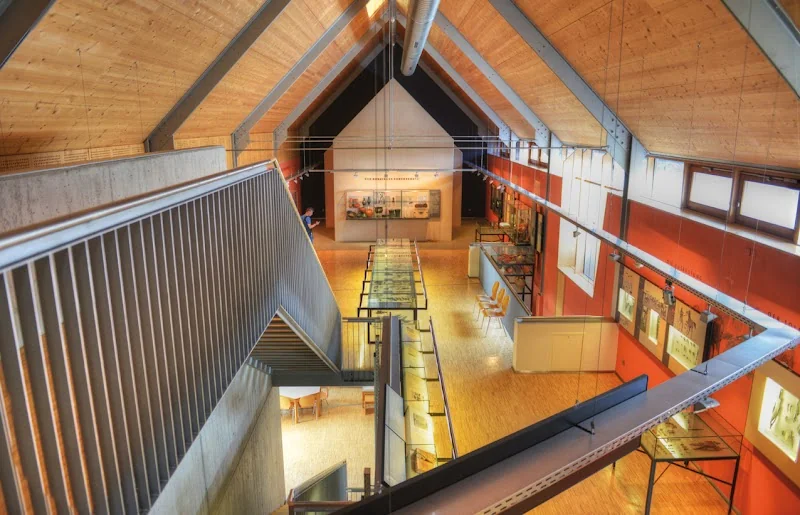
The permanent exhibition is the heart of the Museum Quintana. Covering approximately 700 m² and divided into four thematic areas, it makes more than 7,000 years of settlement history visible. The official presentation emphasizes the combination of vivid presentations, impressive original finds, models, reconstructions, and playful elements. This is important because the museum does not just display objects but explains connections and makes the development of an entire place comprehensible over a very long time. Those who walk through here do not experience a loose collection of individual pieces but a narrated historical landscape with clear dramaturgy. ([museum-quintana.de](https://www.museum-quintana.de/))
The tour begins with the first settled groups in the Stone Age and continues through the Bronze Age. Particularly noteworthy are the model of the Neolithic circular ditch system from Künzing-Unternberg and the finds from the large Bronze Age burial ground. The exhibition makes it clear that Künzing was already an important settlement area very early on and that traces of human presence have been preserved here over a long time. The combination of reconstructed models and archaeological originals helps to make often abstract prehistory tangible. For visitors, this means: One not only sees that people lived here but also understands how they organized themselves, what forms of burial and social differentiation existed, and how deeply rooted the region is archaeologically. ([museum-quintana.de](https://www.museum-quintana.de/ausstellungen/dauerausstellung?utm_source=openai))
A particularly strong chapter is the Roman period. Almost 2,000 years ago, the Romans built the fort Quintana, which gave the present community its name. The exhibition shows how soldiers, traders, and craftsmen shaped life on the Danube Limes. In the museum, these themes are not dealt with dryly, but made tangible with introductory presentations, models, and objects. Additionally, there is a direct reference to the environment: The wooden amphitheater of Künzing has been part of the UNESCO World Heritage Site of the Danube Limes since 2021, and the Roman section of the museum refers to the close connection between military border history, settlement development, and regional identity. Those interested in Roman Bavaria will receive a concentrated but content-rich overview here. ([museum-quintana.de](https://www.museum-quintana.de/ausstellungen/dauerausstellung?utm_source=openai))
The late antiquity and early Middle Ages complete the arc. The official page mentions Saint Severin of Noricum as a defining figure of this phase because he worked in Quintanis, today's Künzing, and thus symbolically represents the transition from antiquity to Christianity. This perspective is important because it shows that the history of the place does not end with the fall of Roman rule. Instead of an abrupt break, the museum tells of continuity, change, and new settlement. This is one of the great strengths of the exhibition: it makes visible that Künzing was not only a Roman place but remained a vibrant cultural area for millennia. ([museum-quintana.de](https://www.museum-quintana.de/ausstellungen/dauerausstellung?utm_source=openai))
Particularly convincing is the didactic approach of the house. The exhibition works with original finds, models, short texts, and clear presentations, so that both specialists and families and school classes can follow along well. The official impression is always the same: history should not only be explained but made directly experienceable. This fits perfectly with the location Künzing, which is considered one of the oldest places in Bavaria and is closely linked to archaeological research in Lower Bavaria. Thus, the museum visit becomes a journey through the long development of a place that preserves remarkably many historical layers in a small space. ([museum-quintana.de](https://www.museum-quintana.de/))
Accessibility, Audioguide, and Visitor Comfort
The Museum Quintana visibly values a comfortable and accessible visit. On the accessibility page, the house is described according to the criteria of Travel for All; the museum also mentions a parking space for people with disabilities, step-free access, an elevator, a restroom for people with disabilities, and a free audioguide in German and English. Assistance dogs are welcome. These are not decorative additional details but concrete service points that make the stay significantly more pleasant for many visitors. Especially families with strollers, older guests, and individuals with mobility impairments benefit directly from this. ([museum-quintana.de](https://www.museum-quintana.de/barrierefreiheit.html))
The museum also thinks digitally about good accessibility. The explanation of accessibility mentions, among other things, alternative texts for images, keyboard operability, color contrasts according to standards, subtitles for videos with sound, easy language for central content, and sign language videos for important information. This shows that accessibility is not only understood as an architectural issue but as a comprehensive visitor and communication concept. Therefore, those who inform themselves online before the visit will find not only opening hours and prices but also a website that is largely tailored to different needs. This is a positive signal, especially for a cultural offering in a rural area. ([museum-quintana.de](https://www.museum-quintana.de/barrierefreiheit.html))
For the actual museum visit, family conditions also play a significant role. Children under 6 years visit the museum for free, the family ticket is clearly calculable, and with the activCard or PassauRegioCard, admission is completely waived. In conjunction with the PLAYMOBIL tour, the playful elements of the permanent exhibition, and the vivid models, a visit remains exciting even for younger guests. The Museum Quintana thus does not appear overloaded or didactic but accessible and well-measured. Those looking for a cultural place where learning, wonder, and relaxed exploration can be combined will make a very good choice here. ([museum-quintana.de](https://www.museum-quintana.de/))
Guided Tours, School Programs, and Special Exhibitions
In addition to the permanent exhibition, the Museum Quintana offers a wide range of guided tours and experience formats. The classic tour lasts about 60 minutes and costs 50 euros per group plus admission. In addition, there are thematic and culinary formats that aim to make history lively and multisensory. This is attractive for groups, clubs, company outings, and circles of friends because one can adapt the visit to their own interests. The official wording is deliberately kept open: whether classic, culinary, or thematic, the museum does not see guided tours as a mandatory program but as an additional experiential value. ([museum-quintana.de](https://www.museum-quintana.de/besuch/fuehrungen))
Particularly exciting is the culinary experience tour. It lasts about 1.5 hours, costs 15 euros per person, requires a minimum number of 15 participants, and includes admission, a glass of Roman aperitif, and various samples of organic quality. Here, it becomes clear how cleverly the museum connects history, everyday life, and enjoyment. Instead of merely describing ancient nutrition theoretically, a sensory approach is chosen that offers groups a shared experience. This is interesting not only for adults but also for everyone who wants to see more than just display cases during museum visits. The connection of knowledge and taste is not a gimmick but a clear educational strategy. ([museum-quintana.de](https://www.museum-quintana.de/besuch/fuehrungen))
For school classes, the offer is even broader. According to the booking page, up to four school classes can be supervised simultaneously, and an individual schedule is created for larger groups. School buses can park for free directly in front of the museum, brought food and drinks may be consumed in the museum or in the outdoor area, and bookings are also possible on Mondays, Tuesdays, or before 10 AM. Payment can be made in cash or by invoice. Additionally, there are specific programs such as the classic Roman tour, museum adventure, archaeology challenge, leather coin purse, wax tablet, Roman food, Actionbound World Heritage Tour, classic Stone Age tour, and Stone Age meal. This makes the Museum Quintana a serious extracurricular learning location with high practical relevance. ([museum-quintana.de](https://www.museum-quintana.de/bildung/buchung/))
The house also regularly presents special exhibitions on archaeological, historical, and cultural topics. The archive shows that the range spans from the Stone Age to the Celts and the Middle Ages to PLAYMOBIL. This diversity makes the museum exciting in the long term because it continually opens up new perspectives on the ancient history of Künzing. For those searching for Museum Quintana photos, reviews, or current special topics, there is a clear indication behind it: The place is not static but lives from changing accents and the close connection between research, exhibition, and communication. Therefore, those looking for not just a single exhibition object but a whole historical experience will find a very coherent overall offering here. ([museum-quintana.de](https://www.museum-quintana.de/ausstellungen/ausstellungsarchiv/?utm_source=openai))
In the end, the Museum Quintana remains interesting primarily because it appeals to several visitor groups equally. Families benefit from the clear pricing structure and playful elements, culture enthusiasts from the archaeological depth, school classes from the educational formats, and cyclists from the good location by the Danube. Thus, the museum is neither just a rainy day venue nor merely a regional museum, but a place where the long history of Lower Bavaria can be experienced in a compact form. This is exactly what makes the charm of this house: It is small enough for a relaxed visit and rich enough to remain in memory for a long time. ([museum-quintana.de](https://www.museum-quintana.de/))
Sources:
- Museum Quintana Künzing - Official Website
- Museum Quintana Künzing - Opening Hours & Admission Prices
- Museum Quintana Künzing - Online Tickets
- Museum Quintana Künzing - Permanent Exhibition
- Museum Quintana Künzing - Accessibility
- Museum Quintana Künzing - Experiences & Tours
- Museum Quintana Künzing - Booking for School Classes
- erlebe.bayern - Museum Quintana
Mehr anzeigenWeniger anzeigen
Museum Quintana Künzing | Opening Hours & Tickets
The Museum Quintana in Künzing is an archaeological museum with a clear regional identity and a strong promise of visitation: Located at Osterhofener Straße 2 in 94550 Künzing, between Passau and Deggendorf and near the Danube Cycle Path, it tells more than 7,000 years of history from the first farmers of the Neolithic period to the Bavarians of the early Middle Ages. The focus is on the Roman fort Quintana, which gave the community its name. Those looking for an excursion that combines knowledge, original finds, vivid presentations, and family-friendly conditions will find here a compact, easily accessible, and surprisingly versatile address. ([museum-quintana.de](https://www.museum-quintana.de/))
Opening Hours, Admission Prices, and Online Tickets
The current opening hours are clear and straightforward: The Museum Quintana is open from Wednesday to Sunday from 10:00 AM to 4:00 PM; it is closed on Mondays and Tuesdays. Additionally, there are fixed closing days, including Good Friday, All Saints' Day, the winter closing days from December 7 to 24, 2026, and New Year's Eve. For groups, it is important to know that visits can also be arranged outside of regular opening hours with prior notice. This makes the museum interesting not only for spontaneous visitors but also for school classes, clubs, and small groups who want to plan their visit deliberately. ([museum-quintana.de](https://www.museum-quintana.de/))
Even regarding tickets, the visit is pleasantly transparent. Adults pay 6.00 euros, and the reduced admission is 4.00 euros. Children under 6 years have free admission, and the family ticket costs 15.00 euros. Additionally, holders of the activCard and the PassauRegioCard benefit from free admission. Those who prepare their excursion in advance can also conveniently purchase tickets through the online shop and receive them via email after purchase. This is particularly practical if the visit is planned as a day trip, family activity, or stopover on a journey through Lower Bavaria. ([museum-quintana.de](https://www.museum-quintana.de/))
The pricing structure shows that the Museum Quintana consciously targets different audiences. Families receive easy access with the family ticket, older visitors and other eligible groups use the discount, and smaller children can visit for free. This creates an offer that is neither complicated nor elitist, but rather accessible and planable. Especially in conjunction with the changing guided tours and educational offerings, it becomes clear that the museum is not just a classic exhibition venue but a vibrant place for learning and experiencing, where one can discover history in peace and without time pressure. ([museum-quintana.de](https://www.museum-quintana.de/))
Directions, Location, and Parking at Museum Quintana
The location of the museum is very convenient for visitors. On the official homepage, the museum describes itself as being situated between Passau and Deggendorf, about 30 minutes by car from Passau and around 20 minutes from Deggendorf, also close to the Danube Cycle Path. The tourism information adds that the museum is conveniently located on the B8 in the town center of Künzing. This makes it a well-integrated stop for both drivers and cyclists on a tour along the Danube and through Lower Bavaria. Those traveling from the surrounding area will find here not a remote niche address but a cultural hub with good regional integration. ([museum-quintana.de](https://www.museum-quintana.de/))
Parking information is also practical: Free parking spaces are available directly in front of the museum for school buses. The accessibility page also mentions a parking space for people with disabilities. Additionally, the tourism information points out that free parking spaces for buses are available right in front of the museum entrance. This is a real advantage for travel groups, school classes, and families, as arrival and departure are possible without long walks or complicated parking searches. Especially for a museum that is often targeted as an excursion destination or learning place, this direct accessibility is a strong plus. ([museum-quintana.de](https://www.museum-quintana.de/bildung/buchung/))
Content-wise, the location is doubly worthwhile: Right near the museum is the wooden amphitheater of Künzing, which has been part of the UNESCO World Heritage Site of the Danube Limes since July 2021. This allows the museum visit to be easily combined with a short cultural walk or an extended discovery tour through the historic site. Those traveling by bike also benefit from the proximity to the Danube Cycle Path. Thus, a museum visit quickly turns into a half or full day trip, where history, movement, and landscape come together pleasantly. ([museum-quintana.de](https://www.museum-quintana.de/))
Permanent Exhibition: 7,000 Years of History from the Stone Age to the Bavarians
The permanent exhibition is the heart of the Museum Quintana. Covering approximately 700 m² and divided into four thematic areas, it makes more than 7,000 years of settlement history visible. The official presentation emphasizes the combination of vivid presentations, impressive original finds, models, reconstructions, and playful elements. This is important because the museum does not just display objects but explains connections and makes the development of an entire place comprehensible over a very long time. Those who walk through here do not experience a loose collection of individual pieces but a narrated historical landscape with clear dramaturgy. ([museum-quintana.de](https://www.museum-quintana.de/))
The tour begins with the first settled groups in the Stone Age and continues through the Bronze Age. Particularly noteworthy are the model of the Neolithic circular ditch system from Künzing-Unternberg and the finds from the large Bronze Age burial ground. The exhibition makes it clear that Künzing was already an important settlement area very early on and that traces of human presence have been preserved here over a long time. The combination of reconstructed models and archaeological originals helps to make often abstract prehistory tangible. For visitors, this means: One not only sees that people lived here but also understands how they organized themselves, what forms of burial and social differentiation existed, and how deeply rooted the region is archaeologically. ([museum-quintana.de](https://www.museum-quintana.de/ausstellungen/dauerausstellung?utm_source=openai))
A particularly strong chapter is the Roman period. Almost 2,000 years ago, the Romans built the fort Quintana, which gave the present community its name. The exhibition shows how soldiers, traders, and craftsmen shaped life on the Danube Limes. In the museum, these themes are not dealt with dryly, but made tangible with introductory presentations, models, and objects. Additionally, there is a direct reference to the environment: The wooden amphitheater of Künzing has been part of the UNESCO World Heritage Site of the Danube Limes since 2021, and the Roman section of the museum refers to the close connection between military border history, settlement development, and regional identity. Those interested in Roman Bavaria will receive a concentrated but content-rich overview here. ([museum-quintana.de](https://www.museum-quintana.de/ausstellungen/dauerausstellung?utm_source=openai))
The late antiquity and early Middle Ages complete the arc. The official page mentions Saint Severin of Noricum as a defining figure of this phase because he worked in Quintanis, today's Künzing, and thus symbolically represents the transition from antiquity to Christianity. This perspective is important because it shows that the history of the place does not end with the fall of Roman rule. Instead of an abrupt break, the museum tells of continuity, change, and new settlement. This is one of the great strengths of the exhibition: it makes visible that Künzing was not only a Roman place but remained a vibrant cultural area for millennia. ([museum-quintana.de](https://www.museum-quintana.de/ausstellungen/dauerausstellung?utm_source=openai))
Particularly convincing is the didactic approach of the house. The exhibition works with original finds, models, short texts, and clear presentations, so that both specialists and families and school classes can follow along well. The official impression is always the same: history should not only be explained but made directly experienceable. This fits perfectly with the location Künzing, which is considered one of the oldest places in Bavaria and is closely linked to archaeological research in Lower Bavaria. Thus, the museum visit becomes a journey through the long development of a place that preserves remarkably many historical layers in a small space. ([museum-quintana.de](https://www.museum-quintana.de/))
Accessibility, Audioguide, and Visitor Comfort
The Museum Quintana visibly values a comfortable and accessible visit. On the accessibility page, the house is described according to the criteria of Travel for All; the museum also mentions a parking space for people with disabilities, step-free access, an elevator, a restroom for people with disabilities, and a free audioguide in German and English. Assistance dogs are welcome. These are not decorative additional details but concrete service points that make the stay significantly more pleasant for many visitors. Especially families with strollers, older guests, and individuals with mobility impairments benefit directly from this. ([museum-quintana.de](https://www.museum-quintana.de/barrierefreiheit.html))
The museum also thinks digitally about good accessibility. The explanation of accessibility mentions, among other things, alternative texts for images, keyboard operability, color contrasts according to standards, subtitles for videos with sound, easy language for central content, and sign language videos for important information. This shows that accessibility is not only understood as an architectural issue but as a comprehensive visitor and communication concept. Therefore, those who inform themselves online before the visit will find not only opening hours and prices but also a website that is largely tailored to different needs. This is a positive signal, especially for a cultural offering in a rural area. ([museum-quintana.de](https://www.museum-quintana.de/barrierefreiheit.html))
For the actual museum visit, family conditions also play a significant role. Children under 6 years visit the museum for free, the family ticket is clearly calculable, and with the activCard or PassauRegioCard, admission is completely waived. In conjunction with the PLAYMOBIL tour, the playful elements of the permanent exhibition, and the vivid models, a visit remains exciting even for younger guests. The Museum Quintana thus does not appear overloaded or didactic but accessible and well-measured. Those looking for a cultural place where learning, wonder, and relaxed exploration can be combined will make a very good choice here. ([museum-quintana.de](https://www.museum-quintana.de/))
Guided Tours, School Programs, and Special Exhibitions
In addition to the permanent exhibition, the Museum Quintana offers a wide range of guided tours and experience formats. The classic tour lasts about 60 minutes and costs 50 euros per group plus admission. In addition, there are thematic and culinary formats that aim to make history lively and multisensory. This is attractive for groups, clubs, company outings, and circles of friends because one can adapt the visit to their own interests. The official wording is deliberately kept open: whether classic, culinary, or thematic, the museum does not see guided tours as a mandatory program but as an additional experiential value. ([museum-quintana.de](https://www.museum-quintana.de/besuch/fuehrungen))
Particularly exciting is the culinary experience tour. It lasts about 1.5 hours, costs 15 euros per person, requires a minimum number of 15 participants, and includes admission, a glass of Roman aperitif, and various samples of organic quality. Here, it becomes clear how cleverly the museum connects history, everyday life, and enjoyment. Instead of merely describing ancient nutrition theoretically, a sensory approach is chosen that offers groups a shared experience. This is interesting not only for adults but also for everyone who wants to see more than just display cases during museum visits. The connection of knowledge and taste is not a gimmick but a clear educational strategy. ([museum-quintana.de](https://www.museum-quintana.de/besuch/fuehrungen))
For school classes, the offer is even broader. According to the booking page, up to four school classes can be supervised simultaneously, and an individual schedule is created for larger groups. School buses can park for free directly in front of the museum, brought food and drinks may be consumed in the museum or in the outdoor area, and bookings are also possible on Mondays, Tuesdays, or before 10 AM. Payment can be made in cash or by invoice. Additionally, there are specific programs such as the classic Roman tour, museum adventure, archaeology challenge, leather coin purse, wax tablet, Roman food, Actionbound World Heritage Tour, classic Stone Age tour, and Stone Age meal. This makes the Museum Quintana a serious extracurricular learning location with high practical relevance. ([museum-quintana.de](https://www.museum-quintana.de/bildung/buchung/))
The house also regularly presents special exhibitions on archaeological, historical, and cultural topics. The archive shows that the range spans from the Stone Age to the Celts and the Middle Ages to PLAYMOBIL. This diversity makes the museum exciting in the long term because it continually opens up new perspectives on the ancient history of Künzing. For those searching for Museum Quintana photos, reviews, or current special topics, there is a clear indication behind it: The place is not static but lives from changing accents and the close connection between research, exhibition, and communication. Therefore, those looking for not just a single exhibition object but a whole historical experience will find a very coherent overall offering here. ([museum-quintana.de](https://www.museum-quintana.de/ausstellungen/ausstellungsarchiv/?utm_source=openai))
In the end, the Museum Quintana remains interesting primarily because it appeals to several visitor groups equally. Families benefit from the clear pricing structure and playful elements, culture enthusiasts from the archaeological depth, school classes from the educational formats, and cyclists from the good location by the Danube. Thus, the museum is neither just a rainy day venue nor merely a regional museum, but a place where the long history of Lower Bavaria can be experienced in a compact form. This is exactly what makes the charm of this house: It is small enough for a relaxed visit and rich enough to remain in memory for a long time. ([museum-quintana.de](https://www.museum-quintana.de/))
Sources:
- Museum Quintana Künzing - Official Website
- Museum Quintana Künzing - Opening Hours & Admission Prices
- Museum Quintana Künzing - Online Tickets
- Museum Quintana Künzing - Permanent Exhibition
- Museum Quintana Künzing - Accessibility
- Museum Quintana Künzing - Experiences & Tours
- Museum Quintana Künzing - Booking for School Classes
- erlebe.bayern - Museum Quintana
Upcoming Events
No events found
Frequently Asked Questions
Reviews
Alex Vasilyev
28. August 2019
Very impressive. And quite cheap - 9 euro family ticket.
Wolfgang Mildner
5. September 2026
Spent more time than expected. Very good concept..lots of local findings.. in a good systematic order. Combined with interesting connections and information. And a playground for kids.
L. S.
14. May 2026
Great museum! The kids and even we adults were thrilled. The interactive tour with Playmobil was a hit and the kids participated the whole time. No lulls, no complaints! Really great for families and anyone wanting to learn.
Rosi Sixt
18. July 2026
Very informative and well designed. I was impressed that there was so much Roman life and work in our area. And so much history in a small village is quite remarkable! But the cashier was also very friendly and explained quite a bit. Thanks for that. So, all in all, a successful trip back to 3800 BC!!! We will gladly recommend it. 👍👍👍👍👍.
Sandra K
11. April 2026
We were already here for the second time today in this beautiful museum. It is super structured with great exhibits from the Stone Age to Roman rule. The lady at the reception was very helpful and friendly. At the moment there is a Playmobil exhibition that is incredibly detailed and lovingly designed. This great museum is always worth a visit!