
Deggendorf
Hengersberger Str. 5, 94557 Niederalteich, Deutschland
Gerhard Neumann Museum | Opening Hours & Tickets
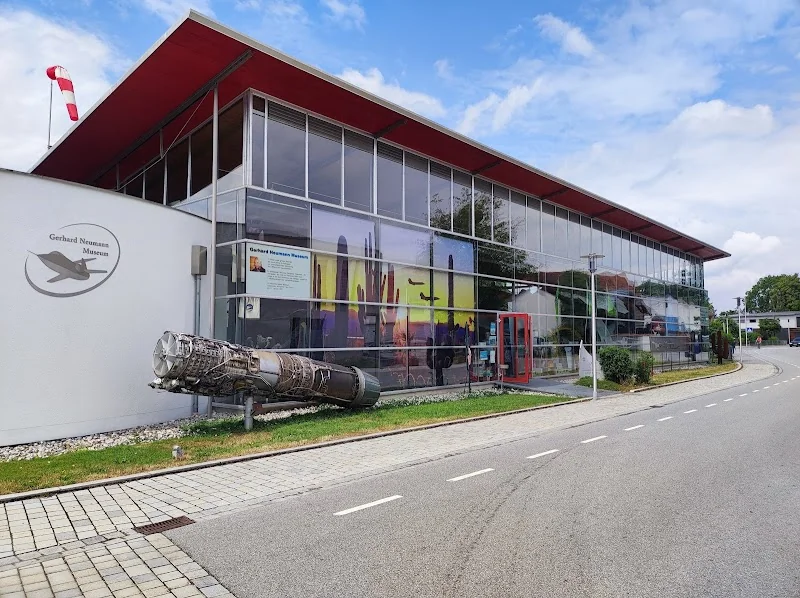
The Gerhard Neumann Museum in Niederalteich is a privately operated aviation museum dedicated to the technical history surrounding the F-104 Starfighter, the MiG-21, and the innovative power of German and international aerospace. Named after the German-American engineer Gerhard Neumann, who was significantly involved in the Turbojet J79 at General Electric, the museum offers a rare density of exhibits that excite both professionals and beginners. Visits are only possible as part of guided tours. A tour lasts about 1.5 hours, costs €8 per person, takes place from Monday to Saturday, and is generally not possible on Sundays. Groups of 15 to 50 people can request preferred dates, while individual visitors join existing tours. The personal, knowledgeable style of the owner and guide Josef Voggenreiter conveys complex aviation technology vividly – from aerodynamics to engine technology to historical contexts of the Cold War. The museum is located in the heart of Lower Bavaria, near Deggendorf, at Hengersberger Straße 5, 94557 Niederalteich.
Opening Hours and Tours at the Gerhard Neumann Museum
As a privately operated institution, the Gerhard Neumann Museum does not have traditional opening hours with free admission, but opens its halls exclusively for guided visits. This allows the collection to be experienced not as a silent exhibition, but as a lively learning environment. The guided visit typically lasts about 1.5 hours. During this time, the guide explains technical connections using illustrative cutaway models and original parts, provides insights into the history of aviation from its beginnings to the high-speed era, and answers questions from the group. The price is €8 per person and is paid upon entry; the tour takes place from Monday to Saturday. The museum is closed on Sundays, which facilitates planning and ensures a focus on guided formats. Groups of 15 to 50 people can request a preferred date. This makes the museum suitable for school classes, clubs, companies, and travel groups seeking a technically grounded but easily understandable introduction. Important for individual guests: Those traveling alone or in pairs can join existing groups on already scheduled dates, provided there are free spots. Coordination is straightforward via inquiry form, phone, or email. The advantage of the guided format lies in the high density of information and the opportunity to experience exhibits up close: Instead of standing alone in front of signs, visitors receive a narrative tour that places individual objects in a larger technical and historical context – for example, how the development of engines, materials, and aerodynamics led to milestones such as Mach-2 flight and climb performance records. By limiting group size, interaction with the guide is maintained; questions are welcome and enrich the shared understanding.
Tickets and Booking: How to Reserve Your Tour
For groups of 15 to 50 people, appointment scheduling is done via an inquiry form. The confirmation includes date and time, and it is noted that the organizer can add additional individual guests or small groups to the confirmed tour. This procedure has proven effective, as it provides both groups with planning security and individual guests with a visiting opportunity. Payment of €8 per person is conveniently made upon entry – no advance payment is required. For individuals, there are two ways: Either one uses published, already scheduled tours and books a spot, or actively inquires by phone or email about available spots. Since the museum is closed on Sundays, it is advisable to inquire early, especially for highly sought-after times on Saturdays. Those arriving with a school class or a technical seminar can mention thematic focuses in the inquiry, such as the functioning of afterburners, the significance of variable stator blades in compressors, or the development of aerodynamic concepts from the MiG-21 to early low-observable studies. The guide adjusts the emphasis of explanations so that both the curious and industry experts get their money's worth. Practically: Since it is a guided visit, long waiting times at a cash register are excluded; the process is also clearly structured – introduction, thematic stations, questions. Those who want to see photos from the museum can find impressions on the official website in a dedicated image section; prior coordination is sufficient for participation in a tour. For organizational reasons, it is advisable to call briefly on the same day for spontaneous travel plans to check if participation is possible. For bus groups, specific time windows facilitate arrival and adherence to a travel plan.
Photos and Impressions: Starfighter, MiG-21, and More
Even upon entering, the density of authentic exhibits is striking. Image impressions on the official website provide a preview: shiny aluminum surfaces, opened maintenance hatches, sightlines along slender fuselages and wings. The tour connects this visual experience with understandable explanations. A particular highlight is a skeletonized F-104 Starfighter, where parts of the outer skin have been removed. This allows for close examination of the internal structure – frames, stringers, lines, wiring harnesses, and system components. Here, it becomes evident how engineers of the 1950s/60s enabled extreme performance in very tight spaces: Aerodynamics, engine integration, and system safety had to come together in a jet that achieved speeds over Mach 2 while remaining controllable. The MiG-21, a gift from the Hungarian Air Force and formerly part of the aerobatic team “Sky-Hussars,” forms an exciting counterpoint. The juxtaposition of both types gives visitors a sense of how technical solutions approached or differed on either side – from delta-like wing layouts to air intakes to operational philosophies. This is complemented by an original Eurofighter wind tunnel model from the development phase: A model like this was used to measure aerodynamics across many configurations before prototypes flew. Additionally, the collection features a rare wind tunnel model of the secret MBB project Lampyridae at a scale of 4:5. This early German stealth study focused on faceting and radar reflections and is now considered a milestone in low-observable research in Germany. Whether large-scale external views or technical details – the guided narrative helps to contextualize what is seen: Why do air intakes appear like sculpted forms? Why are materials and manufacturing details crucial for high speed? The images in the mind thus become a logical story that goes beyond individual snapshots.
Exhibition Highlights: F-104, Lampyridae, Eurofighter Model
The curated selection makes the museum special. The F-104 Starfighter is present as a central motif – multiple times, in variants, with authentic details. One exhibit is skeletonized and shows the interior, while other machines illustrate the aerodynamic clarity of the design: small, thin wings are contrasted with a powerful engine; the interplay made world records in speed, altitude, and climb rate possible. Historically, the Starfighter is closely linked to the GE engine J79, whose constructive innovation “Variable Stators” improved operational safety and acceleration capability over wide flight ranges. In direct comparison, the MiG-21 opens the view to another iconic, but philosophically and design-wise different fighter aircraft from the East, which entered service as early as the late 1950s. Among the particularly rare pieces is the Lampyridae wind tunnel model at a scale of 4:5. This pre-prototype project by MBB aimed for low radar signature in the 1980s. The fact that such a development model can be viewed in the museum today is a small sensation: It makes early German stealth research tangible and shows how great the gap is between concept, aerodynamic laboratory, and later series maturity. Another technical highlight is an original Eurofighter wind tunnel model. Such models were used in the transnational program to capture lift, drag, and stability data and optimize the configuration – for example, the interaction of canards, delta wings, and fuselage. Beyond modern fighter aircraft, an HFB-320 Hansa Jet with its negative sweep illustrates the experimental spirit in German post-war aircraft construction; the unusual wing geometry was aerodynamically challenging and made the business jet a technical specialty. The light multipurpose helicopter Bölkow Bo-105, on the other hand, stands for innovation in the rotorcraft field: It introduced the hinge-less rotor head in civil helicopter manufacturing, allowing for high maneuverability and new operational profiles. An exhibited CF6-50C2 large engine bridges the gap to civil aviation; it is an example of the transition from pure turbojet to economical, two-stage turbofan for large aircraft. The tour connects these objects into a consistent development line: from afterburner turbojets of Mach-2 jets through wind tunnel testing to the system integration of modern fighter aircraft. This makes it clear why the museum is not just a collection, but a tangible history of technology.
Directions to Niederalteich: Address and Route Description
The museum is located in Niederalteich, not far from Deggendorf, making it easily accessible from many regions of Bavaria. For the navigation system, simply enter the full address: Hengersberger Straße 5, 94557 Niederalteich. Those traveling from Regensburg or Passau typically use the A3 motorway and take the Hengersberg exit. From there, the route leads towards Niederalteich; past the monastery, follow the main road until the museum is on the right side. This clear route guidance also facilitates coordination for travel groups with buses or multiple vehicles. Since tours only take place by appointment, it is advisable to plan the arrival time so that the group is on site a few minutes before the start – this facilitates the joint arrival, greeting, and direct entry into the tour. For international guests, it is helpful to know: Niederalteich is in Lower Bavaria, and the museum cites Deggendorf and the Danube as the nearest larger reference points. The regional embedding explains why the museum is also suitable for school classes from the surrounding area and technically interested clubs. In the inquiry, bus travel companies or club coordinators can indicate whether additional individual guests may join; the museum points out that often more interested parties are registered for confirmed group appointments – a pragmatic procedure that allows for efficient utilization and provides access for individual visitors. Those visiting the region for the first time should ideally plan enough buffer time; this way, there remains time on site for organizational notes and focusing on the exhibits. The clear address facilitates orientation as well as a phone inquiry in case something changes at short notice.
Reviews and Visitor Tips for Groups and Individual Guests
Visitor feedback repeatedly highlights the enthusiasm and expertise of the guide. This personal approach shapes the experience: Instead of an anonymous large exhibition, the museum takes visitors on a dialogical tour that is tailored to the group's level of knowledge. For group leaders, it is worthwhile to briefly outline which aspects are of particular interest in the inquiry – for example, aerodynamics comparison F-104 versus MiG-21, propulsion technologies from turbojet to turbofan, or development paths from wind tunnel model to flying platform. This way, the guide can set focal points. Individual guests benefit from the concept of joining existing dates: They experience the tour in the company of like-minded individuals, have ample opportunity for questions, and often make contacts with technology fans. Since there are no tours on Sundays, Saturday is a classic visiting day; accordingly, early inquiries are advisable to secure preferred times. Those who want to get an initial impression can find a selection of images with impressions from the halls on the official website. For travel planning, the essentials can be quickly noted: Hengersberger Straße 5, 94557 Niederalteich; telephone availability at +49 (0)9901 2027-25; email to josef.voggenreiter@f-104.de. For bus groups, firmly agreed time windows facilitate the process, and thanks to the guided structure, the duration of the stay can be well calculated. Tip for technology beginners: Don't hesitate in front of technical terms – the tour accommodates everyone and explains using tangible examples. For aviation enthusiasts, the juxtaposition of iconic models – Starfighter and MiG-21 – as well as the unique Lampyridae model is a special reason to plan a visit. Those wanting to dive deeper can pose questions about the era of creation, the role of the J79 in the Starfighter, or differences between turbojet and turbofan – topics that do not remain dry in this context but become vivid directly at the object.
Sources:
- Gerhard Neumann Museum – Official Website (Home)
- Gerhard Neumann Museum – Request a Tour (Process, Duration, Price, Groups)
- Gerhard Neumann Museum – Exhibits (F-104, MiG-21, Lampyridae, Eurofighter, HFB-320, Bo-105, CF6-50C2)
- Gerhard Neumann Museum – History/Cactus Starfighter Squadron
- District Deggendorf – Gerhard Neumann Museum (Brief Info, Highlights)
- Worthseeing Bavarian Forest – Gerhard Neumann Museum (Directions, Tours, Closed on Sunday)
- Wikipedia – Gerhard Neumann Museum (Overview, Exhibit Overview)
- Wikipedia – Gerhard Neumann (Engineer, GE J79, Background)
Show moreShow less
Gerhard Neumann Museum | Opening Hours & Tickets
The Gerhard Neumann Museum in Niederalteich is a privately operated aviation museum dedicated to the technical history surrounding the F-104 Starfighter, the MiG-21, and the innovative power of German and international aerospace. Named after the German-American engineer Gerhard Neumann, who was significantly involved in the Turbojet J79 at General Electric, the museum offers a rare density of exhibits that excite both professionals and beginners. Visits are only possible as part of guided tours. A tour lasts about 1.5 hours, costs €8 per person, takes place from Monday to Saturday, and is generally not possible on Sundays. Groups of 15 to 50 people can request preferred dates, while individual visitors join existing tours. The personal, knowledgeable style of the owner and guide Josef Voggenreiter conveys complex aviation technology vividly – from aerodynamics to engine technology to historical contexts of the Cold War. The museum is located in the heart of Lower Bavaria, near Deggendorf, at Hengersberger Straße 5, 94557 Niederalteich.
Opening Hours and Tours at the Gerhard Neumann Museum
As a privately operated institution, the Gerhard Neumann Museum does not have traditional opening hours with free admission, but opens its halls exclusively for guided visits. This allows the collection to be experienced not as a silent exhibition, but as a lively learning environment. The guided visit typically lasts about 1.5 hours. During this time, the guide explains technical connections using illustrative cutaway models and original parts, provides insights into the history of aviation from its beginnings to the high-speed era, and answers questions from the group. The price is €8 per person and is paid upon entry; the tour takes place from Monday to Saturday. The museum is closed on Sundays, which facilitates planning and ensures a focus on guided formats. Groups of 15 to 50 people can request a preferred date. This makes the museum suitable for school classes, clubs, companies, and travel groups seeking a technically grounded but easily understandable introduction. Important for individual guests: Those traveling alone or in pairs can join existing groups on already scheduled dates, provided there are free spots. Coordination is straightforward via inquiry form, phone, or email. The advantage of the guided format lies in the high density of information and the opportunity to experience exhibits up close: Instead of standing alone in front of signs, visitors receive a narrative tour that places individual objects in a larger technical and historical context – for example, how the development of engines, materials, and aerodynamics led to milestones such as Mach-2 flight and climb performance records. By limiting group size, interaction with the guide is maintained; questions are welcome and enrich the shared understanding.
Tickets and Booking: How to Reserve Your Tour
For groups of 15 to 50 people, appointment scheduling is done via an inquiry form. The confirmation includes date and time, and it is noted that the organizer can add additional individual guests or small groups to the confirmed tour. This procedure has proven effective, as it provides both groups with planning security and individual guests with a visiting opportunity. Payment of €8 per person is conveniently made upon entry – no advance payment is required. For individuals, there are two ways: Either one uses published, already scheduled tours and books a spot, or actively inquires by phone or email about available spots. Since the museum is closed on Sundays, it is advisable to inquire early, especially for highly sought-after times on Saturdays. Those arriving with a school class or a technical seminar can mention thematic focuses in the inquiry, such as the functioning of afterburners, the significance of variable stator blades in compressors, or the development of aerodynamic concepts from the MiG-21 to early low-observable studies. The guide adjusts the emphasis of explanations so that both the curious and industry experts get their money's worth. Practically: Since it is a guided visit, long waiting times at a cash register are excluded; the process is also clearly structured – introduction, thematic stations, questions. Those who want to see photos from the museum can find impressions on the official website in a dedicated image section; prior coordination is sufficient for participation in a tour. For organizational reasons, it is advisable to call briefly on the same day for spontaneous travel plans to check if participation is possible. For bus groups, specific time windows facilitate arrival and adherence to a travel plan.
Photos and Impressions: Starfighter, MiG-21, and More
Even upon entering, the density of authentic exhibits is striking. Image impressions on the official website provide a preview: shiny aluminum surfaces, opened maintenance hatches, sightlines along slender fuselages and wings. The tour connects this visual experience with understandable explanations. A particular highlight is a skeletonized F-104 Starfighter, where parts of the outer skin have been removed. This allows for close examination of the internal structure – frames, stringers, lines, wiring harnesses, and system components. Here, it becomes evident how engineers of the 1950s/60s enabled extreme performance in very tight spaces: Aerodynamics, engine integration, and system safety had to come together in a jet that achieved speeds over Mach 2 while remaining controllable. The MiG-21, a gift from the Hungarian Air Force and formerly part of the aerobatic team “Sky-Hussars,” forms an exciting counterpoint. The juxtaposition of both types gives visitors a sense of how technical solutions approached or differed on either side – from delta-like wing layouts to air intakes to operational philosophies. This is complemented by an original Eurofighter wind tunnel model from the development phase: A model like this was used to measure aerodynamics across many configurations before prototypes flew. Additionally, the collection features a rare wind tunnel model of the secret MBB project Lampyridae at a scale of 4:5. This early German stealth study focused on faceting and radar reflections and is now considered a milestone in low-observable research in Germany. Whether large-scale external views or technical details – the guided narrative helps to contextualize what is seen: Why do air intakes appear like sculpted forms? Why are materials and manufacturing details crucial for high speed? The images in the mind thus become a logical story that goes beyond individual snapshots.
Exhibition Highlights: F-104, Lampyridae, Eurofighter Model
The curated selection makes the museum special. The F-104 Starfighter is present as a central motif – multiple times, in variants, with authentic details. One exhibit is skeletonized and shows the interior, while other machines illustrate the aerodynamic clarity of the design: small, thin wings are contrasted with a powerful engine; the interplay made world records in speed, altitude, and climb rate possible. Historically, the Starfighter is closely linked to the GE engine J79, whose constructive innovation “Variable Stators” improved operational safety and acceleration capability over wide flight ranges. In direct comparison, the MiG-21 opens the view to another iconic, but philosophically and design-wise different fighter aircraft from the East, which entered service as early as the late 1950s. Among the particularly rare pieces is the Lampyridae wind tunnel model at a scale of 4:5. This pre-prototype project by MBB aimed for low radar signature in the 1980s. The fact that such a development model can be viewed in the museum today is a small sensation: It makes early German stealth research tangible and shows how great the gap is between concept, aerodynamic laboratory, and later series maturity. Another technical highlight is an original Eurofighter wind tunnel model. Such models were used in the transnational program to capture lift, drag, and stability data and optimize the configuration – for example, the interaction of canards, delta wings, and fuselage. Beyond modern fighter aircraft, an HFB-320 Hansa Jet with its negative sweep illustrates the experimental spirit in German post-war aircraft construction; the unusual wing geometry was aerodynamically challenging and made the business jet a technical specialty. The light multipurpose helicopter Bölkow Bo-105, on the other hand, stands for innovation in the rotorcraft field: It introduced the hinge-less rotor head in civil helicopter manufacturing, allowing for high maneuverability and new operational profiles. An exhibited CF6-50C2 large engine bridges the gap to civil aviation; it is an example of the transition from pure turbojet to economical, two-stage turbofan for large aircraft. The tour connects these objects into a consistent development line: from afterburner turbojets of Mach-2 jets through wind tunnel testing to the system integration of modern fighter aircraft. This makes it clear why the museum is not just a collection, but a tangible history of technology.
Directions to Niederalteich: Address and Route Description
The museum is located in Niederalteich, not far from Deggendorf, making it easily accessible from many regions of Bavaria. For the navigation system, simply enter the full address: Hengersberger Straße 5, 94557 Niederalteich. Those traveling from Regensburg or Passau typically use the A3 motorway and take the Hengersberg exit. From there, the route leads towards Niederalteich; past the monastery, follow the main road until the museum is on the right side. This clear route guidance also facilitates coordination for travel groups with buses or multiple vehicles. Since tours only take place by appointment, it is advisable to plan the arrival time so that the group is on site a few minutes before the start – this facilitates the joint arrival, greeting, and direct entry into the tour. For international guests, it is helpful to know: Niederalteich is in Lower Bavaria, and the museum cites Deggendorf and the Danube as the nearest larger reference points. The regional embedding explains why the museum is also suitable for school classes from the surrounding area and technically interested clubs. In the inquiry, bus travel companies or club coordinators can indicate whether additional individual guests may join; the museum points out that often more interested parties are registered for confirmed group appointments – a pragmatic procedure that allows for efficient utilization and provides access for individual visitors. Those visiting the region for the first time should ideally plan enough buffer time; this way, there remains time on site for organizational notes and focusing on the exhibits. The clear address facilitates orientation as well as a phone inquiry in case something changes at short notice.
Reviews and Visitor Tips for Groups and Individual Guests
Visitor feedback repeatedly highlights the enthusiasm and expertise of the guide. This personal approach shapes the experience: Instead of an anonymous large exhibition, the museum takes visitors on a dialogical tour that is tailored to the group's level of knowledge. For group leaders, it is worthwhile to briefly outline which aspects are of particular interest in the inquiry – for example, aerodynamics comparison F-104 versus MiG-21, propulsion technologies from turbojet to turbofan, or development paths from wind tunnel model to flying platform. This way, the guide can set focal points. Individual guests benefit from the concept of joining existing dates: They experience the tour in the company of like-minded individuals, have ample opportunity for questions, and often make contacts with technology fans. Since there are no tours on Sundays, Saturday is a classic visiting day; accordingly, early inquiries are advisable to secure preferred times. Those who want to get an initial impression can find a selection of images with impressions from the halls on the official website. For travel planning, the essentials can be quickly noted: Hengersberger Straße 5, 94557 Niederalteich; telephone availability at +49 (0)9901 2027-25; email to josef.voggenreiter@f-104.de. For bus groups, firmly agreed time windows facilitate the process, and thanks to the guided structure, the duration of the stay can be well calculated. Tip for technology beginners: Don't hesitate in front of technical terms – the tour accommodates everyone and explains using tangible examples. For aviation enthusiasts, the juxtaposition of iconic models – Starfighter and MiG-21 – as well as the unique Lampyridae model is a special reason to plan a visit. Those wanting to dive deeper can pose questions about the era of creation, the role of the J79 in the Starfighter, or differences between turbojet and turbofan – topics that do not remain dry in this context but become vivid directly at the object.
Sources:
- Gerhard Neumann Museum – Official Website (Home)
- Gerhard Neumann Museum – Request a Tour (Process, Duration, Price, Groups)
- Gerhard Neumann Museum – Exhibits (F-104, MiG-21, Lampyridae, Eurofighter, HFB-320, Bo-105, CF6-50C2)
- Gerhard Neumann Museum – History/Cactus Starfighter Squadron
- District Deggendorf – Gerhard Neumann Museum (Brief Info, Highlights)
- Worthseeing Bavarian Forest – Gerhard Neumann Museum (Directions, Tours, Closed on Sunday)
- Wikipedia – Gerhard Neumann Museum (Overview, Exhibit Overview)
- Wikipedia – Gerhard Neumann (Engineer, GE J79, Background)
Gerhard Neumann Museum | Opening Hours & Tickets
The Gerhard Neumann Museum in Niederalteich is a privately operated aviation museum dedicated to the technical history surrounding the F-104 Starfighter, the MiG-21, and the innovative power of German and international aerospace. Named after the German-American engineer Gerhard Neumann, who was significantly involved in the Turbojet J79 at General Electric, the museum offers a rare density of exhibits that excite both professionals and beginners. Visits are only possible as part of guided tours. A tour lasts about 1.5 hours, costs €8 per person, takes place from Monday to Saturday, and is generally not possible on Sundays. Groups of 15 to 50 people can request preferred dates, while individual visitors join existing tours. The personal, knowledgeable style of the owner and guide Josef Voggenreiter conveys complex aviation technology vividly – from aerodynamics to engine technology to historical contexts of the Cold War. The museum is located in the heart of Lower Bavaria, near Deggendorf, at Hengersberger Straße 5, 94557 Niederalteich.
Opening Hours and Tours at the Gerhard Neumann Museum
As a privately operated institution, the Gerhard Neumann Museum does not have traditional opening hours with free admission, but opens its halls exclusively for guided visits. This allows the collection to be experienced not as a silent exhibition, but as a lively learning environment. The guided visit typically lasts about 1.5 hours. During this time, the guide explains technical connections using illustrative cutaway models and original parts, provides insights into the history of aviation from its beginnings to the high-speed era, and answers questions from the group. The price is €8 per person and is paid upon entry; the tour takes place from Monday to Saturday. The museum is closed on Sundays, which facilitates planning and ensures a focus on guided formats. Groups of 15 to 50 people can request a preferred date. This makes the museum suitable for school classes, clubs, companies, and travel groups seeking a technically grounded but easily understandable introduction. Important for individual guests: Those traveling alone or in pairs can join existing groups on already scheduled dates, provided there are free spots. Coordination is straightforward via inquiry form, phone, or email. The advantage of the guided format lies in the high density of information and the opportunity to experience exhibits up close: Instead of standing alone in front of signs, visitors receive a narrative tour that places individual objects in a larger technical and historical context – for example, how the development of engines, materials, and aerodynamics led to milestones such as Mach-2 flight and climb performance records. By limiting group size, interaction with the guide is maintained; questions are welcome and enrich the shared understanding.
Tickets and Booking: How to Reserve Your Tour
For groups of 15 to 50 people, appointment scheduling is done via an inquiry form. The confirmation includes date and time, and it is noted that the organizer can add additional individual guests or small groups to the confirmed tour. This procedure has proven effective, as it provides both groups with planning security and individual guests with a visiting opportunity. Payment of €8 per person is conveniently made upon entry – no advance payment is required. For individuals, there are two ways: Either one uses published, already scheduled tours and books a spot, or actively inquires by phone or email about available spots. Since the museum is closed on Sundays, it is advisable to inquire early, especially for highly sought-after times on Saturdays. Those arriving with a school class or a technical seminar can mention thematic focuses in the inquiry, such as the functioning of afterburners, the significance of variable stator blades in compressors, or the development of aerodynamic concepts from the MiG-21 to early low-observable studies. The guide adjusts the emphasis of explanations so that both the curious and industry experts get their money's worth. Practically: Since it is a guided visit, long waiting times at a cash register are excluded; the process is also clearly structured – introduction, thematic stations, questions. Those who want to see photos from the museum can find impressions on the official website in a dedicated image section; prior coordination is sufficient for participation in a tour. For organizational reasons, it is advisable to call briefly on the same day for spontaneous travel plans to check if participation is possible. For bus groups, specific time windows facilitate arrival and adherence to a travel plan.
Photos and Impressions: Starfighter, MiG-21, and More
Even upon entering, the density of authentic exhibits is striking. Image impressions on the official website provide a preview: shiny aluminum surfaces, opened maintenance hatches, sightlines along slender fuselages and wings. The tour connects this visual experience with understandable explanations. A particular highlight is a skeletonized F-104 Starfighter, where parts of the outer skin have been removed. This allows for close examination of the internal structure – frames, stringers, lines, wiring harnesses, and system components. Here, it becomes evident how engineers of the 1950s/60s enabled extreme performance in very tight spaces: Aerodynamics, engine integration, and system safety had to come together in a jet that achieved speeds over Mach 2 while remaining controllable. The MiG-21, a gift from the Hungarian Air Force and formerly part of the aerobatic team “Sky-Hussars,” forms an exciting counterpoint. The juxtaposition of both types gives visitors a sense of how technical solutions approached or differed on either side – from delta-like wing layouts to air intakes to operational philosophies. This is complemented by an original Eurofighter wind tunnel model from the development phase: A model like this was used to measure aerodynamics across many configurations before prototypes flew. Additionally, the collection features a rare wind tunnel model of the secret MBB project Lampyridae at a scale of 4:5. This early German stealth study focused on faceting and radar reflections and is now considered a milestone in low-observable research in Germany. Whether large-scale external views or technical details – the guided narrative helps to contextualize what is seen: Why do air intakes appear like sculpted forms? Why are materials and manufacturing details crucial for high speed? The images in the mind thus become a logical story that goes beyond individual snapshots.
Exhibition Highlights: F-104, Lampyridae, Eurofighter Model
The curated selection makes the museum special. The F-104 Starfighter is present as a central motif – multiple times, in variants, with authentic details. One exhibit is skeletonized and shows the interior, while other machines illustrate the aerodynamic clarity of the design: small, thin wings are contrasted with a powerful engine; the interplay made world records in speed, altitude, and climb rate possible. Historically, the Starfighter is closely linked to the GE engine J79, whose constructive innovation “Variable Stators” improved operational safety and acceleration capability over wide flight ranges. In direct comparison, the MiG-21 opens the view to another iconic, but philosophically and design-wise different fighter aircraft from the East, which entered service as early as the late 1950s. Among the particularly rare pieces is the Lampyridae wind tunnel model at a scale of 4:5. This pre-prototype project by MBB aimed for low radar signature in the 1980s. The fact that such a development model can be viewed in the museum today is a small sensation: It makes early German stealth research tangible and shows how great the gap is between concept, aerodynamic laboratory, and later series maturity. Another technical highlight is an original Eurofighter wind tunnel model. Such models were used in the transnational program to capture lift, drag, and stability data and optimize the configuration – for example, the interaction of canards, delta wings, and fuselage. Beyond modern fighter aircraft, an HFB-320 Hansa Jet with its negative sweep illustrates the experimental spirit in German post-war aircraft construction; the unusual wing geometry was aerodynamically challenging and made the business jet a technical specialty. The light multipurpose helicopter Bölkow Bo-105, on the other hand, stands for innovation in the rotorcraft field: It introduced the hinge-less rotor head in civil helicopter manufacturing, allowing for high maneuverability and new operational profiles. An exhibited CF6-50C2 large engine bridges the gap to civil aviation; it is an example of the transition from pure turbojet to economical, two-stage turbofan for large aircraft. The tour connects these objects into a consistent development line: from afterburner turbojets of Mach-2 jets through wind tunnel testing to the system integration of modern fighter aircraft. This makes it clear why the museum is not just a collection, but a tangible history of technology.
Directions to Niederalteich: Address and Route Description
The museum is located in Niederalteich, not far from Deggendorf, making it easily accessible from many regions of Bavaria. For the navigation system, simply enter the full address: Hengersberger Straße 5, 94557 Niederalteich. Those traveling from Regensburg or Passau typically use the A3 motorway and take the Hengersberg exit. From there, the route leads towards Niederalteich; past the monastery, follow the main road until the museum is on the right side. This clear route guidance also facilitates coordination for travel groups with buses or multiple vehicles. Since tours only take place by appointment, it is advisable to plan the arrival time so that the group is on site a few minutes before the start – this facilitates the joint arrival, greeting, and direct entry into the tour. For international guests, it is helpful to know: Niederalteich is in Lower Bavaria, and the museum cites Deggendorf and the Danube as the nearest larger reference points. The regional embedding explains why the museum is also suitable for school classes from the surrounding area and technically interested clubs. In the inquiry, bus travel companies or club coordinators can indicate whether additional individual guests may join; the museum points out that often more interested parties are registered for confirmed group appointments – a pragmatic procedure that allows for efficient utilization and provides access for individual visitors. Those visiting the region for the first time should ideally plan enough buffer time; this way, there remains time on site for organizational notes and focusing on the exhibits. The clear address facilitates orientation as well as a phone inquiry in case something changes at short notice.
Reviews and Visitor Tips for Groups and Individual Guests
Visitor feedback repeatedly highlights the enthusiasm and expertise of the guide. This personal approach shapes the experience: Instead of an anonymous large exhibition, the museum takes visitors on a dialogical tour that is tailored to the group's level of knowledge. For group leaders, it is worthwhile to briefly outline which aspects are of particular interest in the inquiry – for example, aerodynamics comparison F-104 versus MiG-21, propulsion technologies from turbojet to turbofan, or development paths from wind tunnel model to flying platform. This way, the guide can set focal points. Individual guests benefit from the concept of joining existing dates: They experience the tour in the company of like-minded individuals, have ample opportunity for questions, and often make contacts with technology fans. Since there are no tours on Sundays, Saturday is a classic visiting day; accordingly, early inquiries are advisable to secure preferred times. Those who want to get an initial impression can find a selection of images with impressions from the halls on the official website. For travel planning, the essentials can be quickly noted: Hengersberger Straße 5, 94557 Niederalteich; telephone availability at +49 (0)9901 2027-25; email to josef.voggenreiter@f-104.de. For bus groups, firmly agreed time windows facilitate the process, and thanks to the guided structure, the duration of the stay can be well calculated. Tip for technology beginners: Don't hesitate in front of technical terms – the tour accommodates everyone and explains using tangible examples. For aviation enthusiasts, the juxtaposition of iconic models – Starfighter and MiG-21 – as well as the unique Lampyridae model is a special reason to plan a visit. Those wanting to dive deeper can pose questions about the era of creation, the role of the J79 in the Starfighter, or differences between turbojet and turbofan – topics that do not remain dry in this context but become vivid directly at the object.
Sources:
- Gerhard Neumann Museum – Official Website (Home)
- Gerhard Neumann Museum – Request a Tour (Process, Duration, Price, Groups)
- Gerhard Neumann Museum – Exhibits (F-104, MiG-21, Lampyridae, Eurofighter, HFB-320, Bo-105, CF6-50C2)
- Gerhard Neumann Museum – History/Cactus Starfighter Squadron
- District Deggendorf – Gerhard Neumann Museum (Brief Info, Highlights)
- Worthseeing Bavarian Forest – Gerhard Neumann Museum (Directions, Tours, Closed on Sunday)
- Wikipedia – Gerhard Neumann Museum (Overview, Exhibit Overview)
- Wikipedia – Gerhard Neumann (Engineer, GE J79, Background)
Upcoming Events
No events found
Frequently Asked Questions
Reviews
Ralph
1. November 2023
Absolutely recommendable for all airplane and technology enthusiasts! During the 1-hour tour, the enthusiasm of the private owner rubs off on everyone and stays in memory for a long time. Note: since it's a private museum, you can only book it in advance as a group or join a group as an individual visitor. So definitely call ahead!
M. Müller
17. July 2022
I found out about the museum by chance. When I was there, I unfortunately had to realize that the museum is only open for groups with prior registration. It's a shame really, you could see some interesting planes from the outside.
Ben
5. March 2024
Great museum about the Starfighter and various others. Appointment needed and minimum number of people.
Jochen Dr. Brenneisen
29. August 2025
A lovingly arranged museum with impressive exhibits. The tour led by the owner personally is absolutely recommendable.
Tom Strohmeier
9. September 2022
If you want to learn something about the Starfighter, the F104, its background, and history - this is the place for you. J. Voggenreiter, the enthusiastic operator of the museum for decades, is a walking encyclopedia of this history. A gem in Lower Bavaria. By the way, you should also visit the nearby church (basilica) on this occasion.