
Deggendorf
Maria-Ward-Platz 1, 94469 Deggendorf, Deutschland
Craft Museum Deggendorf | Opening Hours & Prices
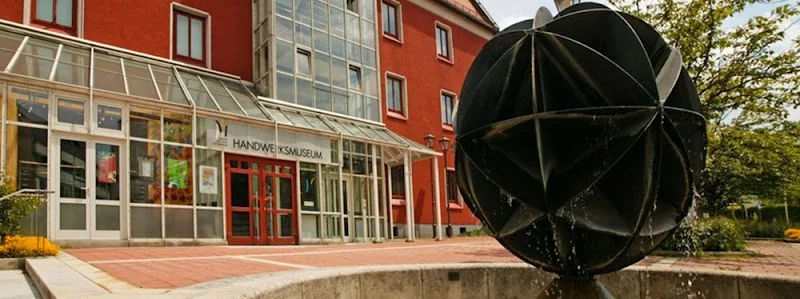
The Craft Museum Deggendorf is a specialized museum in the center of the city that has been showcasing the history of regional and supra-regional crafts since 1991. Those looking for a museum that not only displays objects but also clearly explains the changes in work, education, technology, and everyday culture will find a clear and versatile exhibition here. The museum is located at Maria-Ward-Platz 1, directly in the urban environment, close to the town square and shopping streets. This location makes the visit uncomplicated: the paths are short, orientation is easy, and the museum can be easily combined with a city tour. For many visitors, the Craft Museum is therefore not just a destination for a single afternoon, but a component of a whole cultural walk through Deggendorf.
Particularly striking is the thematic breadth. Eight departments provide an overview of the craft culture of Lower Bavaria and connect historical development with individual professions. The museum not only shows tools, machines, and products but also places them in larger contexts: How did crafts change over time? What role did education and mastery play? Which professions shaped the region? What tasks did women take on in crafts? How did industrialization and mechanization affect them? This perspective creates a museum experience that is exciting for both culturally interested individuals and families, school groups, and day-trippers. In addition, there are special exhibitions, a museum cinema, an educational space, and a cafeteria, so that the visit is not limited to mere viewing but offers space for deepening and breaks.
The official rating of 4.6 stars from 62 reviews also shows that the museum leaves a very good impression on many guests. Those looking for photos, opening hours, prices, or tickets in advance will find the most important information compactly and can plan their visit well. The Craft Museum Deggendorf is thus a place for all who want to experience history not abstractly but vividly and spatially.
Opening Hours, Admission, and Tickets for the Craft Museum Deggendorf
Among the most sought-after topics are opening hours, prices, and tickets, and here the Craft Museum Deggendorf offers clear and reliable information. The museum is open from Tuesday to Saturday from 10:00 AM to 4:00 PM, and on Sundays and public holidays from 10:00 AM to 5:00 PM. It is closed on Mondays. Additionally, there are fixed closing days on Christmas Eve, the first Christmas day, New Year's Eve, and New Year's Day. For groups, a visit is possible by arrangement, which is especially practical for schools, clubs, or organized travel groups. These opening hours are well suited for a museum visit in the morning or early afternoon, but also for a Sunday outing with a bit more time for the exhibitions and the surroundings in the cultural quarter.
When it comes to admission, the museum operates with a transparent pricing system. Adults pay 4.00 euros. Reduced admission costs 2.00 euros; this includes, among others, children from 6 years, teenagers up to 18 years, and other eligible groups such as people in training, retirees, people with disabilities, and individuals receiving certain social benefits. Families with a maximum of two adults and any number of children pay 6.00 euros. For groups of 15 or more, the price per person is also 2.00 euros. There is also an annual pass for 20.00 euros as well as separate tickets for special exhibitions. The special exhibition ticket costs 2.00 euros, reduced 1.00 euro. This makes the museum attractive for repeat visits, especially when new exhibitions or changing themes are presented.
Another plus is the regulation for free admission. Children under 6 years have free access, as do groups from educational institutions without a guided tour by museum staff, members of ICOM or the German Museum Association, press representatives, and people with a volunteer card. Particularly interesting is also Wednesday: then people over 65 years, retirees, and people under 18 years have free admission, provided they show an appropriate ID. This regulation makes a visit during the week additionally attractive and is a strong argument for price-conscious guests. Those looking for tickets for the Craft Museum Deggendorf can therefore distinguish between single tickets, discounts, family tickets, group prices, and special exhibitions and plan their visit according to their own situation.
Guided tours are also part of the offer. A museum tour by museum staff lasts about an hour and is designed for a maximum of 25 people. The price is 50.00 euros. For groups from educational institutions, there are rates starting from 1.00 euro per child, depending on the desired program. This makes the Craft Museum suitable not only for spontaneous visits but also for planned educational offerings. Overall, it shows: Those looking for opening hours, prices, and tickets will find a well-structured and fair visiting logic at the Craft Museum Deggendorf that takes various target groups into account and makes the museum accessible.
The Exhibition at the Craft Museum Deggendorf: Eight Departments with Depth
The exhibition is the heart of the Craft Museum Deggendorf. The house was designed as a specialized museum and showcases the rich craft culture of Lower Bavaria in eight departments. It is not just a mere collection of individual objects, but a narrative exhibition concept that connects profession, technology, social development, and regional peculiarities. The focus is on historical devices, tools, machines, and products that make the changes in work and lifestyles visible. This is precisely what makes the permanent exhibition so exciting for visitors: it not only shows what crafts once were but also how working worlds have changed and what role crafts still play today.
The areas include craft history, museum printing, biographies of craftsmen, education in transition, women in crafts, woodworking in the Bavarian Forest, tanning as a craft by the water, and crafts in the industrial age. This structure is content-wise clever because it makes both individual professions and overarching developments visible. For example, the printing trade clearly illustrates the mechanization of work processes, while the section on tanners shows how strongly some crafts were tied to water, location, and regional conditions. The focus on woodworking explains why the resources of the Bavarian Forest became so important for certain professions. The themes of education, women in crafts, and crafts in the industrial age also make it clear that the museum conveys not only the history of technology but also social history.
A look at the permanent exhibitions also shows that the museum works very consciously with different perspectives. The history of crafts is told in four time periods, making development and upheaval comprehensible. The museum printing brings visitors into the atmosphere of a printing house around 1960. Crafts in the industrial age sheds light on the situation of professions during a time of profound modernization. The biographies of craftsmen make it clear that crafts were often much more than just a profession; they shaped entire life paths. This is precisely where the special appeal of the exhibition lies: it connects factual knowledge with biographical and cultural context.
The museum is also located directly opposite the city museum, making it easy to combine both houses. The exhibition of the Craft Museum ideally complements the cultural offerings of the city because it focuses on a specific part of history. For visitors looking for an expressive exhibition in Deggendorf, the Craft Museum is therefore a very worthwhile destination. It is informative, clearly structured, and at the same time very independent in its regional anchoring.
Access, Parking, and Location in the Center of Deggendorf
The location is one of the great practical advantages of the Craft Museum Deggendorf. The house is located at Maria-Ward-Platz 1 in the middle of the city center. From there, the town square and shopping streets are quickly reachable on foot. For visitors, this means: the museum can be integrated into a stroll through the city center without complicated paths. Especially those who want to connect several stations in Deggendorf benefit from this location in the cultural quarter near the town square. Also, in a regional context, the position is favorable, as Deggendorf lies as a Danube city between Gäuboden and the Bavarian Forest, making it a well-accessible location for day visitors from the surrounding area.
For parking, there is a specific and helpful indication: parking facilities are located in close proximity to the museum in the underground garage with an entrance via the Eastern City Moat. This is particularly important for drivers, as the search for parking spaces in city centers often takes time. Those visiting the museum can therefore expect a relatively short journey and do not have to walk far. This is a real comfort factor, especially for families, older visitors, or groups. The central location also simplifies the combination with other errands or leisure activities in the city. After the museum visit, one can easily continue walking through Deggendorf, visit a café, or continue the tour in the cultural quarter.
The embedding in the cultural offerings of Deggendorf is also remarkable. In the cultural quarter near the town square, several municipal facilities are gathered, including the city library, Kapuzinerstadl, city museum, and the Craft Museum. This creates a small cultural focal point that can be thematically well complemented. Visitors who specifically look for access and parking thus receive not only an address but also a clear visiting context: the museum is centrally located, easily accessible on foot, and offers a direct parking solution with the underground garage. For tourists exploring the district or the city of Deggendorf, this is a clear plus.
Those who prefer public transport, cycling, or a walk through the city also find a pleasant starting point, as the museum is so centrally located that it can be well planned in many forms of visit. The official location description particularly highlights this walkability. This makes the house attractive not only for individual visitors but also for small groups who want to combine several program points. Overall, the Craft Museum Deggendorf is an example of how a good city center location and sensible infrastructure can significantly facilitate a museum visit.
Accessibility, Museum Cinema, Cafeteria, and Offers for Groups
The Craft Museum Deggendorf explicitly sees itself as an open house for as many visitor groups as possible. On the official website, the museum emphasizes that it wants to be open to all people. It is a member of the Inclusive Museums Network and has been certified as a barrier-friendly facility by Reisen für Alle. Additionally, the museum is described as accessible on regional information pages. For guests, this is an important signal, as accessibility means not only access but also planning, orientation, and a good visiting experience. Those traveling with mobility restrictions or with a group can better classify and prepare for the museum visit.
Practical offerings include a museum cinema with films about crafts, an educational space, and a museum cafeteria. This infrastructure distinguishes the house from a mere display collection. The museum cinema deepens individual craft professions and thus complements the exhibition rooms with moving images and additional information. The educational space, in turn, is a good place for workshops, school programs, or children's birthdays. The fact that the museum's educational offerings are explicitly highlighted shows that here not only pure viewing is possible, but also active learning and participation. The cafeteria also offers the opportunity to take a break during the visit, which is especially valuable for families, seniors, or longer exhibition tours.
The offer is also well prepared for groups. Guided tours by museum staff are possible, last about an hour, and are designed for a maximum of 25 people. For educational institutions, there are tiered prices starting from 1.00 euro per child, depending on the program. This makes the museum particularly interesting for schools and other learning contexts. In addition, there is a focus on changing special exhibitions on historical craft topics and modern handicrafts. A special emphasis is placed on the large international competition for crafts and design, which takes place every three years. Thus, the museum possesses not only historical but also current relevance.
The spatial facilities and the educational orientation together create a clear profile: the Craft Museum Deggendorf is a place for learning, discovering, and lingering. It is not only intended for experts in craft history but also for families, school classes, culture-interested travelers, and visitors looking for a barrier-friendly museum in the center of Deggendorf. This combination of content depth and practical accessibility defines the character of the house.
Photos, Reviews, and the Visitor Experience at the Craft Museum Deggendorf
Many visitors search in advance for photos and reviews to get an impression of the Craft Museum Deggendorf. This is understandable, as a museum with craft history strongly lives from its atmosphere, from the exhibition objects, and from the question of how vividly the contents are presented. The available information shows a house that works with historical devices, tools, machines, products, and thematically clearly structured departments. This often speaks for a visit, as it allows for a good impression of the exhibition quality without a long lead time. The official rating of 4.6 stars from 62 reviews further confirms this positive impression. For many guests, this is a sign that the exhibition, location, and service are convincing.
Those looking for photos will likely find the mix of historical working worlds, images of the individual departments, and the special exhibitions particularly interesting. The permanent exhibitions such as museum printing, woodworking in the Bavarian Forest, or crafts in the industrial age offer many visual touchpoints as they show very concrete professional and material environments. The focus on the biographies of craftsmen and on education in transition also makes the museum appealing for visual impressions, as here objects and biographies are thought together. The museum is thus not only informative but also vivid enough to spark curiosity in advance and remain memorable after the visit.
The reviews can be understood in this context as an expression of an overall very rounded visitor experience. A central, easily accessible house, fair prices, clear opening hours, barrier-friendly access, additional offerings such as museum cinema and cafeteria, as well as a strong content structure: these are factors that often contribute to good ratings. The opportunity to visit special exhibitions and events also enhances attractiveness. Those planning a visit to the Craft Museum Deggendorf should therefore not only look for tickets but also for current exhibitions, as the museum thrives on its mix of permanence and change.
In the end, there is a place to visit that works well for different expectations. Those looking for pure information about opening hours and prices can quickly find it. Those seeking an exhibition with historical depth will find it in eight departments. Those visiting with family or groups will find clear conditions and educational offerings. Those viewing photos and reviews see a museum that leaves a strong impression on many guests. This is precisely why the Craft Museum Deggendorf remains relevant both as a search term and as a real excursion destination: it convincingly connects history, city location, accessibility, and vibrant exhibition culture.
Sources:
Show moreShow less
Craft Museum Deggendorf | Opening Hours & Prices
The Craft Museum Deggendorf is a specialized museum in the center of the city that has been showcasing the history of regional and supra-regional crafts since 1991. Those looking for a museum that not only displays objects but also clearly explains the changes in work, education, technology, and everyday culture will find a clear and versatile exhibition here. The museum is located at Maria-Ward-Platz 1, directly in the urban environment, close to the town square and shopping streets. This location makes the visit uncomplicated: the paths are short, orientation is easy, and the museum can be easily combined with a city tour. For many visitors, the Craft Museum is therefore not just a destination for a single afternoon, but a component of a whole cultural walk through Deggendorf.
Particularly striking is the thematic breadth. Eight departments provide an overview of the craft culture of Lower Bavaria and connect historical development with individual professions. The museum not only shows tools, machines, and products but also places them in larger contexts: How did crafts change over time? What role did education and mastery play? Which professions shaped the region? What tasks did women take on in crafts? How did industrialization and mechanization affect them? This perspective creates a museum experience that is exciting for both culturally interested individuals and families, school groups, and day-trippers. In addition, there are special exhibitions, a museum cinema, an educational space, and a cafeteria, so that the visit is not limited to mere viewing but offers space for deepening and breaks.
The official rating of 4.6 stars from 62 reviews also shows that the museum leaves a very good impression on many guests. Those looking for photos, opening hours, prices, or tickets in advance will find the most important information compactly and can plan their visit well. The Craft Museum Deggendorf is thus a place for all who want to experience history not abstractly but vividly and spatially.
Opening Hours, Admission, and Tickets for the Craft Museum Deggendorf
Among the most sought-after topics are opening hours, prices, and tickets, and here the Craft Museum Deggendorf offers clear and reliable information. The museum is open from Tuesday to Saturday from 10:00 AM to 4:00 PM, and on Sundays and public holidays from 10:00 AM to 5:00 PM. It is closed on Mondays. Additionally, there are fixed closing days on Christmas Eve, the first Christmas day, New Year's Eve, and New Year's Day. For groups, a visit is possible by arrangement, which is especially practical for schools, clubs, or organized travel groups. These opening hours are well suited for a museum visit in the morning or early afternoon, but also for a Sunday outing with a bit more time for the exhibitions and the surroundings in the cultural quarter.
When it comes to admission, the museum operates with a transparent pricing system. Adults pay 4.00 euros. Reduced admission costs 2.00 euros; this includes, among others, children from 6 years, teenagers up to 18 years, and other eligible groups such as people in training, retirees, people with disabilities, and individuals receiving certain social benefits. Families with a maximum of two adults and any number of children pay 6.00 euros. For groups of 15 or more, the price per person is also 2.00 euros. There is also an annual pass for 20.00 euros as well as separate tickets for special exhibitions. The special exhibition ticket costs 2.00 euros, reduced 1.00 euro. This makes the museum attractive for repeat visits, especially when new exhibitions or changing themes are presented.
Another plus is the regulation for free admission. Children under 6 years have free access, as do groups from educational institutions without a guided tour by museum staff, members of ICOM or the German Museum Association, press representatives, and people with a volunteer card. Particularly interesting is also Wednesday: then people over 65 years, retirees, and people under 18 years have free admission, provided they show an appropriate ID. This regulation makes a visit during the week additionally attractive and is a strong argument for price-conscious guests. Those looking for tickets for the Craft Museum Deggendorf can therefore distinguish between single tickets, discounts, family tickets, group prices, and special exhibitions and plan their visit according to their own situation.
Guided tours are also part of the offer. A museum tour by museum staff lasts about an hour and is designed for a maximum of 25 people. The price is 50.00 euros. For groups from educational institutions, there are rates starting from 1.00 euro per child, depending on the desired program. This makes the Craft Museum suitable not only for spontaneous visits but also for planned educational offerings. Overall, it shows: Those looking for opening hours, prices, and tickets will find a well-structured and fair visiting logic at the Craft Museum Deggendorf that takes various target groups into account and makes the museum accessible.
The Exhibition at the Craft Museum Deggendorf: Eight Departments with Depth
The exhibition is the heart of the Craft Museum Deggendorf. The house was designed as a specialized museum and showcases the rich craft culture of Lower Bavaria in eight departments. It is not just a mere collection of individual objects, but a narrative exhibition concept that connects profession, technology, social development, and regional peculiarities. The focus is on historical devices, tools, machines, and products that make the changes in work and lifestyles visible. This is precisely what makes the permanent exhibition so exciting for visitors: it not only shows what crafts once were but also how working worlds have changed and what role crafts still play today.
The areas include craft history, museum printing, biographies of craftsmen, education in transition, women in crafts, woodworking in the Bavarian Forest, tanning as a craft by the water, and crafts in the industrial age. This structure is content-wise clever because it makes both individual professions and overarching developments visible. For example, the printing trade clearly illustrates the mechanization of work processes, while the section on tanners shows how strongly some crafts were tied to water, location, and regional conditions. The focus on woodworking explains why the resources of the Bavarian Forest became so important for certain professions. The themes of education, women in crafts, and crafts in the industrial age also make it clear that the museum conveys not only the history of technology but also social history.
A look at the permanent exhibitions also shows that the museum works very consciously with different perspectives. The history of crafts is told in four time periods, making development and upheaval comprehensible. The museum printing brings visitors into the atmosphere of a printing house around 1960. Crafts in the industrial age sheds light on the situation of professions during a time of profound modernization. The biographies of craftsmen make it clear that crafts were often much more than just a profession; they shaped entire life paths. This is precisely where the special appeal of the exhibition lies: it connects factual knowledge with biographical and cultural context.
The museum is also located directly opposite the city museum, making it easy to combine both houses. The exhibition of the Craft Museum ideally complements the cultural offerings of the city because it focuses on a specific part of history. For visitors looking for an expressive exhibition in Deggendorf, the Craft Museum is therefore a very worthwhile destination. It is informative, clearly structured, and at the same time very independent in its regional anchoring.
Access, Parking, and Location in the Center of Deggendorf
The location is one of the great practical advantages of the Craft Museum Deggendorf. The house is located at Maria-Ward-Platz 1 in the middle of the city center. From there, the town square and shopping streets are quickly reachable on foot. For visitors, this means: the museum can be integrated into a stroll through the city center without complicated paths. Especially those who want to connect several stations in Deggendorf benefit from this location in the cultural quarter near the town square. Also, in a regional context, the position is favorable, as Deggendorf lies as a Danube city between Gäuboden and the Bavarian Forest, making it a well-accessible location for day visitors from the surrounding area.
For parking, there is a specific and helpful indication: parking facilities are located in close proximity to the museum in the underground garage with an entrance via the Eastern City Moat. This is particularly important for drivers, as the search for parking spaces in city centers often takes time. Those visiting the museum can therefore expect a relatively short journey and do not have to walk far. This is a real comfort factor, especially for families, older visitors, or groups. The central location also simplifies the combination with other errands or leisure activities in the city. After the museum visit, one can easily continue walking through Deggendorf, visit a café, or continue the tour in the cultural quarter.
The embedding in the cultural offerings of Deggendorf is also remarkable. In the cultural quarter near the town square, several municipal facilities are gathered, including the city library, Kapuzinerstadl, city museum, and the Craft Museum. This creates a small cultural focal point that can be thematically well complemented. Visitors who specifically look for access and parking thus receive not only an address but also a clear visiting context: the museum is centrally located, easily accessible on foot, and offers a direct parking solution with the underground garage. For tourists exploring the district or the city of Deggendorf, this is a clear plus.
Those who prefer public transport, cycling, or a walk through the city also find a pleasant starting point, as the museum is so centrally located that it can be well planned in many forms of visit. The official location description particularly highlights this walkability. This makes the house attractive not only for individual visitors but also for small groups who want to combine several program points. Overall, the Craft Museum Deggendorf is an example of how a good city center location and sensible infrastructure can significantly facilitate a museum visit.
Accessibility, Museum Cinema, Cafeteria, and Offers for Groups
The Craft Museum Deggendorf explicitly sees itself as an open house for as many visitor groups as possible. On the official website, the museum emphasizes that it wants to be open to all people. It is a member of the Inclusive Museums Network and has been certified as a barrier-friendly facility by Reisen für Alle. Additionally, the museum is described as accessible on regional information pages. For guests, this is an important signal, as accessibility means not only access but also planning, orientation, and a good visiting experience. Those traveling with mobility restrictions or with a group can better classify and prepare for the museum visit.
Practical offerings include a museum cinema with films about crafts, an educational space, and a museum cafeteria. This infrastructure distinguishes the house from a mere display collection. The museum cinema deepens individual craft professions and thus complements the exhibition rooms with moving images and additional information. The educational space, in turn, is a good place for workshops, school programs, or children's birthdays. The fact that the museum's educational offerings are explicitly highlighted shows that here not only pure viewing is possible, but also active learning and participation. The cafeteria also offers the opportunity to take a break during the visit, which is especially valuable for families, seniors, or longer exhibition tours.
The offer is also well prepared for groups. Guided tours by museum staff are possible, last about an hour, and are designed for a maximum of 25 people. For educational institutions, there are tiered prices starting from 1.00 euro per child, depending on the program. This makes the museum particularly interesting for schools and other learning contexts. In addition, there is a focus on changing special exhibitions on historical craft topics and modern handicrafts. A special emphasis is placed on the large international competition for crafts and design, which takes place every three years. Thus, the museum possesses not only historical but also current relevance.
The spatial facilities and the educational orientation together create a clear profile: the Craft Museum Deggendorf is a place for learning, discovering, and lingering. It is not only intended for experts in craft history but also for families, school classes, culture-interested travelers, and visitors looking for a barrier-friendly museum in the center of Deggendorf. This combination of content depth and practical accessibility defines the character of the house.
Photos, Reviews, and the Visitor Experience at the Craft Museum Deggendorf
Many visitors search in advance for photos and reviews to get an impression of the Craft Museum Deggendorf. This is understandable, as a museum with craft history strongly lives from its atmosphere, from the exhibition objects, and from the question of how vividly the contents are presented. The available information shows a house that works with historical devices, tools, machines, products, and thematically clearly structured departments. This often speaks for a visit, as it allows for a good impression of the exhibition quality without a long lead time. The official rating of 4.6 stars from 62 reviews further confirms this positive impression. For many guests, this is a sign that the exhibition, location, and service are convincing.
Those looking for photos will likely find the mix of historical working worlds, images of the individual departments, and the special exhibitions particularly interesting. The permanent exhibitions such as museum printing, woodworking in the Bavarian Forest, or crafts in the industrial age offer many visual touchpoints as they show very concrete professional and material environments. The focus on the biographies of craftsmen and on education in transition also makes the museum appealing for visual impressions, as here objects and biographies are thought together. The museum is thus not only informative but also vivid enough to spark curiosity in advance and remain memorable after the visit.
The reviews can be understood in this context as an expression of an overall very rounded visitor experience. A central, easily accessible house, fair prices, clear opening hours, barrier-friendly access, additional offerings such as museum cinema and cafeteria, as well as a strong content structure: these are factors that often contribute to good ratings. The opportunity to visit special exhibitions and events also enhances attractiveness. Those planning a visit to the Craft Museum Deggendorf should therefore not only look for tickets but also for current exhibitions, as the museum thrives on its mix of permanence and change.
In the end, there is a place to visit that works well for different expectations. Those looking for pure information about opening hours and prices can quickly find it. Those seeking an exhibition with historical depth will find it in eight departments. Those visiting with family or groups will find clear conditions and educational offerings. Those viewing photos and reviews see a museum that leaves a strong impression on many guests. This is precisely why the Craft Museum Deggendorf remains relevant both as a search term and as a real excursion destination: it convincingly connects history, city location, accessibility, and vibrant exhibition culture.
Sources:
Craft Museum Deggendorf | Opening Hours & Prices
The Craft Museum Deggendorf is a specialized museum in the center of the city that has been showcasing the history of regional and supra-regional crafts since 1991. Those looking for a museum that not only displays objects but also clearly explains the changes in work, education, technology, and everyday culture will find a clear and versatile exhibition here. The museum is located at Maria-Ward-Platz 1, directly in the urban environment, close to the town square and shopping streets. This location makes the visit uncomplicated: the paths are short, orientation is easy, and the museum can be easily combined with a city tour. For many visitors, the Craft Museum is therefore not just a destination for a single afternoon, but a component of a whole cultural walk through Deggendorf.
Particularly striking is the thematic breadth. Eight departments provide an overview of the craft culture of Lower Bavaria and connect historical development with individual professions. The museum not only shows tools, machines, and products but also places them in larger contexts: How did crafts change over time? What role did education and mastery play? Which professions shaped the region? What tasks did women take on in crafts? How did industrialization and mechanization affect them? This perspective creates a museum experience that is exciting for both culturally interested individuals and families, school groups, and day-trippers. In addition, there are special exhibitions, a museum cinema, an educational space, and a cafeteria, so that the visit is not limited to mere viewing but offers space for deepening and breaks.
The official rating of 4.6 stars from 62 reviews also shows that the museum leaves a very good impression on many guests. Those looking for photos, opening hours, prices, or tickets in advance will find the most important information compactly and can plan their visit well. The Craft Museum Deggendorf is thus a place for all who want to experience history not abstractly but vividly and spatially.
Opening Hours, Admission, and Tickets for the Craft Museum Deggendorf
Among the most sought-after topics are opening hours, prices, and tickets, and here the Craft Museum Deggendorf offers clear and reliable information. The museum is open from Tuesday to Saturday from 10:00 AM to 4:00 PM, and on Sundays and public holidays from 10:00 AM to 5:00 PM. It is closed on Mondays. Additionally, there are fixed closing days on Christmas Eve, the first Christmas day, New Year's Eve, and New Year's Day. For groups, a visit is possible by arrangement, which is especially practical for schools, clubs, or organized travel groups. These opening hours are well suited for a museum visit in the morning or early afternoon, but also for a Sunday outing with a bit more time for the exhibitions and the surroundings in the cultural quarter.
When it comes to admission, the museum operates with a transparent pricing system. Adults pay 4.00 euros. Reduced admission costs 2.00 euros; this includes, among others, children from 6 years, teenagers up to 18 years, and other eligible groups such as people in training, retirees, people with disabilities, and individuals receiving certain social benefits. Families with a maximum of two adults and any number of children pay 6.00 euros. For groups of 15 or more, the price per person is also 2.00 euros. There is also an annual pass for 20.00 euros as well as separate tickets for special exhibitions. The special exhibition ticket costs 2.00 euros, reduced 1.00 euro. This makes the museum attractive for repeat visits, especially when new exhibitions or changing themes are presented.
Another plus is the regulation for free admission. Children under 6 years have free access, as do groups from educational institutions without a guided tour by museum staff, members of ICOM or the German Museum Association, press representatives, and people with a volunteer card. Particularly interesting is also Wednesday: then people over 65 years, retirees, and people under 18 years have free admission, provided they show an appropriate ID. This regulation makes a visit during the week additionally attractive and is a strong argument for price-conscious guests. Those looking for tickets for the Craft Museum Deggendorf can therefore distinguish between single tickets, discounts, family tickets, group prices, and special exhibitions and plan their visit according to their own situation.
Guided tours are also part of the offer. A museum tour by museum staff lasts about an hour and is designed for a maximum of 25 people. The price is 50.00 euros. For groups from educational institutions, there are rates starting from 1.00 euro per child, depending on the desired program. This makes the Craft Museum suitable not only for spontaneous visits but also for planned educational offerings. Overall, it shows: Those looking for opening hours, prices, and tickets will find a well-structured and fair visiting logic at the Craft Museum Deggendorf that takes various target groups into account and makes the museum accessible.
The Exhibition at the Craft Museum Deggendorf: Eight Departments with Depth
The exhibition is the heart of the Craft Museum Deggendorf. The house was designed as a specialized museum and showcases the rich craft culture of Lower Bavaria in eight departments. It is not just a mere collection of individual objects, but a narrative exhibition concept that connects profession, technology, social development, and regional peculiarities. The focus is on historical devices, tools, machines, and products that make the changes in work and lifestyles visible. This is precisely what makes the permanent exhibition so exciting for visitors: it not only shows what crafts once were but also how working worlds have changed and what role crafts still play today.
The areas include craft history, museum printing, biographies of craftsmen, education in transition, women in crafts, woodworking in the Bavarian Forest, tanning as a craft by the water, and crafts in the industrial age. This structure is content-wise clever because it makes both individual professions and overarching developments visible. For example, the printing trade clearly illustrates the mechanization of work processes, while the section on tanners shows how strongly some crafts were tied to water, location, and regional conditions. The focus on woodworking explains why the resources of the Bavarian Forest became so important for certain professions. The themes of education, women in crafts, and crafts in the industrial age also make it clear that the museum conveys not only the history of technology but also social history.
A look at the permanent exhibitions also shows that the museum works very consciously with different perspectives. The history of crafts is told in four time periods, making development and upheaval comprehensible. The museum printing brings visitors into the atmosphere of a printing house around 1960. Crafts in the industrial age sheds light on the situation of professions during a time of profound modernization. The biographies of craftsmen make it clear that crafts were often much more than just a profession; they shaped entire life paths. This is precisely where the special appeal of the exhibition lies: it connects factual knowledge with biographical and cultural context.
The museum is also located directly opposite the city museum, making it easy to combine both houses. The exhibition of the Craft Museum ideally complements the cultural offerings of the city because it focuses on a specific part of history. For visitors looking for an expressive exhibition in Deggendorf, the Craft Museum is therefore a very worthwhile destination. It is informative, clearly structured, and at the same time very independent in its regional anchoring.
Access, Parking, and Location in the Center of Deggendorf
The location is one of the great practical advantages of the Craft Museum Deggendorf. The house is located at Maria-Ward-Platz 1 in the middle of the city center. From there, the town square and shopping streets are quickly reachable on foot. For visitors, this means: the museum can be integrated into a stroll through the city center without complicated paths. Especially those who want to connect several stations in Deggendorf benefit from this location in the cultural quarter near the town square. Also, in a regional context, the position is favorable, as Deggendorf lies as a Danube city between Gäuboden and the Bavarian Forest, making it a well-accessible location for day visitors from the surrounding area.
For parking, there is a specific and helpful indication: parking facilities are located in close proximity to the museum in the underground garage with an entrance via the Eastern City Moat. This is particularly important for drivers, as the search for parking spaces in city centers often takes time. Those visiting the museum can therefore expect a relatively short journey and do not have to walk far. This is a real comfort factor, especially for families, older visitors, or groups. The central location also simplifies the combination with other errands or leisure activities in the city. After the museum visit, one can easily continue walking through Deggendorf, visit a café, or continue the tour in the cultural quarter.
The embedding in the cultural offerings of Deggendorf is also remarkable. In the cultural quarter near the town square, several municipal facilities are gathered, including the city library, Kapuzinerstadl, city museum, and the Craft Museum. This creates a small cultural focal point that can be thematically well complemented. Visitors who specifically look for access and parking thus receive not only an address but also a clear visiting context: the museum is centrally located, easily accessible on foot, and offers a direct parking solution with the underground garage. For tourists exploring the district or the city of Deggendorf, this is a clear plus.
Those who prefer public transport, cycling, or a walk through the city also find a pleasant starting point, as the museum is so centrally located that it can be well planned in many forms of visit. The official location description particularly highlights this walkability. This makes the house attractive not only for individual visitors but also for small groups who want to combine several program points. Overall, the Craft Museum Deggendorf is an example of how a good city center location and sensible infrastructure can significantly facilitate a museum visit.
Accessibility, Museum Cinema, Cafeteria, and Offers for Groups
The Craft Museum Deggendorf explicitly sees itself as an open house for as many visitor groups as possible. On the official website, the museum emphasizes that it wants to be open to all people. It is a member of the Inclusive Museums Network and has been certified as a barrier-friendly facility by Reisen für Alle. Additionally, the museum is described as accessible on regional information pages. For guests, this is an important signal, as accessibility means not only access but also planning, orientation, and a good visiting experience. Those traveling with mobility restrictions or with a group can better classify and prepare for the museum visit.
Practical offerings include a museum cinema with films about crafts, an educational space, and a museum cafeteria. This infrastructure distinguishes the house from a mere display collection. The museum cinema deepens individual craft professions and thus complements the exhibition rooms with moving images and additional information. The educational space, in turn, is a good place for workshops, school programs, or children's birthdays. The fact that the museum's educational offerings are explicitly highlighted shows that here not only pure viewing is possible, but also active learning and participation. The cafeteria also offers the opportunity to take a break during the visit, which is especially valuable for families, seniors, or longer exhibition tours.
The offer is also well prepared for groups. Guided tours by museum staff are possible, last about an hour, and are designed for a maximum of 25 people. For educational institutions, there are tiered prices starting from 1.00 euro per child, depending on the program. This makes the museum particularly interesting for schools and other learning contexts. In addition, there is a focus on changing special exhibitions on historical craft topics and modern handicrafts. A special emphasis is placed on the large international competition for crafts and design, which takes place every three years. Thus, the museum possesses not only historical but also current relevance.
The spatial facilities and the educational orientation together create a clear profile: the Craft Museum Deggendorf is a place for learning, discovering, and lingering. It is not only intended for experts in craft history but also for families, school classes, culture-interested travelers, and visitors looking for a barrier-friendly museum in the center of Deggendorf. This combination of content depth and practical accessibility defines the character of the house.
Photos, Reviews, and the Visitor Experience at the Craft Museum Deggendorf
Many visitors search in advance for photos and reviews to get an impression of the Craft Museum Deggendorf. This is understandable, as a museum with craft history strongly lives from its atmosphere, from the exhibition objects, and from the question of how vividly the contents are presented. The available information shows a house that works with historical devices, tools, machines, products, and thematically clearly structured departments. This often speaks for a visit, as it allows for a good impression of the exhibition quality without a long lead time. The official rating of 4.6 stars from 62 reviews further confirms this positive impression. For many guests, this is a sign that the exhibition, location, and service are convincing.
Those looking for photos will likely find the mix of historical working worlds, images of the individual departments, and the special exhibitions particularly interesting. The permanent exhibitions such as museum printing, woodworking in the Bavarian Forest, or crafts in the industrial age offer many visual touchpoints as they show very concrete professional and material environments. The focus on the biographies of craftsmen and on education in transition also makes the museum appealing for visual impressions, as here objects and biographies are thought together. The museum is thus not only informative but also vivid enough to spark curiosity in advance and remain memorable after the visit.
The reviews can be understood in this context as an expression of an overall very rounded visitor experience. A central, easily accessible house, fair prices, clear opening hours, barrier-friendly access, additional offerings such as museum cinema and cafeteria, as well as a strong content structure: these are factors that often contribute to good ratings. The opportunity to visit special exhibitions and events also enhances attractiveness. Those planning a visit to the Craft Museum Deggendorf should therefore not only look for tickets but also for current exhibitions, as the museum thrives on its mix of permanence and change.
In the end, there is a place to visit that works well for different expectations. Those looking for pure information about opening hours and prices can quickly find it. Those seeking an exhibition with historical depth will find it in eight departments. Those visiting with family or groups will find clear conditions and educational offerings. Those viewing photos and reviews see a museum that leaves a strong impression on many guests. This is precisely why the Craft Museum Deggendorf remains relevant both as a search term and as a real excursion destination: it convincingly connects history, city location, accessibility, and vibrant exhibition culture.
Sources:
Upcoming Events
No events found
Frequently Asked Questions
Reviews
Ceren Ak
1. February 2022
It was so beautiful
Philipp Küthe
20. July 2018
I like this place :)
Monika Drechsler
15. November 2025
Hat uns sehr gut gefallen.
Matze
31. August 2025
Very nice museum. Nice lady at the info desk. Great for both big and small!
Mischi Ha
3. October 2025
The gentleman at the ticket counter kindly invited us in and was very helpful. With the volunteer card, we even had free entry.