
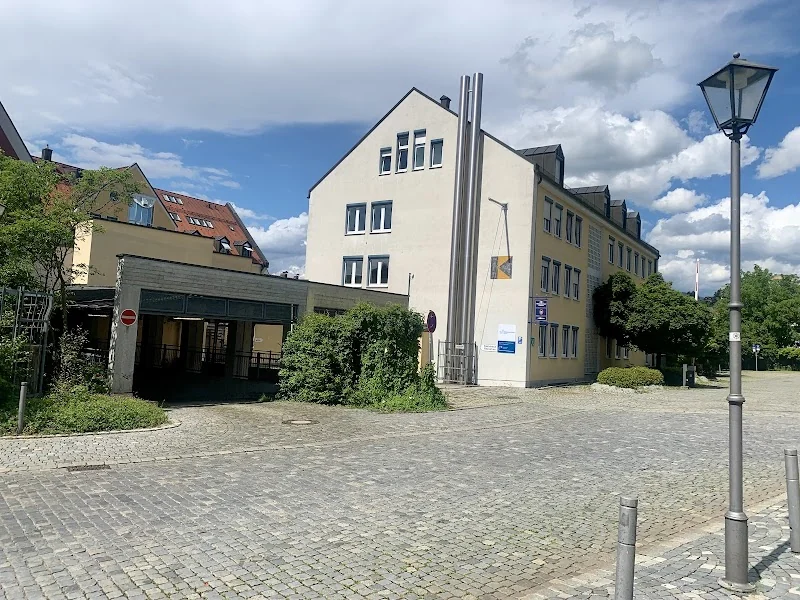
Deggendorf
Maria-Ward-Platz 10, 94469 Deggendorf-Oberperlasberg, Deutschland
Kapuzinerstadl Deggendorf | Events & Program 2026
The Kapuzinerstadl Deggendorf is one of the most exciting cultural addresses in Lower Bavaria, as history and the present meet directly here. The location was originally the church of the former Deggendorf Capuchin monastery and is now used as a cultural house, small arts stage, concert hall, and exhibition venue. Those who visit the Kapuzinerstadl experience not an interchangeable event space, but a place with character, open to regional art as well as international guests. This mix makes the Kapuzinerstadl highly relevant for events, program research, and spontaneous cultural evenings. Due to its central location in Deggendorf, good accessibility, and clearly structured event calendar, the Kapuzinerstadl is interesting not only for visitors but also for organizers looking for a special setting. ([deggendorf.de](https://www.deggendorf.de/kunst-und-kultur/kultureinrichtungen/kapuzinerstadl))
Events, Program, and Calendar 2026
Those looking for the Kapuzinerstadl Deggendorf program will find themselves directly on the official pages of the Deggendorf City Halls today. There, the dates are continuously maintained, and there are separate overviews for the Kapuzinerstadl for 2026 and 2027. This is practical for anyone who wants not just to check individual dates but needs a quick overview of the entire season. The Kapuzinerstadl is deliberately broad in its offerings: The official description lists art exhibitions, concerts, cabaret, conferences, symposia, and small congresses as regular uses. This breadth ensures that the venue cannot be reduced to a single genre. Instead, culture, stage performances, discussion formats, and exhibitions alternate meaningfully in the calendar, aligning well with search intentions behind terms like events, program, and today. ([deggendorfer-stadthallen.de](https://www.deggendorfer-stadthallen.de/veranstaltungen-kapuzinerstadl.html))
A look at the program for 2026 shows how diverse the event space is actually used. The official event page lists exhibitions such as EVERYTHING COLOR - TEN PERSPECTIVES, Everyday Moments - Images and Sculptures by Birgit Stern and Kathi Ringlstetter, or Robert Weber and Friends. In addition, there are concerts and stage evenings like Voodoo Jürgens - New Date/New Location, Rena Schwarz - Princess is also not a Dream Job, Maxjoseph - NAU, Gloria Gray 6.0 & Band, Pavel Steidl - Guitarist, and ChillOut with Silverweed. This selection already shows that the Kapuzinerstadl is not only for classical music or only for pop, but appeals to a mixed audience. Those searching for the term Kapuzinerstadl today usually want to experience exactly this mix of relevance, overview, and culture. ([deggendorfer-stadthallen.de](https://www.deggendorfer-stadthallen.de/index.php?nr=4&unnr=119&utm_source=openai))
For practical use, this means: The program is not only available statically as an annual list but is also supplemented through individual event pages with start times, admission, durations, and sometimes multiple dates. This is particularly helpful for exhibitions, as specific opening days are often mentioned, such as daily or only on weekends. Thus, the Kapuzinerstadl becomes a very clear information source for the search queries program, events 2026, and today. So, anyone planning a spontaneous cultural appointment, a specific exhibition, or a concert evening in Deggendorf will find the official calendar the best entry point. ([deggendorfer-stadthallen.de](https://www.deggendorfer-stadthallen.de/index.php?nr=4&unnr=119&utm_source=openai))
Opening Hours, Tickets, and Booking
When it comes to the keyword Kapuzinerstadl Deggendorf opening hours, it is important to distinguish: For the venue as an event location, there are no universally valid standard hours like in a museum with fixed daily opening hours. The Deggendorf City Halls explicitly note on their contact page that dates are available upon request. This means that events usually take place according to individual planning, booking, or in connection with the respective calendar. For visitors, therefore, it is not a general time that is crucial, but the specific event with its own times. This principle is particularly evident in exhibitions, as the respective event pages list the opening hours separately and very precisely, for example, Tuesdays to Fridays and on weekends or holidays with varying time slots. ([deggendorfer-stadthallen.de](https://www.deggendorfer-stadthallen.de/kontakt.html))
Also, regarding tickets and booking, the Kapuzinerstadl is very event-oriented. On the official pages, individual dates appear with notes like free admission, ticket prices, or direct links to further information. This means: The ticket purchase and reservation primarily depend on the respective format, whether it is an exhibition, a concert, or a cabaret evening. Those needing seats should also pay attention to the seating plan for the upper floor, which is provided. This allows for better planning of events, for example, if one wants to sit next to friends, choose a specific area, or prepare for a row seating arrangement. Additionally, the contact details of the Deggendorf City Halls GmbH are available for practical inquiries, including phone, email, and a dedicated contact form. ([deggendorfer-stadthallen.de](https://www.deggendorfer-stadthallen.de/index.php?nr=9))
This structure is pleasant for visitors because it does not create unnecessary complexity. Instead of general mass information, the relevant details are directly where they are needed: at the event, in the calendar, or at the contact point. Therefore, anyone looking for tickets should always open the specific event, as there you will find the start time, duration, admission, and additional notes. Those asking about opening hours should first check the individual date for exhibitions and for private or closed formats, submit inquiries through the City Halls. This combination of individual booking and clear event details makes the Kapuzinerstadl particularly clear for users who prefer reliable information. ([deggendorfer-stadthallen.de](https://www.deggendorfer-stadthallen.de/index.php?nr=4&unnr=119&utm_source=openai))
Directions and Parking at Kapuzinerstadl
The journey to the Kapuzinerstadl Deggendorf is uncomplicated thanks to its central location. According to the official directions page, visitors can reach the City Halls via the A3 Nuremberg - Passau and the A92 Munich - Deggendorf. After the Deggendorf Mitte exit, they simply follow the signs. The location is also well connected for train travelers, as the Deggendorf train station is centrally located and can be reached from the City Halls in about 15 minutes on foot. For many visitors, this combination of highway access, city center location, and good pedestrian connection is an important reason to choose the Kapuzinerstadl for events or exhibitions. ([deggendorfer-stadthallen.de](https://www.deggendorfer-stadthallen.de/anfahrt.html))
Parking is also clearly described: The parking garage Stadthalle is available directly across the street, and from there, an underpass leads directly to the main entrance. This is particularly pleasant in rain or winter, as you arrive dry at the event location. At the same time, the official page points out that there may be longer waiting and exit times in the parking garage and surrounding parking lots during large events. Therefore, anyone attending an evening event should plan a buffer. For visitors with tight travel schedules, this is valuable, as it means they do not have to search for a parking space on-site but know the situation in advance. ([deggendorfer-stadthallen.de](https://www.deggendorfer-stadthallen.de/anfahrt.html))
For the search intentions parking and directions, this is a very solid information base. It is especially important that the Kapuzinerstadl is not located on the edge of the city but right in the center and directly next to a park. This location additionally simplifies orientation. Those arriving by car should follow the signs; those coming by train can calculate the walking distance well; and those parking can use the opposite parking garage with an underpass. This creates a visitor flow that remains robust even on busy days. Especially for concerts or exhibitions with many guests, this clear infrastructure is a real advantage. ([deggendorfer-stadthallen.de](https://www.deggendorfer-stadthallen.de/anfahrt.html))
History and Special Atmosphere
The history of the Kapuzinerstadl is closely linked to the religious and urban past of Deggendorf. The current cultural venue was originally the church of the former Deggendorf Capuchin monastery. The tourism page also describes that the Kapuzinerstadl was opened in November 1990 under the motto House of Culture for All. This transformed a historic monastery church into an open event space for the city. This development explains very well why the place radiates so much identity today: One does not enter a neutral hall, but a space that looks back on a long history and is simultaneously being newly utilized for the present. ([deggendorf.de](https://www.deggendorf.de/kunst-und-kultur/kultureinrichtungen/kapuzinerstadl))
The official city page describes the Kapuzinerstadl today as a cultural house, small arts stage, and concert hall for international artists, but also as an exhibition space for artists from the region. This is exactly what makes the atmosphere so special. On one side, there is the historical framework of the former monastery, and on the other side, the modern use as a flexible event venue. The Deggendorf City Halls also state that the location has developed into one of the most important institutions for art exhibitions, concerts, cabaret, conferences, symposia, and small congresses in recent decades. For visitors, this means: The place combines cultural tradition with a program that is deliberately open and versatile. ([deggendorf.de](https://www.deggendorf.de/kunst-und-kultur/kultureinrichtungen/kapuzinerstadl))
For the city, the Kapuzinerstadl is more than just an address in the calendar. The city of Deggendorf supports regional artists and cultural creators through funding applications for events at the Kapuzinerstadl. This shows that the place functions not only as an event hall but also as a cultural impulse generator. Therefore, those coming here for an exhibition or concert often experience a direct connection to the regional scene. The special effect arises from the mix of historic building, contemporary use, and artistic openness. This combination shapes the reputation of the Kapuzinerstadl and explains why the location repeatedly plays a role in search queries about history, special features, and photos. ([deggendorf.de](https://www.deggendorf.de/kunst-und-kultur/kultureinrichtungen/kapuzinerstadl))
Rooms, Capacity, and Technical Equipment
The Kapuzinerstadl Deggendorf is deliberately designed as a location with two very different rooms. According to the City Halls, there is an upper floor with barrel vaulting and a ground floor with unplastered masonry. Depending on the event and number of visitors, one can choose between these rooms or both levels can be used together. This architectural division is a significant advantage because the character of the space can be directly adapted to the occasion. For small cultural events, the ground floor feels very independent, while the upper floor with its vaulted structure provides a more festive and clearly defined setting. ([deggendorfer-stadthallen.de](https://www.deggendorfer-stadthallen.de/index.php?nr=9))
The room data is also transparently provided. The price list states 136 square meters of space on the ground floor, accommodating 120 people in row seating, 42 people in parliamentary style, and 42 people in banquet setup. The upper floor is listed with 180 square meters, accommodating 196 people in row seating, 70 people in parliamentary style, and 108 people in banquet setup. This is particularly helpful for SEO searches for capacity or seating plans, as one can quickly assess whether the Kapuzinerstadl fits the desired number of guests. This openness is very useful, especially for conferences, lectures, small congresses, or seating arrangements with chairs and tables. ([deggendorfer-stadthallen.de](https://www.deggendorfer-stadthallen.de/upload/downloads/Preisliste_2024_2026_Kapuzinerstadl.pdf))
The venue is also well-equipped technically. The upper floor includes a permanently installed screen measuring 5 x 5 meters, a permanently mounted video projector with 5000 ANSI lumens in Full HD, a wireless audio and video system, a mobile sound system from Yamaha LS9-16, as well as speakers from Fohhn with line arrays, subwoofers, and delay speakers. Additionally, further equipment can be rented upon request. For organizers, this is a clear signal that the space is suitable not only for simple row seating but also for presentations, stage formats, and hybrid use. The officially provided numbered seating plan for the upper floor sensibly complements this technical infrastructure. ([deggendorfer-stadthallen.de](https://www.deggendorfer-stadthallen.de/index.php?nr=9))
In summary, the Kapuzinerstadl is not just a backdrop but a versatile cultural and event location. The spatial structure supports various target groups: art enthusiasts, concertgoers, organizers, clubs, and companies. Those searching for Kapuzinerstadl seating plan, capacity, or equipment will find very concrete information on the official pages in advance. This makes the location very efficient for planning and booking. ([deggendorfer-stadthallen.de](https://www.deggendorfer-stadthallen.de/index.php?nr=9))
Photos, Exhibitions, and Typical Events
The search term Kapuzinerstadl photos is no coincidence, as the place visually thrives on its historical building substance and the changing exhibitions. On the official pages of the city and the City Halls, the Kapuzinerstadl is regularly presented with images, and the use as an exhibition space is firmly established. Typical formats include spring and group exhibitions, such as the spring exhibition of the Deggendorf Art Association, the exhibition Colorful Worlds - A Festival of Colors, or the Great East Bavarian Art Exhibition. Such projects show very well that the Kapuzinerstadl is not only suitable for individual evening events but also functions as a cultural venue over several days or weeks. ([deggendorf.de](https://www.deggendorf.de/averanstaltungen/fruehjahrsausstellung-kunstverein-deggendorf-e-v?utm_source=openai))
The official program practice also confirms that various types of events alternate in the Kapuzinerstadl. In addition to exhibitions, concerts, cabaret evenings, smaller shows, symposia, and small congresses take place there. This covers many user intentions behind the keywords events, program, today, exhibitions, and concerts. For visitors, this is pleasant, as they can visit the Kapuzinerstadl with different expectations and still find a clear cultural signature. The mix of art, music, and discussion formats makes the place a real hub for all those who want to experience Deggendorf not just through sights but through vibrant culture. ([deggendorfer-stadthallen.de](https://www.deggendorfer-stadthallen.de/index.php?nr=9))
The tourism and city pages also support this impression: The Kapuzinerstadl is part of a cultural offering that considers regional artists as well as international guests. This explains why the location appears repeatedly in search queries about photos as well as inquiries about programs and current events. Those who visit the Kapuzinerstadl not only get an appointment but usually also a very clear impression of the relationship between historical architecture and contemporary use. This is exactly what makes the place so attractive for social media, discovery, and search engines, as real images and real experiences come together here. ([deggendorf.de](https://www.deggendorf.de/kunst-und-kultur/kultureinrichtungen/kapuzinerstadl))
The Kapuzinerstadl Deggendorf thus impresses as a versatile cultural venue with history, flexible spaces, and a program ranging from exhibitions to concerts to cabaret. Those planning an event, looking for a cultural offering, or simply wanting to experience the character of the house will find a location with a clear profile and good practical accessibility. ([deggendorf.de](https://www.deggendorf.de/kunst-und-kultur/kultureinrichtungen/kapuzinerstadl))
Sources:
Show moreShow less
Kapuzinerstadl Deggendorf | Events & Program 2026
The Kapuzinerstadl Deggendorf is one of the most exciting cultural addresses in Lower Bavaria, as history and the present meet directly here. The location was originally the church of the former Deggendorf Capuchin monastery and is now used as a cultural house, small arts stage, concert hall, and exhibition venue. Those who visit the Kapuzinerstadl experience not an interchangeable event space, but a place with character, open to regional art as well as international guests. This mix makes the Kapuzinerstadl highly relevant for events, program research, and spontaneous cultural evenings. Due to its central location in Deggendorf, good accessibility, and clearly structured event calendar, the Kapuzinerstadl is interesting not only for visitors but also for organizers looking for a special setting. ([deggendorf.de](https://www.deggendorf.de/kunst-und-kultur/kultureinrichtungen/kapuzinerstadl))
Events, Program, and Calendar 2026
Those looking for the Kapuzinerstadl Deggendorf program will find themselves directly on the official pages of the Deggendorf City Halls today. There, the dates are continuously maintained, and there are separate overviews for the Kapuzinerstadl for 2026 and 2027. This is practical for anyone who wants not just to check individual dates but needs a quick overview of the entire season. The Kapuzinerstadl is deliberately broad in its offerings: The official description lists art exhibitions, concerts, cabaret, conferences, symposia, and small congresses as regular uses. This breadth ensures that the venue cannot be reduced to a single genre. Instead, culture, stage performances, discussion formats, and exhibitions alternate meaningfully in the calendar, aligning well with search intentions behind terms like events, program, and today. ([deggendorfer-stadthallen.de](https://www.deggendorfer-stadthallen.de/veranstaltungen-kapuzinerstadl.html))
A look at the program for 2026 shows how diverse the event space is actually used. The official event page lists exhibitions such as EVERYTHING COLOR - TEN PERSPECTIVES, Everyday Moments - Images and Sculptures by Birgit Stern and Kathi Ringlstetter, or Robert Weber and Friends. In addition, there are concerts and stage evenings like Voodoo Jürgens - New Date/New Location, Rena Schwarz - Princess is also not a Dream Job, Maxjoseph - NAU, Gloria Gray 6.0 & Band, Pavel Steidl - Guitarist, and ChillOut with Silverweed. This selection already shows that the Kapuzinerstadl is not only for classical music or only for pop, but appeals to a mixed audience. Those searching for the term Kapuzinerstadl today usually want to experience exactly this mix of relevance, overview, and culture. ([deggendorfer-stadthallen.de](https://www.deggendorfer-stadthallen.de/index.php?nr=4&unnr=119&utm_source=openai))
For practical use, this means: The program is not only available statically as an annual list but is also supplemented through individual event pages with start times, admission, durations, and sometimes multiple dates. This is particularly helpful for exhibitions, as specific opening days are often mentioned, such as daily or only on weekends. Thus, the Kapuzinerstadl becomes a very clear information source for the search queries program, events 2026, and today. So, anyone planning a spontaneous cultural appointment, a specific exhibition, or a concert evening in Deggendorf will find the official calendar the best entry point. ([deggendorfer-stadthallen.de](https://www.deggendorfer-stadthallen.de/index.php?nr=4&unnr=119&utm_source=openai))
Opening Hours, Tickets, and Booking
When it comes to the keyword Kapuzinerstadl Deggendorf opening hours, it is important to distinguish: For the venue as an event location, there are no universally valid standard hours like in a museum with fixed daily opening hours. The Deggendorf City Halls explicitly note on their contact page that dates are available upon request. This means that events usually take place according to individual planning, booking, or in connection with the respective calendar. For visitors, therefore, it is not a general time that is crucial, but the specific event with its own times. This principle is particularly evident in exhibitions, as the respective event pages list the opening hours separately and very precisely, for example, Tuesdays to Fridays and on weekends or holidays with varying time slots. ([deggendorfer-stadthallen.de](https://www.deggendorfer-stadthallen.de/kontakt.html))
Also, regarding tickets and booking, the Kapuzinerstadl is very event-oriented. On the official pages, individual dates appear with notes like free admission, ticket prices, or direct links to further information. This means: The ticket purchase and reservation primarily depend on the respective format, whether it is an exhibition, a concert, or a cabaret evening. Those needing seats should also pay attention to the seating plan for the upper floor, which is provided. This allows for better planning of events, for example, if one wants to sit next to friends, choose a specific area, or prepare for a row seating arrangement. Additionally, the contact details of the Deggendorf City Halls GmbH are available for practical inquiries, including phone, email, and a dedicated contact form. ([deggendorfer-stadthallen.de](https://www.deggendorfer-stadthallen.de/index.php?nr=9))
This structure is pleasant for visitors because it does not create unnecessary complexity. Instead of general mass information, the relevant details are directly where they are needed: at the event, in the calendar, or at the contact point. Therefore, anyone looking for tickets should always open the specific event, as there you will find the start time, duration, admission, and additional notes. Those asking about opening hours should first check the individual date for exhibitions and for private or closed formats, submit inquiries through the City Halls. This combination of individual booking and clear event details makes the Kapuzinerstadl particularly clear for users who prefer reliable information. ([deggendorfer-stadthallen.de](https://www.deggendorfer-stadthallen.de/index.php?nr=4&unnr=119&utm_source=openai))
Directions and Parking at Kapuzinerstadl
The journey to the Kapuzinerstadl Deggendorf is uncomplicated thanks to its central location. According to the official directions page, visitors can reach the City Halls via the A3 Nuremberg - Passau and the A92 Munich - Deggendorf. After the Deggendorf Mitte exit, they simply follow the signs. The location is also well connected for train travelers, as the Deggendorf train station is centrally located and can be reached from the City Halls in about 15 minutes on foot. For many visitors, this combination of highway access, city center location, and good pedestrian connection is an important reason to choose the Kapuzinerstadl for events or exhibitions. ([deggendorfer-stadthallen.de](https://www.deggendorfer-stadthallen.de/anfahrt.html))
Parking is also clearly described: The parking garage Stadthalle is available directly across the street, and from there, an underpass leads directly to the main entrance. This is particularly pleasant in rain or winter, as you arrive dry at the event location. At the same time, the official page points out that there may be longer waiting and exit times in the parking garage and surrounding parking lots during large events. Therefore, anyone attending an evening event should plan a buffer. For visitors with tight travel schedules, this is valuable, as it means they do not have to search for a parking space on-site but know the situation in advance. ([deggendorfer-stadthallen.de](https://www.deggendorfer-stadthallen.de/anfahrt.html))
For the search intentions parking and directions, this is a very solid information base. It is especially important that the Kapuzinerstadl is not located on the edge of the city but right in the center and directly next to a park. This location additionally simplifies orientation. Those arriving by car should follow the signs; those coming by train can calculate the walking distance well; and those parking can use the opposite parking garage with an underpass. This creates a visitor flow that remains robust even on busy days. Especially for concerts or exhibitions with many guests, this clear infrastructure is a real advantage. ([deggendorfer-stadthallen.de](https://www.deggendorfer-stadthallen.de/anfahrt.html))
History and Special Atmosphere
The history of the Kapuzinerstadl is closely linked to the religious and urban past of Deggendorf. The current cultural venue was originally the church of the former Deggendorf Capuchin monastery. The tourism page also describes that the Kapuzinerstadl was opened in November 1990 under the motto House of Culture for All. This transformed a historic monastery church into an open event space for the city. This development explains very well why the place radiates so much identity today: One does not enter a neutral hall, but a space that looks back on a long history and is simultaneously being newly utilized for the present. ([deggendorf.de](https://www.deggendorf.de/kunst-und-kultur/kultureinrichtungen/kapuzinerstadl))
The official city page describes the Kapuzinerstadl today as a cultural house, small arts stage, and concert hall for international artists, but also as an exhibition space for artists from the region. This is exactly what makes the atmosphere so special. On one side, there is the historical framework of the former monastery, and on the other side, the modern use as a flexible event venue. The Deggendorf City Halls also state that the location has developed into one of the most important institutions for art exhibitions, concerts, cabaret, conferences, symposia, and small congresses in recent decades. For visitors, this means: The place combines cultural tradition with a program that is deliberately open and versatile. ([deggendorf.de](https://www.deggendorf.de/kunst-und-kultur/kultureinrichtungen/kapuzinerstadl))
For the city, the Kapuzinerstadl is more than just an address in the calendar. The city of Deggendorf supports regional artists and cultural creators through funding applications for events at the Kapuzinerstadl. This shows that the place functions not only as an event hall but also as a cultural impulse generator. Therefore, those coming here for an exhibition or concert often experience a direct connection to the regional scene. The special effect arises from the mix of historic building, contemporary use, and artistic openness. This combination shapes the reputation of the Kapuzinerstadl and explains why the location repeatedly plays a role in search queries about history, special features, and photos. ([deggendorf.de](https://www.deggendorf.de/kunst-und-kultur/kultureinrichtungen/kapuzinerstadl))
Rooms, Capacity, and Technical Equipment
The Kapuzinerstadl Deggendorf is deliberately designed as a location with two very different rooms. According to the City Halls, there is an upper floor with barrel vaulting and a ground floor with unplastered masonry. Depending on the event and number of visitors, one can choose between these rooms or both levels can be used together. This architectural division is a significant advantage because the character of the space can be directly adapted to the occasion. For small cultural events, the ground floor feels very independent, while the upper floor with its vaulted structure provides a more festive and clearly defined setting. ([deggendorfer-stadthallen.de](https://www.deggendorfer-stadthallen.de/index.php?nr=9))
The room data is also transparently provided. The price list states 136 square meters of space on the ground floor, accommodating 120 people in row seating, 42 people in parliamentary style, and 42 people in banquet setup. The upper floor is listed with 180 square meters, accommodating 196 people in row seating, 70 people in parliamentary style, and 108 people in banquet setup. This is particularly helpful for SEO searches for capacity or seating plans, as one can quickly assess whether the Kapuzinerstadl fits the desired number of guests. This openness is very useful, especially for conferences, lectures, small congresses, or seating arrangements with chairs and tables. ([deggendorfer-stadthallen.de](https://www.deggendorfer-stadthallen.de/upload/downloads/Preisliste_2024_2026_Kapuzinerstadl.pdf))
The venue is also well-equipped technically. The upper floor includes a permanently installed screen measuring 5 x 5 meters, a permanently mounted video projector with 5000 ANSI lumens in Full HD, a wireless audio and video system, a mobile sound system from Yamaha LS9-16, as well as speakers from Fohhn with line arrays, subwoofers, and delay speakers. Additionally, further equipment can be rented upon request. For organizers, this is a clear signal that the space is suitable not only for simple row seating but also for presentations, stage formats, and hybrid use. The officially provided numbered seating plan for the upper floor sensibly complements this technical infrastructure. ([deggendorfer-stadthallen.de](https://www.deggendorfer-stadthallen.de/index.php?nr=9))
In summary, the Kapuzinerstadl is not just a backdrop but a versatile cultural and event location. The spatial structure supports various target groups: art enthusiasts, concertgoers, organizers, clubs, and companies. Those searching for Kapuzinerstadl seating plan, capacity, or equipment will find very concrete information on the official pages in advance. This makes the location very efficient for planning and booking. ([deggendorfer-stadthallen.de](https://www.deggendorfer-stadthallen.de/index.php?nr=9))
Photos, Exhibitions, and Typical Events
The search term Kapuzinerstadl photos is no coincidence, as the place visually thrives on its historical building substance and the changing exhibitions. On the official pages of the city and the City Halls, the Kapuzinerstadl is regularly presented with images, and the use as an exhibition space is firmly established. Typical formats include spring and group exhibitions, such as the spring exhibition of the Deggendorf Art Association, the exhibition Colorful Worlds - A Festival of Colors, or the Great East Bavarian Art Exhibition. Such projects show very well that the Kapuzinerstadl is not only suitable for individual evening events but also functions as a cultural venue over several days or weeks. ([deggendorf.de](https://www.deggendorf.de/averanstaltungen/fruehjahrsausstellung-kunstverein-deggendorf-e-v?utm_source=openai))
The official program practice also confirms that various types of events alternate in the Kapuzinerstadl. In addition to exhibitions, concerts, cabaret evenings, smaller shows, symposia, and small congresses take place there. This covers many user intentions behind the keywords events, program, today, exhibitions, and concerts. For visitors, this is pleasant, as they can visit the Kapuzinerstadl with different expectations and still find a clear cultural signature. The mix of art, music, and discussion formats makes the place a real hub for all those who want to experience Deggendorf not just through sights but through vibrant culture. ([deggendorfer-stadthallen.de](https://www.deggendorfer-stadthallen.de/index.php?nr=9))
The tourism and city pages also support this impression: The Kapuzinerstadl is part of a cultural offering that considers regional artists as well as international guests. This explains why the location appears repeatedly in search queries about photos as well as inquiries about programs and current events. Those who visit the Kapuzinerstadl not only get an appointment but usually also a very clear impression of the relationship between historical architecture and contemporary use. This is exactly what makes the place so attractive for social media, discovery, and search engines, as real images and real experiences come together here. ([deggendorf.de](https://www.deggendorf.de/kunst-und-kultur/kultureinrichtungen/kapuzinerstadl))
The Kapuzinerstadl Deggendorf thus impresses as a versatile cultural venue with history, flexible spaces, and a program ranging from exhibitions to concerts to cabaret. Those planning an event, looking for a cultural offering, or simply wanting to experience the character of the house will find a location with a clear profile and good practical accessibility. ([deggendorf.de](https://www.deggendorf.de/kunst-und-kultur/kultureinrichtungen/kapuzinerstadl))
Sources:
Kapuzinerstadl Deggendorf | Events & Program 2026
The Kapuzinerstadl Deggendorf is one of the most exciting cultural addresses in Lower Bavaria, as history and the present meet directly here. The location was originally the church of the former Deggendorf Capuchin monastery and is now used as a cultural house, small arts stage, concert hall, and exhibition venue. Those who visit the Kapuzinerstadl experience not an interchangeable event space, but a place with character, open to regional art as well as international guests. This mix makes the Kapuzinerstadl highly relevant for events, program research, and spontaneous cultural evenings. Due to its central location in Deggendorf, good accessibility, and clearly structured event calendar, the Kapuzinerstadl is interesting not only for visitors but also for organizers looking for a special setting. ([deggendorf.de](https://www.deggendorf.de/kunst-und-kultur/kultureinrichtungen/kapuzinerstadl))
Events, Program, and Calendar 2026
Those looking for the Kapuzinerstadl Deggendorf program will find themselves directly on the official pages of the Deggendorf City Halls today. There, the dates are continuously maintained, and there are separate overviews for the Kapuzinerstadl for 2026 and 2027. This is practical for anyone who wants not just to check individual dates but needs a quick overview of the entire season. The Kapuzinerstadl is deliberately broad in its offerings: The official description lists art exhibitions, concerts, cabaret, conferences, symposia, and small congresses as regular uses. This breadth ensures that the venue cannot be reduced to a single genre. Instead, culture, stage performances, discussion formats, and exhibitions alternate meaningfully in the calendar, aligning well with search intentions behind terms like events, program, and today. ([deggendorfer-stadthallen.de](https://www.deggendorfer-stadthallen.de/veranstaltungen-kapuzinerstadl.html))
A look at the program for 2026 shows how diverse the event space is actually used. The official event page lists exhibitions such as EVERYTHING COLOR - TEN PERSPECTIVES, Everyday Moments - Images and Sculptures by Birgit Stern and Kathi Ringlstetter, or Robert Weber and Friends. In addition, there are concerts and stage evenings like Voodoo Jürgens - New Date/New Location, Rena Schwarz - Princess is also not a Dream Job, Maxjoseph - NAU, Gloria Gray 6.0 & Band, Pavel Steidl - Guitarist, and ChillOut with Silverweed. This selection already shows that the Kapuzinerstadl is not only for classical music or only for pop, but appeals to a mixed audience. Those searching for the term Kapuzinerstadl today usually want to experience exactly this mix of relevance, overview, and culture. ([deggendorfer-stadthallen.de](https://www.deggendorfer-stadthallen.de/index.php?nr=4&unnr=119&utm_source=openai))
For practical use, this means: The program is not only available statically as an annual list but is also supplemented through individual event pages with start times, admission, durations, and sometimes multiple dates. This is particularly helpful for exhibitions, as specific opening days are often mentioned, such as daily or only on weekends. Thus, the Kapuzinerstadl becomes a very clear information source for the search queries program, events 2026, and today. So, anyone planning a spontaneous cultural appointment, a specific exhibition, or a concert evening in Deggendorf will find the official calendar the best entry point. ([deggendorfer-stadthallen.de](https://www.deggendorfer-stadthallen.de/index.php?nr=4&unnr=119&utm_source=openai))
Opening Hours, Tickets, and Booking
When it comes to the keyword Kapuzinerstadl Deggendorf opening hours, it is important to distinguish: For the venue as an event location, there are no universally valid standard hours like in a museum with fixed daily opening hours. The Deggendorf City Halls explicitly note on their contact page that dates are available upon request. This means that events usually take place according to individual planning, booking, or in connection with the respective calendar. For visitors, therefore, it is not a general time that is crucial, but the specific event with its own times. This principle is particularly evident in exhibitions, as the respective event pages list the opening hours separately and very precisely, for example, Tuesdays to Fridays and on weekends or holidays with varying time slots. ([deggendorfer-stadthallen.de](https://www.deggendorfer-stadthallen.de/kontakt.html))
Also, regarding tickets and booking, the Kapuzinerstadl is very event-oriented. On the official pages, individual dates appear with notes like free admission, ticket prices, or direct links to further information. This means: The ticket purchase and reservation primarily depend on the respective format, whether it is an exhibition, a concert, or a cabaret evening. Those needing seats should also pay attention to the seating plan for the upper floor, which is provided. This allows for better planning of events, for example, if one wants to sit next to friends, choose a specific area, or prepare for a row seating arrangement. Additionally, the contact details of the Deggendorf City Halls GmbH are available for practical inquiries, including phone, email, and a dedicated contact form. ([deggendorfer-stadthallen.de](https://www.deggendorfer-stadthallen.de/index.php?nr=9))
This structure is pleasant for visitors because it does not create unnecessary complexity. Instead of general mass information, the relevant details are directly where they are needed: at the event, in the calendar, or at the contact point. Therefore, anyone looking for tickets should always open the specific event, as there you will find the start time, duration, admission, and additional notes. Those asking about opening hours should first check the individual date for exhibitions and for private or closed formats, submit inquiries through the City Halls. This combination of individual booking and clear event details makes the Kapuzinerstadl particularly clear for users who prefer reliable information. ([deggendorfer-stadthallen.de](https://www.deggendorfer-stadthallen.de/index.php?nr=4&unnr=119&utm_source=openai))
Directions and Parking at Kapuzinerstadl
The journey to the Kapuzinerstadl Deggendorf is uncomplicated thanks to its central location. According to the official directions page, visitors can reach the City Halls via the A3 Nuremberg - Passau and the A92 Munich - Deggendorf. After the Deggendorf Mitte exit, they simply follow the signs. The location is also well connected for train travelers, as the Deggendorf train station is centrally located and can be reached from the City Halls in about 15 minutes on foot. For many visitors, this combination of highway access, city center location, and good pedestrian connection is an important reason to choose the Kapuzinerstadl for events or exhibitions. ([deggendorfer-stadthallen.de](https://www.deggendorfer-stadthallen.de/anfahrt.html))
Parking is also clearly described: The parking garage Stadthalle is available directly across the street, and from there, an underpass leads directly to the main entrance. This is particularly pleasant in rain or winter, as you arrive dry at the event location. At the same time, the official page points out that there may be longer waiting and exit times in the parking garage and surrounding parking lots during large events. Therefore, anyone attending an evening event should plan a buffer. For visitors with tight travel schedules, this is valuable, as it means they do not have to search for a parking space on-site but know the situation in advance. ([deggendorfer-stadthallen.de](https://www.deggendorfer-stadthallen.de/anfahrt.html))
For the search intentions parking and directions, this is a very solid information base. It is especially important that the Kapuzinerstadl is not located on the edge of the city but right in the center and directly next to a park. This location additionally simplifies orientation. Those arriving by car should follow the signs; those coming by train can calculate the walking distance well; and those parking can use the opposite parking garage with an underpass. This creates a visitor flow that remains robust even on busy days. Especially for concerts or exhibitions with many guests, this clear infrastructure is a real advantage. ([deggendorfer-stadthallen.de](https://www.deggendorfer-stadthallen.de/anfahrt.html))
History and Special Atmosphere
The history of the Kapuzinerstadl is closely linked to the religious and urban past of Deggendorf. The current cultural venue was originally the church of the former Deggendorf Capuchin monastery. The tourism page also describes that the Kapuzinerstadl was opened in November 1990 under the motto House of Culture for All. This transformed a historic monastery church into an open event space for the city. This development explains very well why the place radiates so much identity today: One does not enter a neutral hall, but a space that looks back on a long history and is simultaneously being newly utilized for the present. ([deggendorf.de](https://www.deggendorf.de/kunst-und-kultur/kultureinrichtungen/kapuzinerstadl))
The official city page describes the Kapuzinerstadl today as a cultural house, small arts stage, and concert hall for international artists, but also as an exhibition space for artists from the region. This is exactly what makes the atmosphere so special. On one side, there is the historical framework of the former monastery, and on the other side, the modern use as a flexible event venue. The Deggendorf City Halls also state that the location has developed into one of the most important institutions for art exhibitions, concerts, cabaret, conferences, symposia, and small congresses in recent decades. For visitors, this means: The place combines cultural tradition with a program that is deliberately open and versatile. ([deggendorf.de](https://www.deggendorf.de/kunst-und-kultur/kultureinrichtungen/kapuzinerstadl))
For the city, the Kapuzinerstadl is more than just an address in the calendar. The city of Deggendorf supports regional artists and cultural creators through funding applications for events at the Kapuzinerstadl. This shows that the place functions not only as an event hall but also as a cultural impulse generator. Therefore, those coming here for an exhibition or concert often experience a direct connection to the regional scene. The special effect arises from the mix of historic building, contemporary use, and artistic openness. This combination shapes the reputation of the Kapuzinerstadl and explains why the location repeatedly plays a role in search queries about history, special features, and photos. ([deggendorf.de](https://www.deggendorf.de/kunst-und-kultur/kultureinrichtungen/kapuzinerstadl))
Rooms, Capacity, and Technical Equipment
The Kapuzinerstadl Deggendorf is deliberately designed as a location with two very different rooms. According to the City Halls, there is an upper floor with barrel vaulting and a ground floor with unplastered masonry. Depending on the event and number of visitors, one can choose between these rooms or both levels can be used together. This architectural division is a significant advantage because the character of the space can be directly adapted to the occasion. For small cultural events, the ground floor feels very independent, while the upper floor with its vaulted structure provides a more festive and clearly defined setting. ([deggendorfer-stadthallen.de](https://www.deggendorfer-stadthallen.de/index.php?nr=9))
The room data is also transparently provided. The price list states 136 square meters of space on the ground floor, accommodating 120 people in row seating, 42 people in parliamentary style, and 42 people in banquet setup. The upper floor is listed with 180 square meters, accommodating 196 people in row seating, 70 people in parliamentary style, and 108 people in banquet setup. This is particularly helpful for SEO searches for capacity or seating plans, as one can quickly assess whether the Kapuzinerstadl fits the desired number of guests. This openness is very useful, especially for conferences, lectures, small congresses, or seating arrangements with chairs and tables. ([deggendorfer-stadthallen.de](https://www.deggendorfer-stadthallen.de/upload/downloads/Preisliste_2024_2026_Kapuzinerstadl.pdf))
The venue is also well-equipped technically. The upper floor includes a permanently installed screen measuring 5 x 5 meters, a permanently mounted video projector with 5000 ANSI lumens in Full HD, a wireless audio and video system, a mobile sound system from Yamaha LS9-16, as well as speakers from Fohhn with line arrays, subwoofers, and delay speakers. Additionally, further equipment can be rented upon request. For organizers, this is a clear signal that the space is suitable not only for simple row seating but also for presentations, stage formats, and hybrid use. The officially provided numbered seating plan for the upper floor sensibly complements this technical infrastructure. ([deggendorfer-stadthallen.de](https://www.deggendorfer-stadthallen.de/index.php?nr=9))
In summary, the Kapuzinerstadl is not just a backdrop but a versatile cultural and event location. The spatial structure supports various target groups: art enthusiasts, concertgoers, organizers, clubs, and companies. Those searching for Kapuzinerstadl seating plan, capacity, or equipment will find very concrete information on the official pages in advance. This makes the location very efficient for planning and booking. ([deggendorfer-stadthallen.de](https://www.deggendorfer-stadthallen.de/index.php?nr=9))
Photos, Exhibitions, and Typical Events
The search term Kapuzinerstadl photos is no coincidence, as the place visually thrives on its historical building substance and the changing exhibitions. On the official pages of the city and the City Halls, the Kapuzinerstadl is regularly presented with images, and the use as an exhibition space is firmly established. Typical formats include spring and group exhibitions, such as the spring exhibition of the Deggendorf Art Association, the exhibition Colorful Worlds - A Festival of Colors, or the Great East Bavarian Art Exhibition. Such projects show very well that the Kapuzinerstadl is not only suitable for individual evening events but also functions as a cultural venue over several days or weeks. ([deggendorf.de](https://www.deggendorf.de/averanstaltungen/fruehjahrsausstellung-kunstverein-deggendorf-e-v?utm_source=openai))
The official program practice also confirms that various types of events alternate in the Kapuzinerstadl. In addition to exhibitions, concerts, cabaret evenings, smaller shows, symposia, and small congresses take place there. This covers many user intentions behind the keywords events, program, today, exhibitions, and concerts. For visitors, this is pleasant, as they can visit the Kapuzinerstadl with different expectations and still find a clear cultural signature. The mix of art, music, and discussion formats makes the place a real hub for all those who want to experience Deggendorf not just through sights but through vibrant culture. ([deggendorfer-stadthallen.de](https://www.deggendorfer-stadthallen.de/index.php?nr=9))
The tourism and city pages also support this impression: The Kapuzinerstadl is part of a cultural offering that considers regional artists as well as international guests. This explains why the location appears repeatedly in search queries about photos as well as inquiries about programs and current events. Those who visit the Kapuzinerstadl not only get an appointment but usually also a very clear impression of the relationship between historical architecture and contemporary use. This is exactly what makes the place so attractive for social media, discovery, and search engines, as real images and real experiences come together here. ([deggendorf.de](https://www.deggendorf.de/kunst-und-kultur/kultureinrichtungen/kapuzinerstadl))
The Kapuzinerstadl Deggendorf thus impresses as a versatile cultural venue with history, flexible spaces, and a program ranging from exhibitions to concerts to cabaret. Those planning an event, looking for a cultural offering, or simply wanting to experience the character of the house will find a location with a clear profile and good practical accessibility. ([deggendorf.de](https://www.deggendorf.de/kunst-und-kultur/kultureinrichtungen/kapuzinerstadl))
Sources:
Upcoming Events
No events found
Frequently Asked Questions
Reviews
Luciana Merca
16. March 2023
The place looks more like a conference hall. No good acoustic. Nothing to remind a concert hall. The town could invest more in culture, I believe.
Laurentius Knoll
9. January 2024
Experienced unusual theater from the Landestheater Landshut. Laughed a lot, but unfortunately one of the actors spoke so quietly that it was hard to understand even in the second row.
Richard S.
10. March 2024
For some events, the hall might work. But not for an Irish band (without Irish people) with four ladies who can do Irish dance, but you can only see their upper bodies, which is just silly for Irish dance. Besides that, you couldn't understand the band members in row 9 anymore. The musician from Regensburg just mumbled, too far from the microphone, as did the "lead singer" - good musicians on the instruments, but the performance was ... What a shame for the 20 euros per person!
Martin Nothaft
13. January 2019
Great acoustics, super facilities, relaxed atmosphere.
Andreas Hartl
11. March 2026
Great venue...