
Abteistraße 3, Metten
Abteistraße 3, 94526 Metten, Germany
Metten Abbey | Library & Tours
Metten Abbey is one of the most impressive Benedictine sites in Lower Bavaria and is much more than just a beautiful photo opportunity. Located between the Danube plain and the Bavarian Forest, the abbey combines spiritual life, centuries-old educational tradition, baroque art, and a vibrant cultural program. According to the official monastery history, its roots date back to the 8th century; the official foundation is cited as 792. Today, the golden figure of the Archangel Michael on the church dome, the famous baroque library, the parish and monastery church of St. Michael, concerts, and the prelate garden shape the image of this place. Those searching for Metten Abbey photos, Metten Abbey reviews, or specifically the Metten Abbey Library will find a destination that not only tells history but makes it spatially tangible. The abbey is located at Abteistraße 3 in Metten and is culturally and spiritually firmly anchored in the everyday life of the place. ([kloster-metten.com](https://www.kloster-metten.com/?page_id=137))
Metten Abbey Library: Tours, Admission, and Baroque History
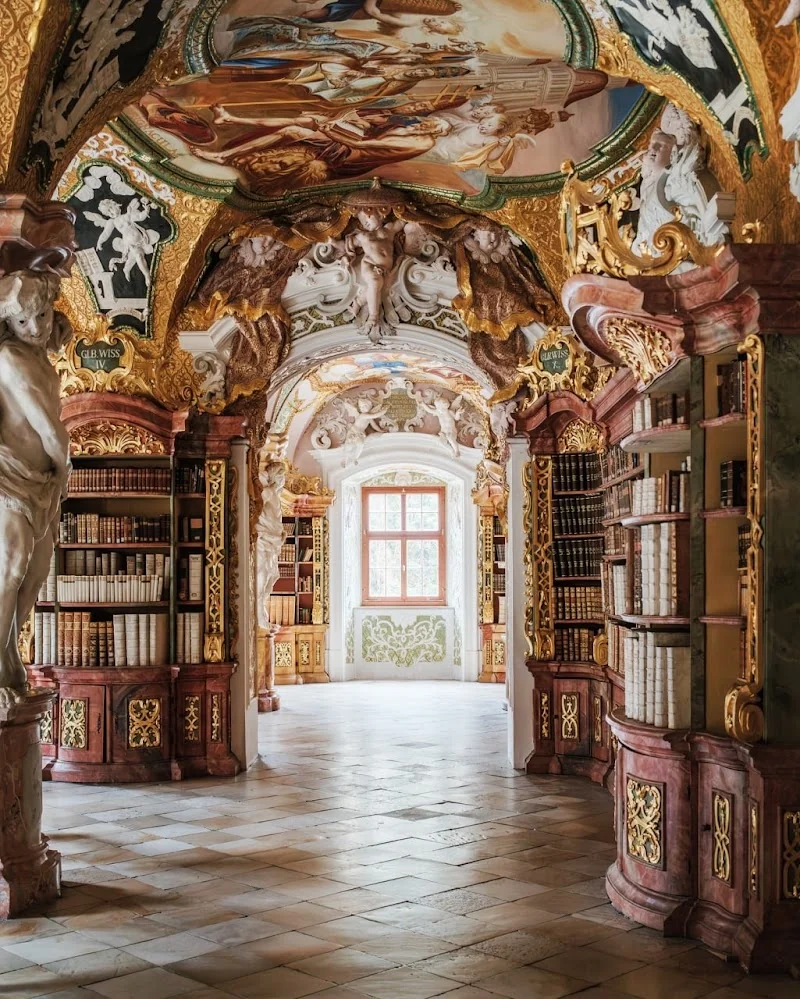
The Metten Abbey Library is the centerpiece of many visitor inquiries, and for good reason. The famous baroque library is only accessible as part of a guided tour, according to the official website. Tours take place from Tuesday to Saturday at 10:00 AM and 3:00 PM; on Sundays and public holidays, there is only the tour at 3:00 PM. No tours are offered from December 24 to January 6, from Ash Wednesday to Saturday, during Holy Week until Easter Monday, and on all church holidays. The admission or maintenance fee is 5 euros for adults, 4 euros for groups of 25 or more with prior registration, and 3 euros for children from 6 years old, students, and severely disabled persons with ID. For many travelers, this clear, planable structure is an advantage: Those who really want to see the library should time their visit consciously. ([kloster-metten.de](https://www.kloster-metten.de/barockbibliothek))
Historically, the library is as exciting as it is aesthetic. The expansion of the old library is dated to around 1265. A scriptorium is documented around 1400, and under Abbot Johannes Nablas, the library room was built in 1624. Between 1720 and 1722, the room received its baroque splendor; responsible were the stucco artist Franz Josef Ignaz Holzinger, the fresco painter Innozenz Waräthi, and the carpenter Jakob Schöpf. After the secularization of 1803, large parts of the old collection were lost or distributed to other libraries. For the new library, Bishop Johann Michael Sailer symbolically laid the foundation stone in 1830, later additional collections were added, and in 2009, new library rooms on the ground floor were opened. The result is not a static museum but a vibrant knowledge space that makes the educational mission of the abbey visible. ([kloster-metten.com](https://www.kloster-metten.com/?page_id=2115))
The interior design is also worth a closer look. The ceiling frescoes and the iconographic program connect faith, scholarship, and monastic history. In the main room, Thomas Aquinas and Bonaventure meet, the question of the origin of science is visually staged, and the answer leads the gaze to Christian wisdom. Further frescoes depict the Church Fathers Augustine, Ambrose, Gregory, and Jerome, the mystics Gertrude and Mechthild of Helfta, Saint Benedict writing his Rule, and a representation of the Church as a feminine figure asserting itself against the Reformers. This mixture of baroque dramaturgy, religious symbolism, and intellectual ambition makes the Metten Abbey Library so attractive for photographers, cultural travelers, and history enthusiasts. ([kloster-metten.de](https://www.kloster-metten.de/barockbibliothek))
The History of Metten Abbey from Its Beginnings to Today
The history of Metten Abbey is closely linked to the beginnings of Bavarian Benedictinism. The official tradition names the year 766 as the founding time, while the official foundation by Charlemagne is dated to 792. At that time, the monastery received royal protection and immunity. According to tradition, the hermit Utto helped the emperor during a hunt in the surrounding forest; this led to the monastic foundation. In the 9th century, Emperors Louis the Pious and Louis the German confirmed the rights of the monastery. Later, Metten was tasked with clearing and colonizing the region. This early role as a spiritual and cultural center explains why the abbey is perceived today not only as a sight but also as a historical key location in Bavaria. ([kloster-metten.com](https://www.kloster-metten.com/?page_id=137))
Like many monasteries, Metten also had to endure severe cuts. The fire of 1236 almost completely destroyed the complex. The reconstruction led to the consecration of the church in 1264, and over the centuries, further modifications followed. Under Abbot Petrus II, the Gothic redesign began in 1451, Abbot Johannes III. Nablas had an organ installed in 1602, and in the 17th century, parts of the complex were changed again. After the Thirty Years' War, Abbot Roman Märkl had the monastery redesigned in the baroque style, so that the church, library, and festival hall received the form that still impresses visitors today. The connection of medieval origins and baroque representation is one of the main reasons why Metten Abbey frequently appears in search queries related to history, Bavaria, and Germany. ([kloster-metten.com](https://www.kloster-metten.com/?page_id=137))
The deepest break came in 1803 with the secularization. Abbot Cölestin Stöckl was informed of the dissolution of the monastery, property was auctioned or leased, and the religious community lost its economic foundation. In 1830, Johann von Pronath-Offenberg acquired large parts of the estate and, with the permission of King Ludwig I, enabled the resettlement of monks. This made Metten the first Benedictine monastery in Bavaria to reopen. By 1837, a seminary and school were established; later, this developed into the current high school with a boarding school. This re-establishment made Metten a starting point for the Bavarian Benedictine renewal and connects the place to education, science, and pastoral care to this day. This mixture of historical depth and vibrant presence distinguishes Metten Abbey from many purely museum-like facilities. ([kloster-metten.com](https://www.kloster-metten.com/?page_id=137))
Parish and Monastery Church of St. Michael: Artworks, Altar, and Organ
The parish and monastery church of St. Michael is the architectural counterpart to the library and a central reason why visitors search for Metten Abbey photos. In its place once stood a Carolingian house of worship, followed in the 12th century by a three-nave basilica with two west towers and a forecourt. After the fire of 1236, Abbot Albert I rebuilt the church and abbey; the church was consecrated in 1264. From the 15th century onward, further modifications were made, including Gothic expansions, numerous altars, and an organ. The baroque form was given to the building at the beginning of the 18th century: Franz Josef Ignaz Holzinger created the stucco work, Jakob Schöpf provided the high altar, and the altar painting was done by Cosmas Damian Asam. This artistic density makes the church space a must-stop for all who wish to understand not only the facade but also the spiritual symbolism of the abbey. ([kloster-metten.de](https://www.kloster-metten.de/pfarr-und-klosterkirche))
Particularly impressive is the theological imagery. On the main altar, St. Michael is seen expelling the fallen angels, next to him is Emperor Charlemagne with a model of the monastery church and Saint Benedict of Nursia. The ceiling fresco in the altar area depicts the divine Trinity and the counsel for the salvation of humanity. The other altars are also carefully composed: the cross altar with Christ and the figures of Heraclius and Helena, the Marian altar with the Queen of the Rosary and the Assumption, the St. Stephen altar, the Apostle altar, and the Sebastian altar form a dense network of biblical narrative, veneration of saints, and monastic piety. For visitors, this means: The church is not only beautiful but rich in content, and those who observe it attentively discover many layers of monastic history. ([kloster-metten.de](https://www.kloster-metten.de/pfarr-und-klosterkirche))
The church also thrives on sound and worship. According to the official site, the convent mass takes place on weekdays in the Benedictus Chapel at 5:45 AM, as well as the noon hour and evening Compline. On Sundays, there are regular masses and vespers, along with additional services in the parish community of Metten-Neuhausen. This liturgical rhythm shows that the church is not merely a monument but remains part of a lived monastic and parish life. This is one of the greatest peculiarities of Metten Abbey: Art, prayer, and everyday life merge in a place that is equally attractive to believers, cultural travelers, and photography fans. ([kloster-metten.de](https://www.kloster-metten.com/?page_id=11770))
Concerts at Metten Abbey: Sudhaus, Festival Hall, and Collegiate Church
Those searching for Metten Abbey reviews or a lively program will quickly come across the concerts at Metten Abbey. The official concert page shows how actively the place is used musically. Tickets are available at the monastery gate, reservations can be made by phone or email, and the range includes carnival concerts, passion music, as well as chamber and symphony concerts. Performances take place in venues such as the Sudhaus, the collegiate church, the festival hall, the Himmelbergschlösschen, and the Wittelsbachersaal. Thus, Metten is not just a monastery but a cultural space with several characterful stages suitable for different ensemble sizes and styles. ([kloster-metten.de](https://www.kloster-metten.de/konzerte-im-kloster-metten))
The current program for 2026 shows the range particularly clearly. A carnival concert in the Sudhaus opens the series, in March passion music follows in the collegiate church, in April and May there are chamber and symphony concerts in the festival hall, in June there is more chamber repertoire, and in July a matinee in the Himmelbergschlösschen. In the autumn, organ and church concerts will take place in the collegiate church as well as a chamber concert in the Wittelsbachersaal. This variety is remarkable for an abbey and provides visitors with a strong argument to plan their visit not just as a day trip but as a cultural evening. The combination of sacred space, monastic tranquility, and professional concert operations makes Metten Abbey an address firmly anchored in the southern German cultural calendar. ([kloster-metten.de](https://www.kloster-metten.de/konzerte-im-kloster-metten))
From an SEO perspective, these details are also important, as search queries often look for tickets, programs, concert halls, or schedules. Metten Abbey meets these expectations in a genuine way: The monastery gate is the central point of contact, concert dates are publicly documented, and the rooms are clearly named. Therefore, anyone searching for a location with historical walls and a lively event calendar will find a rare mix of spirituality and stage. This multiple use makes the monastery attractive for music lovers, families, cultural travelers, and groups wishing to combine a day trip with a concert. ([kloster-metten.de](https://www.kloster-metten.de/konzerte-im-kloster-metten))
Prelate Garden, Monastery Gate, and Getting to Metten Abbey
Around Metten Abbey, it is worth not only looking up at the library or the church but also taking a walk in the Prelate Garden. The garden, located west of the monastery complex, was created in 2007 on the site of the former hop garden and dedicated to the public. With an area of 5,500 square meters, it is oriented towards the tradition of late baroque pleasure gardens in Lower Bavarian monasteries. A small pavilion, a fountain, clear paths, seating steps, and native fruit tree varieties characterize the place. The garden is not just a decorative area but a space of tranquility and reflection that pleasantly rounds off the visit to Metten Abbey. It is also ideal for photography and short breaks, as it offers strong perspectives with the monastery in the background. ([kloster-metten.de](https://www.kloster-metten.de/praelatengarten))
A special role is played by the Benedict Column, which was erected in the Prelate Garden and refers to the work of Saint Benedict. The work by Joseph Michael Neustifter is more than a sculpture: It sets a spiritual accent and connects the place with the Benedictine thought of prayer, work, and education. The pavilion can also be used for civil weddings, which opens the garden for local festivities and ceremonial occasions. Thus, the Prelate Garden becomes an interface of monastic tradition, public use, and regional life. Anyone visiting Metten Abbey should not treat this area as a minor matter but plan it as an important part of the overall experience. ([kloster-metten.de](https://www.kloster-metten.de/praelatengarten))
For practical planning, the monastery gate is important. The official address is Abteistraße 3 in 94526 Metten; the monastery gate is open Monday to Saturday from 8:30 AM to 11:30 AM and from 2:00 PM to 5:00 PM, and on Sundays from 2:00 PM to 5:00 PM. The official website also mentions direct bus connections to Metten, including from Neuhausen, Offenberg, Niederwinkling, Schwarzach, Bernried, Deggendorf, Edenstetten, Egg, Berg, and Plattling. Thus, getting there is well planned even without a car, which is particularly helpful for day visitors, school groups, and older visitors. Metten Abbey is therefore not an isolated pilgrimage site but well integrated into the regional infrastructure. ([kloster-metten.de](https://www.kloster-metten.de/kultur-tourismus))
Photos, Reviews, and the Best Visiting Tips for Metten Abbey
Many search queries about Metten Abbey revolve around photos and reviews, which is quite understandable. Visitors mainly report on the open, impressive church and the famous library, which is only accessible as part of guided tours. This results in the typical visitor experience: Those who enter the monastery spontaneously first experience the church and the atmosphere of the place; those who want to see the library should check the times, tour schedules, and possible closure dates in advance. This is not a disadvantage but an expression of active monastic life and the sensitive historical spaces. For many guests, this combination of accessibility and exclusivity is particularly appealing. The church offers strong interior shots, the library the iconic baroque images, and the Prelate Garden provides calm, green perspectives. ([kloster-metten.de](https://www.kloster-metten.de/barockbibliothek))
If you are planning Metten Abbey photos, think in terms of motifs rather than just stations. The facade with the onion towers, the golden figure of Michael on the dome, the church interior with altar and frescoes, the library with its iconographic ceiling program, and the Prelate Garden with pavilion and Benedict Column together create a very strong image series. Those searching for Metten Abbey reviews will also quickly find hints that the library is only open with a tour and that the church is considered particularly beautiful. These feedbacks fit well with the official information and help with realistic preparation. Thus, the search term becomes a meaningful visit plan: first orient outside, then church, then tour, then garden, and possibly a concert or a short detour to the town center. ([kloster-metten.de](https://www.kloster-metten.de/barockbibliothek))
A final tip for the visit: Metten Abbey is a place of silence and respect. Those who consider the worship services, the monastery gate, and the tour times will experience the facility much more relaxed. Especially in connection with a concert event or a library tour, a visit with some advance planning is worthwhile. Thus, a simple search for Metten Abbey Germany, Metten Abbey Bavaria, or Metten Abbey becomes a real day trip with history, art, music, and spiritual atmosphere. This is precisely the special charm of this abbey: It is not only a popular photo motif but a place where the long tradition of Benedictine life remains visible and audible to this day. ([kloster-metten.de](https://www.kloster-metten.de/kultur-tourismus))
Sources:
- Official Website of Metten Benedictine Abbey ([kloster-metten.de](https://www.kloster-metten.de/kultur-tourismus))
- Baroque Library Metten – Tours and History ([kloster-metten.de](https://www.kloster-metten.de/barockbibliothek))
- House History and Historical Overview of Metten Abbey ([kloster-metten.com](https://www.kloster-metten.com/?page_id=137))
- Parish and Monastery Church of St. Michael ([kloster-metten.de](https://www.kloster-metten.de/pfarr-und-klosterkirche))
- Prelate Garden at Metten Abbey ([kloster-metten.de](https://www.kloster-metten.de/praelatengarten))
- Concerts at Metten Abbey ([kloster-metten.de](https://www.kloster-metten.de/konzerte-im-kloster-metten))
- School bus connections and direct travel options ([kloster-metten.com](https://www.kloster-metten.com/?page_id=11053))
- HMML Repository for the Library of Metten Benedictine Abbey ([hmml.org](https://hmml.org/collections/repositories/Germany/benediktinerabtei-metten--bibliothek/))
Show moreShow less
Metten Abbey | Library & Tours
Metten Abbey is one of the most impressive Benedictine sites in Lower Bavaria and is much more than just a beautiful photo opportunity. Located between the Danube plain and the Bavarian Forest, the abbey combines spiritual life, centuries-old educational tradition, baroque art, and a vibrant cultural program. According to the official monastery history, its roots date back to the 8th century; the official foundation is cited as 792. Today, the golden figure of the Archangel Michael on the church dome, the famous baroque library, the parish and monastery church of St. Michael, concerts, and the prelate garden shape the image of this place. Those searching for Metten Abbey photos, Metten Abbey reviews, or specifically the Metten Abbey Library will find a destination that not only tells history but makes it spatially tangible. The abbey is located at Abteistraße 3 in Metten and is culturally and spiritually firmly anchored in the everyday life of the place. ([kloster-metten.com](https://www.kloster-metten.com/?page_id=137))
Metten Abbey Library: Tours, Admission, and Baroque History
The Metten Abbey Library is the centerpiece of many visitor inquiries, and for good reason. The famous baroque library is only accessible as part of a guided tour, according to the official website. Tours take place from Tuesday to Saturday at 10:00 AM and 3:00 PM; on Sundays and public holidays, there is only the tour at 3:00 PM. No tours are offered from December 24 to January 6, from Ash Wednesday to Saturday, during Holy Week until Easter Monday, and on all church holidays. The admission or maintenance fee is 5 euros for adults, 4 euros for groups of 25 or more with prior registration, and 3 euros for children from 6 years old, students, and severely disabled persons with ID. For many travelers, this clear, planable structure is an advantage: Those who really want to see the library should time their visit consciously. ([kloster-metten.de](https://www.kloster-metten.de/barockbibliothek))
Historically, the library is as exciting as it is aesthetic. The expansion of the old library is dated to around 1265. A scriptorium is documented around 1400, and under Abbot Johannes Nablas, the library room was built in 1624. Between 1720 and 1722, the room received its baroque splendor; responsible were the stucco artist Franz Josef Ignaz Holzinger, the fresco painter Innozenz Waräthi, and the carpenter Jakob Schöpf. After the secularization of 1803, large parts of the old collection were lost or distributed to other libraries. For the new library, Bishop Johann Michael Sailer symbolically laid the foundation stone in 1830, later additional collections were added, and in 2009, new library rooms on the ground floor were opened. The result is not a static museum but a vibrant knowledge space that makes the educational mission of the abbey visible. ([kloster-metten.com](https://www.kloster-metten.com/?page_id=2115))
The interior design is also worth a closer look. The ceiling frescoes and the iconographic program connect faith, scholarship, and monastic history. In the main room, Thomas Aquinas and Bonaventure meet, the question of the origin of science is visually staged, and the answer leads the gaze to Christian wisdom. Further frescoes depict the Church Fathers Augustine, Ambrose, Gregory, and Jerome, the mystics Gertrude and Mechthild of Helfta, Saint Benedict writing his Rule, and a representation of the Church as a feminine figure asserting itself against the Reformers. This mixture of baroque dramaturgy, religious symbolism, and intellectual ambition makes the Metten Abbey Library so attractive for photographers, cultural travelers, and history enthusiasts. ([kloster-metten.de](https://www.kloster-metten.de/barockbibliothek))
The History of Metten Abbey from Its Beginnings to Today
The history of Metten Abbey is closely linked to the beginnings of Bavarian Benedictinism. The official tradition names the year 766 as the founding time, while the official foundation by Charlemagne is dated to 792. At that time, the monastery received royal protection and immunity. According to tradition, the hermit Utto helped the emperor during a hunt in the surrounding forest; this led to the monastic foundation. In the 9th century, Emperors Louis the Pious and Louis the German confirmed the rights of the monastery. Later, Metten was tasked with clearing and colonizing the region. This early role as a spiritual and cultural center explains why the abbey is perceived today not only as a sight but also as a historical key location in Bavaria. ([kloster-metten.com](https://www.kloster-metten.com/?page_id=137))
Like many monasteries, Metten also had to endure severe cuts. The fire of 1236 almost completely destroyed the complex. The reconstruction led to the consecration of the church in 1264, and over the centuries, further modifications followed. Under Abbot Petrus II, the Gothic redesign began in 1451, Abbot Johannes III. Nablas had an organ installed in 1602, and in the 17th century, parts of the complex were changed again. After the Thirty Years' War, Abbot Roman Märkl had the monastery redesigned in the baroque style, so that the church, library, and festival hall received the form that still impresses visitors today. The connection of medieval origins and baroque representation is one of the main reasons why Metten Abbey frequently appears in search queries related to history, Bavaria, and Germany. ([kloster-metten.com](https://www.kloster-metten.com/?page_id=137))
The deepest break came in 1803 with the secularization. Abbot Cölestin Stöckl was informed of the dissolution of the monastery, property was auctioned or leased, and the religious community lost its economic foundation. In 1830, Johann von Pronath-Offenberg acquired large parts of the estate and, with the permission of King Ludwig I, enabled the resettlement of monks. This made Metten the first Benedictine monastery in Bavaria to reopen. By 1837, a seminary and school were established; later, this developed into the current high school with a boarding school. This re-establishment made Metten a starting point for the Bavarian Benedictine renewal and connects the place to education, science, and pastoral care to this day. This mixture of historical depth and vibrant presence distinguishes Metten Abbey from many purely museum-like facilities. ([kloster-metten.com](https://www.kloster-metten.com/?page_id=137))
Parish and Monastery Church of St. Michael: Artworks, Altar, and Organ
The parish and monastery church of St. Michael is the architectural counterpart to the library and a central reason why visitors search for Metten Abbey photos. In its place once stood a Carolingian house of worship, followed in the 12th century by a three-nave basilica with two west towers and a forecourt. After the fire of 1236, Abbot Albert I rebuilt the church and abbey; the church was consecrated in 1264. From the 15th century onward, further modifications were made, including Gothic expansions, numerous altars, and an organ. The baroque form was given to the building at the beginning of the 18th century: Franz Josef Ignaz Holzinger created the stucco work, Jakob Schöpf provided the high altar, and the altar painting was done by Cosmas Damian Asam. This artistic density makes the church space a must-stop for all who wish to understand not only the facade but also the spiritual symbolism of the abbey. ([kloster-metten.de](https://www.kloster-metten.de/pfarr-und-klosterkirche))
Particularly impressive is the theological imagery. On the main altar, St. Michael is seen expelling the fallen angels, next to him is Emperor Charlemagne with a model of the monastery church and Saint Benedict of Nursia. The ceiling fresco in the altar area depicts the divine Trinity and the counsel for the salvation of humanity. The other altars are also carefully composed: the cross altar with Christ and the figures of Heraclius and Helena, the Marian altar with the Queen of the Rosary and the Assumption, the St. Stephen altar, the Apostle altar, and the Sebastian altar form a dense network of biblical narrative, veneration of saints, and monastic piety. For visitors, this means: The church is not only beautiful but rich in content, and those who observe it attentively discover many layers of monastic history. ([kloster-metten.de](https://www.kloster-metten.de/pfarr-und-klosterkirche))
The church also thrives on sound and worship. According to the official site, the convent mass takes place on weekdays in the Benedictus Chapel at 5:45 AM, as well as the noon hour and evening Compline. On Sundays, there are regular masses and vespers, along with additional services in the parish community of Metten-Neuhausen. This liturgical rhythm shows that the church is not merely a monument but remains part of a lived monastic and parish life. This is one of the greatest peculiarities of Metten Abbey: Art, prayer, and everyday life merge in a place that is equally attractive to believers, cultural travelers, and photography fans. ([kloster-metten.de](https://www.kloster-metten.com/?page_id=11770))
Concerts at Metten Abbey: Sudhaus, Festival Hall, and Collegiate Church
Those searching for Metten Abbey reviews or a lively program will quickly come across the concerts at Metten Abbey. The official concert page shows how actively the place is used musically. Tickets are available at the monastery gate, reservations can be made by phone or email, and the range includes carnival concerts, passion music, as well as chamber and symphony concerts. Performances take place in venues such as the Sudhaus, the collegiate church, the festival hall, the Himmelbergschlösschen, and the Wittelsbachersaal. Thus, Metten is not just a monastery but a cultural space with several characterful stages suitable for different ensemble sizes and styles. ([kloster-metten.de](https://www.kloster-metten.de/konzerte-im-kloster-metten))
The current program for 2026 shows the range particularly clearly. A carnival concert in the Sudhaus opens the series, in March passion music follows in the collegiate church, in April and May there are chamber and symphony concerts in the festival hall, in June there is more chamber repertoire, and in July a matinee in the Himmelbergschlösschen. In the autumn, organ and church concerts will take place in the collegiate church as well as a chamber concert in the Wittelsbachersaal. This variety is remarkable for an abbey and provides visitors with a strong argument to plan their visit not just as a day trip but as a cultural evening. The combination of sacred space, monastic tranquility, and professional concert operations makes Metten Abbey an address firmly anchored in the southern German cultural calendar. ([kloster-metten.de](https://www.kloster-metten.de/konzerte-im-kloster-metten))
From an SEO perspective, these details are also important, as search queries often look for tickets, programs, concert halls, or schedules. Metten Abbey meets these expectations in a genuine way: The monastery gate is the central point of contact, concert dates are publicly documented, and the rooms are clearly named. Therefore, anyone searching for a location with historical walls and a lively event calendar will find a rare mix of spirituality and stage. This multiple use makes the monastery attractive for music lovers, families, cultural travelers, and groups wishing to combine a day trip with a concert. ([kloster-metten.de](https://www.kloster-metten.de/konzerte-im-kloster-metten))
Prelate Garden, Monastery Gate, and Getting to Metten Abbey
Around Metten Abbey, it is worth not only looking up at the library or the church but also taking a walk in the Prelate Garden. The garden, located west of the monastery complex, was created in 2007 on the site of the former hop garden and dedicated to the public. With an area of 5,500 square meters, it is oriented towards the tradition of late baroque pleasure gardens in Lower Bavarian monasteries. A small pavilion, a fountain, clear paths, seating steps, and native fruit tree varieties characterize the place. The garden is not just a decorative area but a space of tranquility and reflection that pleasantly rounds off the visit to Metten Abbey. It is also ideal for photography and short breaks, as it offers strong perspectives with the monastery in the background. ([kloster-metten.de](https://www.kloster-metten.de/praelatengarten))
A special role is played by the Benedict Column, which was erected in the Prelate Garden and refers to the work of Saint Benedict. The work by Joseph Michael Neustifter is more than a sculpture: It sets a spiritual accent and connects the place with the Benedictine thought of prayer, work, and education. The pavilion can also be used for civil weddings, which opens the garden for local festivities and ceremonial occasions. Thus, the Prelate Garden becomes an interface of monastic tradition, public use, and regional life. Anyone visiting Metten Abbey should not treat this area as a minor matter but plan it as an important part of the overall experience. ([kloster-metten.de](https://www.kloster-metten.de/praelatengarten))
For practical planning, the monastery gate is important. The official address is Abteistraße 3 in 94526 Metten; the monastery gate is open Monday to Saturday from 8:30 AM to 11:30 AM and from 2:00 PM to 5:00 PM, and on Sundays from 2:00 PM to 5:00 PM. The official website also mentions direct bus connections to Metten, including from Neuhausen, Offenberg, Niederwinkling, Schwarzach, Bernried, Deggendorf, Edenstetten, Egg, Berg, and Plattling. Thus, getting there is well planned even without a car, which is particularly helpful for day visitors, school groups, and older visitors. Metten Abbey is therefore not an isolated pilgrimage site but well integrated into the regional infrastructure. ([kloster-metten.de](https://www.kloster-metten.de/kultur-tourismus))
Photos, Reviews, and the Best Visiting Tips for Metten Abbey
Many search queries about Metten Abbey revolve around photos and reviews, which is quite understandable. Visitors mainly report on the open, impressive church and the famous library, which is only accessible as part of guided tours. This results in the typical visitor experience: Those who enter the monastery spontaneously first experience the church and the atmosphere of the place; those who want to see the library should check the times, tour schedules, and possible closure dates in advance. This is not a disadvantage but an expression of active monastic life and the sensitive historical spaces. For many guests, this combination of accessibility and exclusivity is particularly appealing. The church offers strong interior shots, the library the iconic baroque images, and the Prelate Garden provides calm, green perspectives. ([kloster-metten.de](https://www.kloster-metten.de/barockbibliothek))
If you are planning Metten Abbey photos, think in terms of motifs rather than just stations. The facade with the onion towers, the golden figure of Michael on the dome, the church interior with altar and frescoes, the library with its iconographic ceiling program, and the Prelate Garden with pavilion and Benedict Column together create a very strong image series. Those searching for Metten Abbey reviews will also quickly find hints that the library is only open with a tour and that the church is considered particularly beautiful. These feedbacks fit well with the official information and help with realistic preparation. Thus, the search term becomes a meaningful visit plan: first orient outside, then church, then tour, then garden, and possibly a concert or a short detour to the town center. ([kloster-metten.de](https://www.kloster-metten.de/barockbibliothek))
A final tip for the visit: Metten Abbey is a place of silence and respect. Those who consider the worship services, the monastery gate, and the tour times will experience the facility much more relaxed. Especially in connection with a concert event or a library tour, a visit with some advance planning is worthwhile. Thus, a simple search for Metten Abbey Germany, Metten Abbey Bavaria, or Metten Abbey becomes a real day trip with history, art, music, and spiritual atmosphere. This is precisely the special charm of this abbey: It is not only a popular photo motif but a place where the long tradition of Benedictine life remains visible and audible to this day. ([kloster-metten.de](https://www.kloster-metten.de/kultur-tourismus))
Sources:
- Official Website of Metten Benedictine Abbey ([kloster-metten.de](https://www.kloster-metten.de/kultur-tourismus))
- Baroque Library Metten – Tours and History ([kloster-metten.de](https://www.kloster-metten.de/barockbibliothek))
- House History and Historical Overview of Metten Abbey ([kloster-metten.com](https://www.kloster-metten.com/?page_id=137))
- Parish and Monastery Church of St. Michael ([kloster-metten.de](https://www.kloster-metten.de/pfarr-und-klosterkirche))
- Prelate Garden at Metten Abbey ([kloster-metten.de](https://www.kloster-metten.de/praelatengarten))
- Concerts at Metten Abbey ([kloster-metten.de](https://www.kloster-metten.de/konzerte-im-kloster-metten))
- School bus connections and direct travel options ([kloster-metten.com](https://www.kloster-metten.com/?page_id=11053))
- HMML Repository for the Library of Metten Benedictine Abbey ([hmml.org](https://hmml.org/collections/repositories/Germany/benediktinerabtei-metten--bibliothek/))
Metten Abbey | Library & Tours
Metten Abbey is one of the most impressive Benedictine sites in Lower Bavaria and is much more than just a beautiful photo opportunity. Located between the Danube plain and the Bavarian Forest, the abbey combines spiritual life, centuries-old educational tradition, baroque art, and a vibrant cultural program. According to the official monastery history, its roots date back to the 8th century; the official foundation is cited as 792. Today, the golden figure of the Archangel Michael on the church dome, the famous baroque library, the parish and monastery church of St. Michael, concerts, and the prelate garden shape the image of this place. Those searching for Metten Abbey photos, Metten Abbey reviews, or specifically the Metten Abbey Library will find a destination that not only tells history but makes it spatially tangible. The abbey is located at Abteistraße 3 in Metten and is culturally and spiritually firmly anchored in the everyday life of the place. ([kloster-metten.com](https://www.kloster-metten.com/?page_id=137))
Metten Abbey Library: Tours, Admission, and Baroque History
The Metten Abbey Library is the centerpiece of many visitor inquiries, and for good reason. The famous baroque library is only accessible as part of a guided tour, according to the official website. Tours take place from Tuesday to Saturday at 10:00 AM and 3:00 PM; on Sundays and public holidays, there is only the tour at 3:00 PM. No tours are offered from December 24 to January 6, from Ash Wednesday to Saturday, during Holy Week until Easter Monday, and on all church holidays. The admission or maintenance fee is 5 euros for adults, 4 euros for groups of 25 or more with prior registration, and 3 euros for children from 6 years old, students, and severely disabled persons with ID. For many travelers, this clear, planable structure is an advantage: Those who really want to see the library should time their visit consciously. ([kloster-metten.de](https://www.kloster-metten.de/barockbibliothek))
Historically, the library is as exciting as it is aesthetic. The expansion of the old library is dated to around 1265. A scriptorium is documented around 1400, and under Abbot Johannes Nablas, the library room was built in 1624. Between 1720 and 1722, the room received its baroque splendor; responsible were the stucco artist Franz Josef Ignaz Holzinger, the fresco painter Innozenz Waräthi, and the carpenter Jakob Schöpf. After the secularization of 1803, large parts of the old collection were lost or distributed to other libraries. For the new library, Bishop Johann Michael Sailer symbolically laid the foundation stone in 1830, later additional collections were added, and in 2009, new library rooms on the ground floor were opened. The result is not a static museum but a vibrant knowledge space that makes the educational mission of the abbey visible. ([kloster-metten.com](https://www.kloster-metten.com/?page_id=2115))
The interior design is also worth a closer look. The ceiling frescoes and the iconographic program connect faith, scholarship, and monastic history. In the main room, Thomas Aquinas and Bonaventure meet, the question of the origin of science is visually staged, and the answer leads the gaze to Christian wisdom. Further frescoes depict the Church Fathers Augustine, Ambrose, Gregory, and Jerome, the mystics Gertrude and Mechthild of Helfta, Saint Benedict writing his Rule, and a representation of the Church as a feminine figure asserting itself against the Reformers. This mixture of baroque dramaturgy, religious symbolism, and intellectual ambition makes the Metten Abbey Library so attractive for photographers, cultural travelers, and history enthusiasts. ([kloster-metten.de](https://www.kloster-metten.de/barockbibliothek))
The History of Metten Abbey from Its Beginnings to Today
The history of Metten Abbey is closely linked to the beginnings of Bavarian Benedictinism. The official tradition names the year 766 as the founding time, while the official foundation by Charlemagne is dated to 792. At that time, the monastery received royal protection and immunity. According to tradition, the hermit Utto helped the emperor during a hunt in the surrounding forest; this led to the monastic foundation. In the 9th century, Emperors Louis the Pious and Louis the German confirmed the rights of the monastery. Later, Metten was tasked with clearing and colonizing the region. This early role as a spiritual and cultural center explains why the abbey is perceived today not only as a sight but also as a historical key location in Bavaria. ([kloster-metten.com](https://www.kloster-metten.com/?page_id=137))
Like many monasteries, Metten also had to endure severe cuts. The fire of 1236 almost completely destroyed the complex. The reconstruction led to the consecration of the church in 1264, and over the centuries, further modifications followed. Under Abbot Petrus II, the Gothic redesign began in 1451, Abbot Johannes III. Nablas had an organ installed in 1602, and in the 17th century, parts of the complex were changed again. After the Thirty Years' War, Abbot Roman Märkl had the monastery redesigned in the baroque style, so that the church, library, and festival hall received the form that still impresses visitors today. The connection of medieval origins and baroque representation is one of the main reasons why Metten Abbey frequently appears in search queries related to history, Bavaria, and Germany. ([kloster-metten.com](https://www.kloster-metten.com/?page_id=137))
The deepest break came in 1803 with the secularization. Abbot Cölestin Stöckl was informed of the dissolution of the monastery, property was auctioned or leased, and the religious community lost its economic foundation. In 1830, Johann von Pronath-Offenberg acquired large parts of the estate and, with the permission of King Ludwig I, enabled the resettlement of monks. This made Metten the first Benedictine monastery in Bavaria to reopen. By 1837, a seminary and school were established; later, this developed into the current high school with a boarding school. This re-establishment made Metten a starting point for the Bavarian Benedictine renewal and connects the place to education, science, and pastoral care to this day. This mixture of historical depth and vibrant presence distinguishes Metten Abbey from many purely museum-like facilities. ([kloster-metten.com](https://www.kloster-metten.com/?page_id=137))
Parish and Monastery Church of St. Michael: Artworks, Altar, and Organ
The parish and monastery church of St. Michael is the architectural counterpart to the library and a central reason why visitors search for Metten Abbey photos. In its place once stood a Carolingian house of worship, followed in the 12th century by a three-nave basilica with two west towers and a forecourt. After the fire of 1236, Abbot Albert I rebuilt the church and abbey; the church was consecrated in 1264. From the 15th century onward, further modifications were made, including Gothic expansions, numerous altars, and an organ. The baroque form was given to the building at the beginning of the 18th century: Franz Josef Ignaz Holzinger created the stucco work, Jakob Schöpf provided the high altar, and the altar painting was done by Cosmas Damian Asam. This artistic density makes the church space a must-stop for all who wish to understand not only the facade but also the spiritual symbolism of the abbey. ([kloster-metten.de](https://www.kloster-metten.de/pfarr-und-klosterkirche))
Particularly impressive is the theological imagery. On the main altar, St. Michael is seen expelling the fallen angels, next to him is Emperor Charlemagne with a model of the monastery church and Saint Benedict of Nursia. The ceiling fresco in the altar area depicts the divine Trinity and the counsel for the salvation of humanity. The other altars are also carefully composed: the cross altar with Christ and the figures of Heraclius and Helena, the Marian altar with the Queen of the Rosary and the Assumption, the St. Stephen altar, the Apostle altar, and the Sebastian altar form a dense network of biblical narrative, veneration of saints, and monastic piety. For visitors, this means: The church is not only beautiful but rich in content, and those who observe it attentively discover many layers of monastic history. ([kloster-metten.de](https://www.kloster-metten.de/pfarr-und-klosterkirche))
The church also thrives on sound and worship. According to the official site, the convent mass takes place on weekdays in the Benedictus Chapel at 5:45 AM, as well as the noon hour and evening Compline. On Sundays, there are regular masses and vespers, along with additional services in the parish community of Metten-Neuhausen. This liturgical rhythm shows that the church is not merely a monument but remains part of a lived monastic and parish life. This is one of the greatest peculiarities of Metten Abbey: Art, prayer, and everyday life merge in a place that is equally attractive to believers, cultural travelers, and photography fans. ([kloster-metten.de](https://www.kloster-metten.com/?page_id=11770))
Concerts at Metten Abbey: Sudhaus, Festival Hall, and Collegiate Church
Those searching for Metten Abbey reviews or a lively program will quickly come across the concerts at Metten Abbey. The official concert page shows how actively the place is used musically. Tickets are available at the monastery gate, reservations can be made by phone or email, and the range includes carnival concerts, passion music, as well as chamber and symphony concerts. Performances take place in venues such as the Sudhaus, the collegiate church, the festival hall, the Himmelbergschlösschen, and the Wittelsbachersaal. Thus, Metten is not just a monastery but a cultural space with several characterful stages suitable for different ensemble sizes and styles. ([kloster-metten.de](https://www.kloster-metten.de/konzerte-im-kloster-metten))
The current program for 2026 shows the range particularly clearly. A carnival concert in the Sudhaus opens the series, in March passion music follows in the collegiate church, in April and May there are chamber and symphony concerts in the festival hall, in June there is more chamber repertoire, and in July a matinee in the Himmelbergschlösschen. In the autumn, organ and church concerts will take place in the collegiate church as well as a chamber concert in the Wittelsbachersaal. This variety is remarkable for an abbey and provides visitors with a strong argument to plan their visit not just as a day trip but as a cultural evening. The combination of sacred space, monastic tranquility, and professional concert operations makes Metten Abbey an address firmly anchored in the southern German cultural calendar. ([kloster-metten.de](https://www.kloster-metten.de/konzerte-im-kloster-metten))
From an SEO perspective, these details are also important, as search queries often look for tickets, programs, concert halls, or schedules. Metten Abbey meets these expectations in a genuine way: The monastery gate is the central point of contact, concert dates are publicly documented, and the rooms are clearly named. Therefore, anyone searching for a location with historical walls and a lively event calendar will find a rare mix of spirituality and stage. This multiple use makes the monastery attractive for music lovers, families, cultural travelers, and groups wishing to combine a day trip with a concert. ([kloster-metten.de](https://www.kloster-metten.de/konzerte-im-kloster-metten))
Prelate Garden, Monastery Gate, and Getting to Metten Abbey
Around Metten Abbey, it is worth not only looking up at the library or the church but also taking a walk in the Prelate Garden. The garden, located west of the monastery complex, was created in 2007 on the site of the former hop garden and dedicated to the public. With an area of 5,500 square meters, it is oriented towards the tradition of late baroque pleasure gardens in Lower Bavarian monasteries. A small pavilion, a fountain, clear paths, seating steps, and native fruit tree varieties characterize the place. The garden is not just a decorative area but a space of tranquility and reflection that pleasantly rounds off the visit to Metten Abbey. It is also ideal for photography and short breaks, as it offers strong perspectives with the monastery in the background. ([kloster-metten.de](https://www.kloster-metten.de/praelatengarten))
A special role is played by the Benedict Column, which was erected in the Prelate Garden and refers to the work of Saint Benedict. The work by Joseph Michael Neustifter is more than a sculpture: It sets a spiritual accent and connects the place with the Benedictine thought of prayer, work, and education. The pavilion can also be used for civil weddings, which opens the garden for local festivities and ceremonial occasions. Thus, the Prelate Garden becomes an interface of monastic tradition, public use, and regional life. Anyone visiting Metten Abbey should not treat this area as a minor matter but plan it as an important part of the overall experience. ([kloster-metten.de](https://www.kloster-metten.de/praelatengarten))
For practical planning, the monastery gate is important. The official address is Abteistraße 3 in 94526 Metten; the monastery gate is open Monday to Saturday from 8:30 AM to 11:30 AM and from 2:00 PM to 5:00 PM, and on Sundays from 2:00 PM to 5:00 PM. The official website also mentions direct bus connections to Metten, including from Neuhausen, Offenberg, Niederwinkling, Schwarzach, Bernried, Deggendorf, Edenstetten, Egg, Berg, and Plattling. Thus, getting there is well planned even without a car, which is particularly helpful for day visitors, school groups, and older visitors. Metten Abbey is therefore not an isolated pilgrimage site but well integrated into the regional infrastructure. ([kloster-metten.de](https://www.kloster-metten.de/kultur-tourismus))
Photos, Reviews, and the Best Visiting Tips for Metten Abbey
Many search queries about Metten Abbey revolve around photos and reviews, which is quite understandable. Visitors mainly report on the open, impressive church and the famous library, which is only accessible as part of guided tours. This results in the typical visitor experience: Those who enter the monastery spontaneously first experience the church and the atmosphere of the place; those who want to see the library should check the times, tour schedules, and possible closure dates in advance. This is not a disadvantage but an expression of active monastic life and the sensitive historical spaces. For many guests, this combination of accessibility and exclusivity is particularly appealing. The church offers strong interior shots, the library the iconic baroque images, and the Prelate Garden provides calm, green perspectives. ([kloster-metten.de](https://www.kloster-metten.de/barockbibliothek))
If you are planning Metten Abbey photos, think in terms of motifs rather than just stations. The facade with the onion towers, the golden figure of Michael on the dome, the church interior with altar and frescoes, the library with its iconographic ceiling program, and the Prelate Garden with pavilion and Benedict Column together create a very strong image series. Those searching for Metten Abbey reviews will also quickly find hints that the library is only open with a tour and that the church is considered particularly beautiful. These feedbacks fit well with the official information and help with realistic preparation. Thus, the search term becomes a meaningful visit plan: first orient outside, then church, then tour, then garden, and possibly a concert or a short detour to the town center. ([kloster-metten.de](https://www.kloster-metten.de/barockbibliothek))
A final tip for the visit: Metten Abbey is a place of silence and respect. Those who consider the worship services, the monastery gate, and the tour times will experience the facility much more relaxed. Especially in connection with a concert event or a library tour, a visit with some advance planning is worthwhile. Thus, a simple search for Metten Abbey Germany, Metten Abbey Bavaria, or Metten Abbey becomes a real day trip with history, art, music, and spiritual atmosphere. This is precisely the special charm of this abbey: It is not only a popular photo motif but a place where the long tradition of Benedictine life remains visible and audible to this day. ([kloster-metten.de](https://www.kloster-metten.de/kultur-tourismus))
Sources:
- Official Website of Metten Benedictine Abbey ([kloster-metten.de](https://www.kloster-metten.de/kultur-tourismus))
- Baroque Library Metten – Tours and History ([kloster-metten.de](https://www.kloster-metten.de/barockbibliothek))
- House History and Historical Overview of Metten Abbey ([kloster-metten.com](https://www.kloster-metten.com/?page_id=137))
- Parish and Monastery Church of St. Michael ([kloster-metten.de](https://www.kloster-metten.de/pfarr-und-klosterkirche))
- Prelate Garden at Metten Abbey ([kloster-metten.de](https://www.kloster-metten.de/praelatengarten))
- Concerts at Metten Abbey ([kloster-metten.de](https://www.kloster-metten.de/konzerte-im-kloster-metten))
- School bus connections and direct travel options ([kloster-metten.com](https://www.kloster-metten.com/?page_id=11053))
- HMML Repository for the Library of Metten Benedictine Abbey ([hmml.org](https://hmml.org/collections/repositories/Germany/benediktinerabtei-metten--bibliothek/))
Upcoming Events
No events found
Frequently Asked Questions
Reviews
Yvette Van Der Merwe
15. January 2023
The Church was open but the Library was not. The library is the one you want to see, only guided tours. They only have 2 tours a day. There are no visitor signs to guide you where to go. The Church is very beautiful though... Remember to be respectful if you go and visit.
Joseph Kanamkudam
15. June 2019
Worth seeing historical place and education center... Famous for its Library...
Joyce YU
2. August 2020
It’s a great art decoration inside the church.
Adriana Brzović
22. August 2022
Went to visit the baroque library. The library is lovely, but I wish they would let people take at least one photo. As far as I could tell, tours are only in German so keep that in mind.
Mabel Ortiz
12. February 2023
Church is wonderful baroque, but if you want to see the library it is only possible through a guided visit at 10:00 or 15:00. ONLY IN GERMAN. The abbot in charge was not friendly at all.