
Helene Hegemann
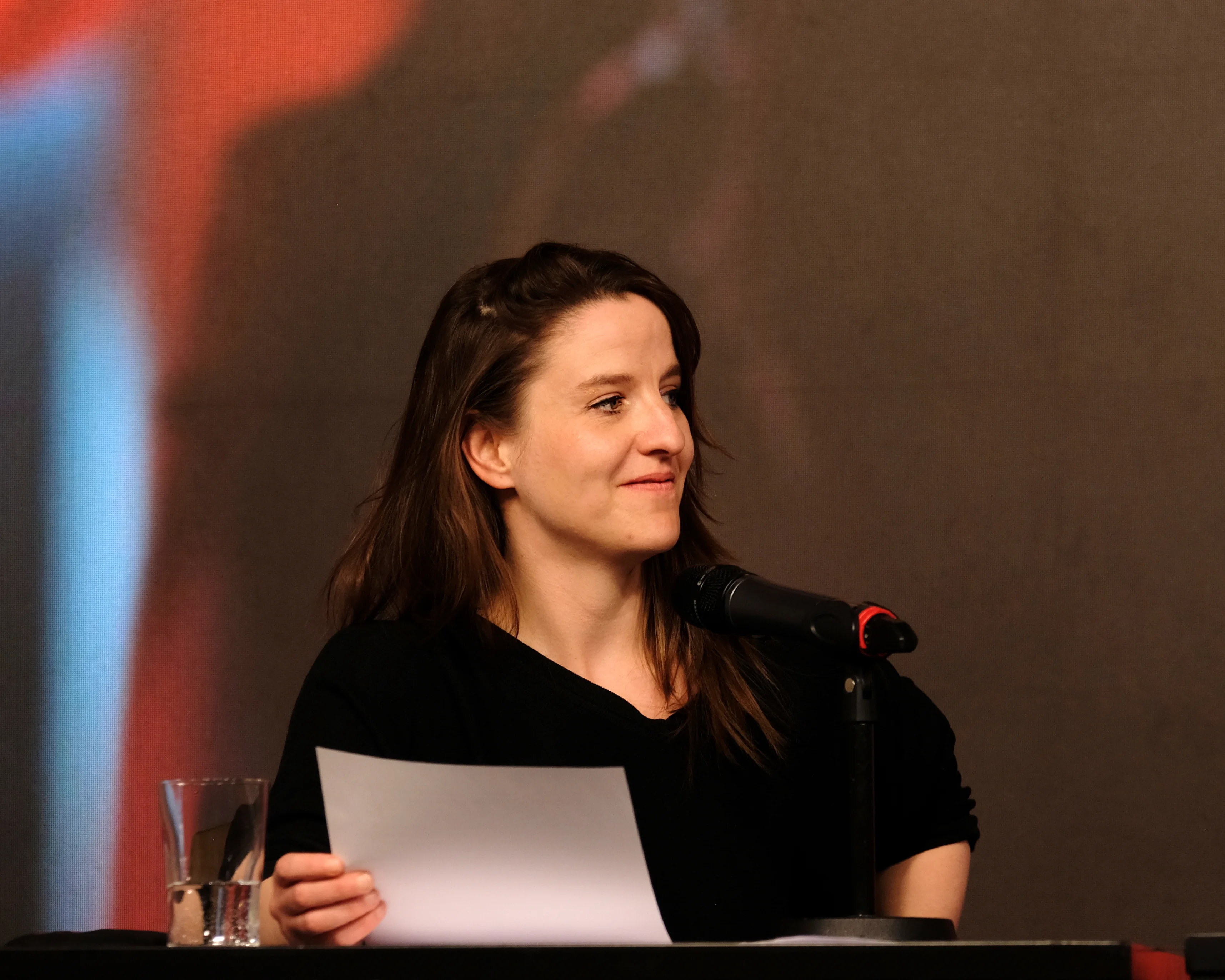
Image from Wikipedia
Image from Wikipedia
Helene Hegemann: The Precise Chronicler of the Present Between Literature, Film, and Stage
An Author, Director, and Media Figure with Enormous Radiance
Helene Hegemann is one of the most distinctive German-speaking voices of her generation. Born on February 19, 1992, in Freiburg im Breisgau, she became well-known early on for a work that immediately sparked debates and simultaneously showcased her artistic fingerprint. Her debut novel Axolotl Roadkill not only brought her attention but also one of the most intense plagiarism debates of recent literary history. Since then, Hegemann has navigated with a keen sense for friction points between literature, film, theater, and the media public. ([de.wikipedia.org](https://de.wikipedia.org/wiki/Helene_Hegemann?utm_source=openai))
Her profile is much larger than the classic definition of a writer. Hegemann works as an author, screenwriter, director, and, since 2024, also as a moderator for an ARD literary format. This versatility does not define her music career in a strict sense, but her approach to rhythm, montage, scene, and sound often recalls the dramaturgy of good pop culture: precise, direct, crafted for impact, and always close to the present. ([de.wikipedia.org](https://de.wikipedia.org/wiki/Helene_Hegemann?utm_source=openai))
Early Years: Between Berlin, Theater, and the Joy of Storytelling
Hegemann began writing at a very young age and first garnered attention through blogs and early theater works. In 2007, her play Ariel 15 premiered in Berlin; a year later, a radio play based on the text was created. Concurrently, at the age of 14, she developed a screenplay from which the film Torpedo emerged, premiering at the Hof Film Festival in 2008 and hitting German cinemas in 2009. These early stages demonstrate a remarkable artistic development: Hegemann worked not in a single form but in a close interplay of literature, image, and staging. ([en.wikipedia.org](https://en.wikipedia.org/wiki/Helene_Hegemann?utm_source=openai))
The fact that she became interested in the language of urban youth cultures, nightlife, pop aesthetics, and Berlin environments at an early age continues to shape her work today. In interviews and portraits, her writing has repeatedly been described as direct, observant, and strongly atmospheric. A vital quality of her work lies precisely in this: she translates social spaces into literary and audiovisual scenes without smoothing over the energy of the present. ([courrierinternational.com](https://www.courrierinternational.com/article/2010/02/11/l-age-de-deraison?utm_source=openai))
The Breakthrough with Axolotl Roadkill and the Major Controversy
In 2010, Axolotl Roadkill was published, catapulting Hegemann to immediate fame. The novel was initially celebrated as the authentic, uncompromising voice of a young generation before the plagiarism allegations grew denser and sparked a broad cultural criticism debate. This very tension between formal energy and copyright transgressions shaped the public discourse surrounding Hegemann for years. At the same time, the book was translated into many languages, reaching an international readership. ([de.wikipedia.org](https://de.wikipedia.org/wiki/Helene_Hegemann?utm_source=openai))
The scandal long obscured the view of the literary substance of her debut. However, in retrospect, it becomes clear how strongly Hegemann works with quotes, fragments, and cultural snippets. The work stands exemplary for a generation that does not separate pop, theory, film, and everyday life but rather intertwines them. From a music journalistic perspective, this method recalls sampling and remix culture: not as mere copies but as an aesthetic process of condensation. ([courrierinternational.com](https://www.courrierinternational.com/article/2010/02/11/l-age-de-deraison?utm_source=openai))
Further Novels and the Maturation of a Distinctive Style
Following her debut, additional novels such as Jage zwei Tiger and Bungalow deepened Hegemann's interest in psychological tension, urban dynamics, and social pressure. Bungalow was published in 2018 by Hanser and was also recognized internationally; the Goethe-Institut regards the novel in connection with her work and categorizes it as an important step in her career. In 2025, Striker was published by Kiepenheuer & Witsch, marking another sign that Hegemann is consistently progressing her literary development. ([kiwi-verlag.de](https://www.kiwi-verlag.de/autor/helene-hegemann-4001398?utm_source=openai))
This phase showcases an author who does not fall into repetition from the spotlight of her debut but expands her repertoire. Her texts combine pace with density, dialogues with observation, and inner lives with diagnoses of the present. Her authority in writing lies precisely here: she understands the codes of youth and urban culture without pandering to them and forms a distinctive prose from them. ([kiwi-verlag.de](https://www.kiwi-verlag.de/verlag/verlagsgeschichte/2019-2026-neue-leitung-und-verlagsjubilaeum-75-jahre?utm_source=openai))
Film, Opera, and Theater: The Stage as Extended Storytelling
Hegemann’s work as a director and screenwriter is not a sideline but a central part of her artistic identity. Torpedo marked the early starting point, and later in 2017, the film adaptation of her debut material, Axolotl Overkill, followed. Additional theater and opera projects include the Cologne opera production Musik, for which she was responsible for the libretto and direction. Critics described her work as scenic, bold, and strongly built on mood and conflict. ([welt.de](https://www.welt.de/newsticker/dpa_nt/infoline_nt/boulevard_nt/article122695087/Urauffuehrung-von-Helene-Hegemanns-Musik-in-Koeln.html?utm_source=openai))
Here, too, her sense of composition and arrangement is evident, though not in a musical sense, but as a dramaturgy of text, body, and image. Hegemann relies on friction, rapid transitions, and an aesthetic of the urban pulse. This makes her projects for theater and film so unique: they engage with the cultural space without appearing academic or conventional. ([welt.de](https://www.welt.de/newsticker/dpa_nt/infoline_nt/boulevard_nt/article122695087/Urauffuehrung-von-Helene-Hegemanns-Musik-in-Koeln.html?utm_source=openai))
Style and Themes: Berlin Today, Youth, Identity, Pace
A central motif in Hegemann's work is Berlin as a spiritual and social resonating space. The city appears in her work not just as a backdrop but as a densifying space of language, class, nightlife, and self-concept. This perspective on the metropolis connects her novels, films, and stage works and gives her overall body of work a strong coherence. ([berliner-zeitung.de](https://www.berliner-zeitung.de/kultur-vergnuegen/helene-hegemann-im-interview-ich-halte-berlin-fuer-den-mittelpunkt-der-freien-welt-li.2202458?utm_source=openai))
In content, her works often revolve around youth, insecurity, desire, and the question of how identity emerges in a perpetually accelerated present. Formally, she employs a mix of laconic directness, scene montage, and pop cultural references. This makes her of cultural-historical interest: Hegemann is an author who does not preserve literary traditions but rather transforms them into a modern, media-driven flow. ([courrierinternational.com](https://www.courrierinternational.com/article/2010/02/11/l-age-de-deraison?utm_source=openai))
Critical Reception and Cultural Influence
Few German authors of her generation were discussed as intensely and early as Hegemann. The debate surrounding Axolotl Roadkill made her a symbolic figure for questions of originality, authorship, and intertextuality. At the same time, this very debate ensured that her name became known far beyond literature, remaining permanently present in feuilleton, pop discourse, and cultural criticism. ([de.wikipedia.org](https://de.wikipedia.org/wiki/Helene_Hegemann?utm_source=openai))
Her cultural influence lies not only in sales figures or awards but in the intensity of resonance. Hegemann stands for a form of contemporary literature that thinks visually, works dialogically, and functions across media. The fact that publishing houses, festivals, and broadcasters continue to engage her voice prominently speaks to the sustained relevance of her perspective. ([kiwi-verlag.de](https://www.kiwi-verlag.de/autor/helene-hegemann-4001398?utm_source=openai))
Current Projects: Longreads and New Presence in the Literary Scene
Since 2024, Hegemann has been moderating the ARD literary format Longreads. The format has been announced as a new literary discussion offering and described in several reports as a fresh approach to book culture. With this, she expands her profile once more: moving away from a pure author status towards that of a public intellectual who not only writes literature but also communicates it. ([zeit.de](https://www.zeit.de/news/2024-03/13/studio-orange-beendet-neue-sendung-mit-hegemann?utm_source=openai))
Additionally, her novel Striker was published in 2025, while publishing house and fair appearances show that Hegemann remains firmly anchored in the literary scene. At the Leipzig Book Fair 2025, she participated in events of the Kiepenheuer & Witsch program, and the publisher continues to regard her as a formative voice in its program. This current presence underscores that Hegemann's artistic development is not completed but is evolving in real time. ([kiwi-verlag.de](https://www.kiwi-verlag.de/verlag/blogger-magazin/blogger-news/unsere-veranstaltungen-auf-der-leipziger-buchmesse-2025?utm_source=openai))
A Conclusion: Why Helene Hegemann Remains Fascinating to This Day
Helene Hegemann fascinates because she never allows herself to be reduced to a single role. She is an author, director, screenwriter, and moderator, but above all, a precise observer of her time. Her work connects literary energy with cultural instinct, and it is this very tension that continually attracts readers, viewers, and critics. ([kiwi-verlag.de](https://www.kiwi-verlag.de/autor/helene-hegemann-4001398?utm_source=openai))
Those who wish to follow Hegemann will not find comfortable simplicity but a strong artistic stance. Her books, films, and stage works thrive on pace, restlessness, and proximity to the present. It is precisely for this reason that her work is worth revisiting time and again – on stage, in books, and in conversation with the times. ([nmz.de](https://www.nmz.de/kritik/oper-konzert/irgendwie-ist-der-film-doch-das-bessere-theater-helene-hegemann-inszeniert-der?utm_source=openai))
Official Channels of Helene Hegemann:
- Instagram: No official profile found
- Facebook: No official profile found
- YouTube: No official profile found
- Spotify: No official profile found
- TikTok: No official profile found
Sources:
- Wikipedia – Helene Hegemann
- Kiepenheuer & Witsch – Helene Hegemann
- Kiepenheuer & Witsch – Events at the Leipzig Book Fair 2025
- Kiepenheuer & Witsch – Publishing History 2019–2026
- Press Portal – Helene Hegemann with new literary format "Longreads" in ARD Mediathek
- DIE ZEIT – Studio Orange Ends: New Show with Hegemann
- Berliner Zeitung – Interview with Helene Hegemann, 07.04.2024
- Neue Musikzeitung – Helene Hegemann directs "Musik"
- WELT – Premiere of Helene Hegemann's "Musik" in Cologne
- WELT – Interview "I hold nothing of this delirium"
- taz – New RBB Literary Program "Longreads"
- Goethe-Institut – Helene Hegemann
Upcoming Events
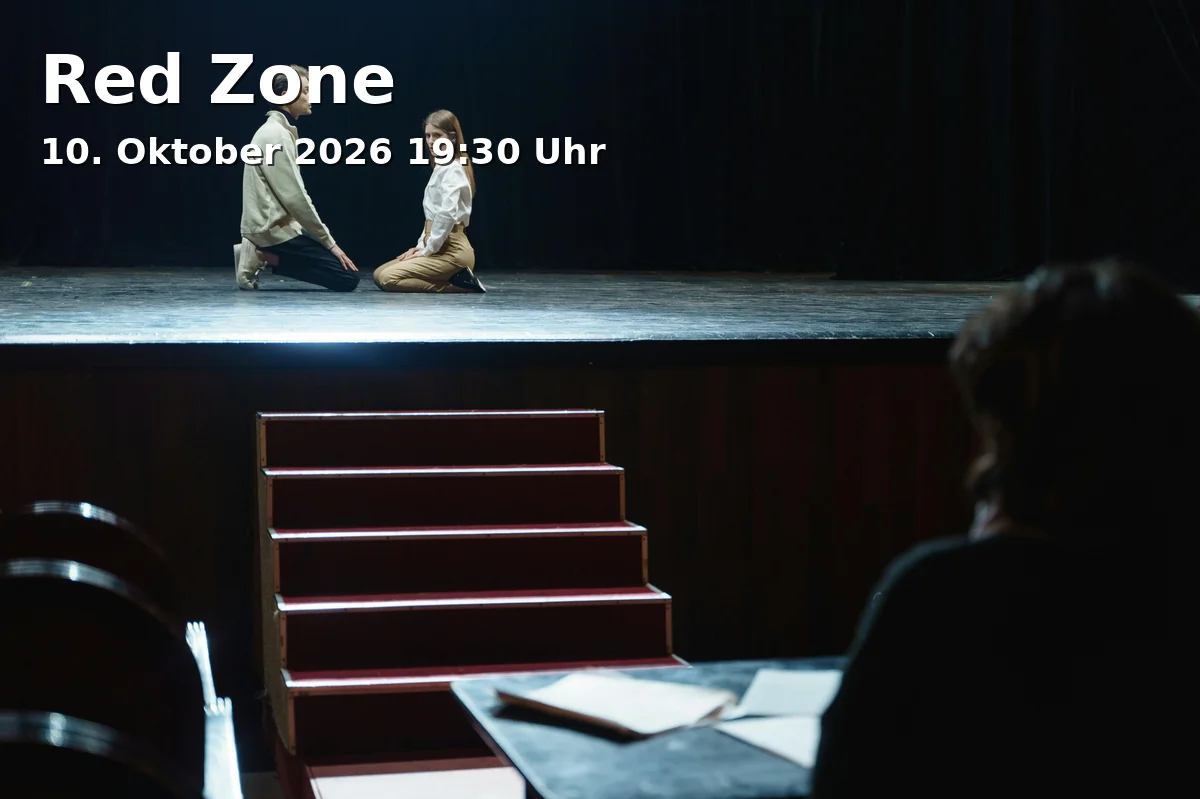
Red Zone
World Premiere: Red Zone
Red Zone