
Wolfmother
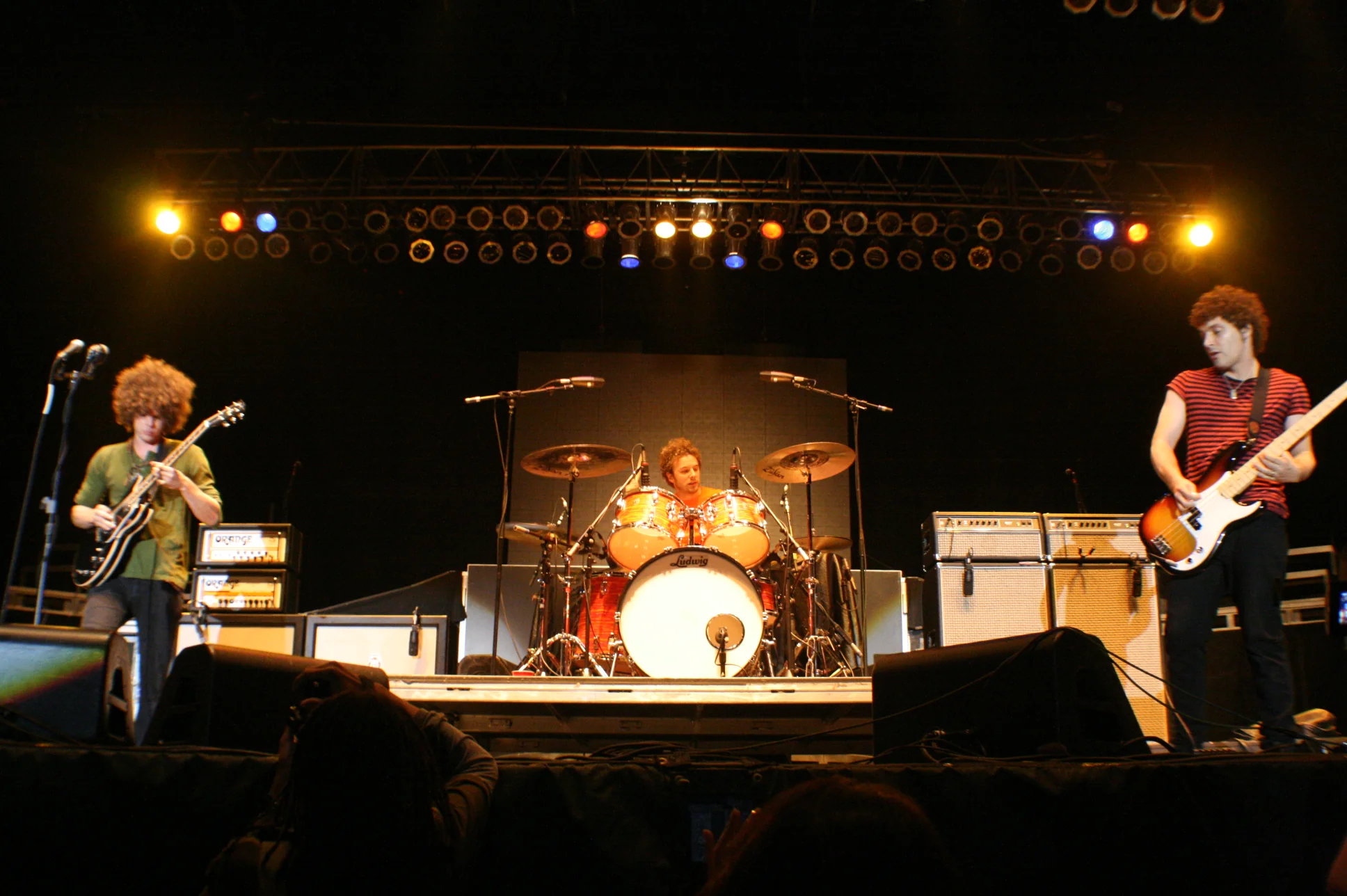
Image from Wikipedia
Image from Wikipedia
Wolfmother – The Australian Hard Rock Powerhouse Between Retro Riffs and Modern Stage Energy
Wolfmother: A Band That Not Only Quotes Classic Rock but Infuses It with Maximum Energy
Wolfmother from Erskineville near Sydney is one of the most prominent Australian rock bands of the 2000s. Their sound oscillates between Stoner Rock, Hard Rock, and a consciously classic approach to the great influences of the Seventies, without tipping into mere nostalgia. The band was formed in 2004 and early on created an aesthetic connected to Led Zeppelin, Black Sabbath, AC/DC, Aerosmith, Deep Purple, and the Black Crowes. ([en.wikipedia.org](https://en.wikipedia.org/wiki/Wolfmother_discography))
Biographical Beginning: From Sydney to the International Rock Scene
The original lineup consisted of Andrew Stockdale, Chris Ross, and Myles Heskett. Even their initial releases showcased a band that relied on massive guitars, driving grooves, and a distinctive, charged voice. The self-titled debut EP was released in 2004 through Modular Recordings and quickly established Wolfmother as a serious presence in the Australian scene. Later that same year, the band appeared at major events like Homebake and Big Day Out, laying the groundwork for their rapid rise. ([en.wikipedia.org](https://en.wikipedia.org/wiki/Wolfmother_discography))
The pivotal step came in 2005 with the debut album Wolfmother. The album was initially released in Australia, later extended internationally, and brought the band commercial and cultural breakthrough. With this release, Wolfmother positioned themselves as a group that combines classic Hard Rock with contemporary power and a clear song orientation. It was this blend of respect for rock tradition and offensive sonic richness that made the band globally appealing. ([en.wikipedia.org](https://en.wikipedia.org/wiki/Wolfmother_discography))
The Breakthrough: A Debut Album with Lasting Impact
The album Wolfmother reached number 3 on the Australian ARIA charts, was certified quintuple platinum, and sold over 1.6 million copies worldwide by 2009. The singles strategy was particularly important: Singles such as "Mind’s Eye," "White Unicorn," "Dimension," "Woman," "Love Train," and "Joker & the Thief" were released from the album. "Joker & the Thief" became the album's most successful single, reaching number 8 on the ARIA Singles Chart. ([en.wikipedia.org](https://en.wikipedia.org/wiki/Wolfmother_%28album%29))
Beyond the numbers, the debut achieved album status. Triple J played the record in heavy rotation, named it Album of the Week, and awarded it the first J Award as well as the Listener’s Choice Album of the Year. Six songs from the album made it into the Hottest 100, highlighting the cultural resonance of the band. Wolfmother thus combined not only a retro reflex but also a rare mainstream effect for a band whose power and sound are closely tied to classic Hard Rock. ([en.wikipedia.org](https://en.wikipedia.org/wiki/Wolfmother_%28album%29))
Sound Language and Style: Between Stoner Riffs, Psychedelia, and Stadium Format
Musically, Wolfmother works with a clearly recognizable signature: heavy riffs, distorted guitars, driving rhythms, and a penchant for anthemic choruses. The band is often described as Stoner Rock, but stylistically they have a broader range because their songs also incorporate psychedelic colors, blues influences, and the pathos of classic arena rock. Particularly in the debut phase, there was a strong affinity for large, epic tension arcs and songs that develop a whole sound architecture from a simple riff. ([en.wikipedia.org](https://en.wikipedia.org/wiki/Wolfmother_discography))
The press reacted early to this mix with a clear classification. The Guardian described Wolfmother in 2006 as a band that picks up a Zeppelin/Black Sabbath blueprint and develops a “gloriously infectious” rock from it, while Pitchfork highlighted the sonic range and the combination of clean and dirty guitars, organ, and dynamic transitions. Such assessments show: Wolfmother function not only as a retro reference but as a band that translates classic rock formulas into the present with palpable energy and convincing stage presence. ([theguardian.com](https://www.theguardian.com/music/2006/jul/12/popandrock1))
Career Development: Line-up Changes, New Chapters, and Persistence
After the initial success, a significant change occurred in 2008 when Chris Ross and Myles Heskett left the band. Andrew Stockdale remained as the creative core and restructured the lineup. For the second phase, he brought in Ian Peres, Aidan Nemeth, and Dave Atkins, among others; later, the lineup changed again, making Wolfmother a band with high personnel dynamics for years. This constant movement shaped their development without destroying their core identity. ([en.wikipedia.org](https://en.wikipedia.org/wiki/Wolfmother))
With Cosmic Egg, an impressive continuation was achieved in 2009. The album reached number 3 in Australia, number 16 in the USA, and number 35 in the UK. The lead-up with “Back Round” and “New Moon Rising” indicated that Wolfmother had not lost their momentum after the upheaval. The band toured with the album through Australia, North America, and Europe, and also supported AC/DC on their Black Ice World Tour in Australia. ([en.wikipedia.org](https://en.wikipedia.org/wiki/Wolfmother))
Discography: From Debut to Later Releases
Wolfmother's discography includes six studio albums, four EPs, 18 singles, 14 music videos, and one video album. After the debut and Cosmic Egg, they released New Crown and Victorious, followed by additional releases later on. The band has thus established itself as an active catalog act over two decades, with releases often accompanied by tours, line-up-related new beginnings, and solo activities by Andrew Stockdale. ([en.wikipedia.org](https://en.wikipedia.org/wiki/Wolfmother_discography))
The band's official music archive mentions a recording at Henson Recording Studios for Victorious and sessions in Los Angeles and Byron Bay for New Crown. The website also lists later pieces like “Rock’n’Roll Survivor,” “Kick Ass,” “Higher,” and “Sweet Spot,” which emphasize a focus on riff-driven, compact rock with high directness. This keeps Wolfmother true to an aesthetic that relies on immediate physical impact, particularly evident in live contexts. ([wolfmother.com](https://wolfmother.com/music?utm_source=openai))
Current Projects and Live Presence: Wolfmother on Tour
Even in 2025 and 2026, the band shows active presence. Official information on the website lists numerous concerts in the USA and Canada, including Austin, Houston, Dallas, Atlanta, Boston, Brooklyn, Toronto, Detroit, and additional stops. Simultaneously, Andrew Stockdale mentioned in an interview in early 2025 that enough new material is available for a potential Wolfmother album, and referred to the ongoing work on the song material. This underlines that Wolfmother is not only living off their legacy but continues to work on new music and their concert dynamics. ([wolfmother.com](https://wolfmother.com/))
The current phase is thus less characterized by a sudden restart than by continuous activity. Wolfmother remains a band defined by the stage: loud guitars, immediate choruses, a clear focus on live energy, and an aesthetic that understands rock as a physical experience. This is where their lasting relevance lies for fans of classically shaped guitar music. ([wolfmother.com](https://wolfmother.com/))
Critical Reception and Cultural Influence
The cultural influence of Wolfmother lies in their ability to make classic rock feel contemporary rather than museum-like. The press and audience perceived the band as a formation that reintroduced the great riff tradition while reaching a younger audience. The Guardian emphasized the audience's enthusiasm as well as the strong stage gestures, while Pitchfork highlighted the balance between homage and original power. This dual reading – as a reference to rock history and as a self-confident performance band – explains the ongoing attention. ([theguardian.com](https://www.theguardian.com/music/2006/jul/12/popandrock1))
Additionally, they received a Grammy in 2007 for “Woman” in the Best Hard Rock Performance category. Such awards not only confirm the band's international reach but also their adaptability within the global rock discourse. Wolfmother thus represents a form of Australian Hard Rock that is locally rooted yet exportable. ([es.wikipedia.org](https://es.wikipedia.org/wiki/Wolfmother))
Wolfmother is exciting because they carry classic rock into the present with genuine conviction, massive sound, and consistent stage energy. Their songs thrive on riff power, strong choruses, and a sense of grand arrangement, which becomes particularly tangible in concert halls. For lovers of Hard Rock, experiencing Wolfmother live is essential: there, the full force of this band unfolds most impressively. ([wolfmother.com](https://wolfmother.com/))
Official Channels of Wolfmother:
- Instagram: No official profile found
- Facebook: No official profile found
- YouTube: No official profile found
- Spotify: No official profile found
- TikTok: No official profile found
Sources:
- Wolfmother - Official Website
- Wolfmother - Music
- Wolfmother - Shows / Tour Dates
- Wikipedia - Wolfmother
- Wikipedia - Wolfmother Discography
- Wikipedia - Wolfmother (Album)
- The Guardian - Wolfmother, July 12, 2006
- Pitchfork - Wolfmother Album Review
- Noise11 - Wolfmother Prepares For A Red Hot Summer Tour and New Music for 2025