
Deggendorf
Edlmairstraße 2, 94469 Deggendorf, Deutschland
Room of Silence Deggendorf | Events & Directions
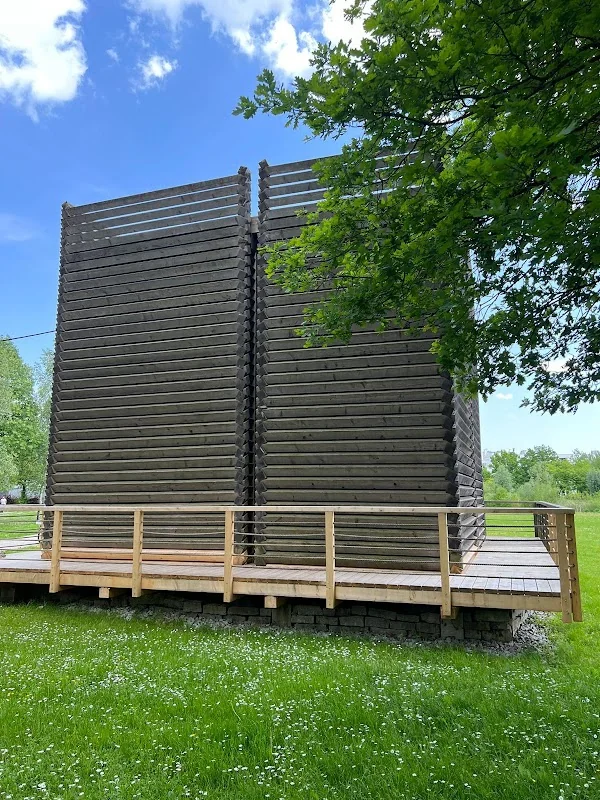
Those searching for Raum Deggendorf, Room of Silence Deggendorf, House of Silence Deggendorf, or the abbreviated term Raum de Stille usually mean the same special place in the Stadthallenpark. The Room of Silence is not a classic hall with a large stage, but a deliberately small place designed for lingering, experimenting, and pausing. This is precisely what attracts visitors looking for tranquility, workshops, or an unusual location in Deggendorf. The official website describes the room as a cube-shaped log cabin made from local materials, built for the State Garden Show 2014, and today used for both quiet and active formats. ([raum-der-stille-deggendorf.de](https://raum-der-stille-deggendorf.de/))
Its effect arises from the combination of simple architecture, clear form, and open usability. The building is not religiously charged but open to different people and various contents. This is why the typical search queries fit it so well: some want to know how to get there, others look for reviews, while others are interested in yoga, meditation, or simply the name of the place. In SEO terms, these are clear navigation and information signals that point to a small but distinctive location. The Room of Silence does not speak with size but with atmosphere. This makes it an exciting place for all who want to discover Deggendorf away from the large event formats. ([raum-der-stille-deggendorf.de](https://raum-der-stille-deggendorf.de/))
What is the Room of Silence in Deggendorf?
The Room of Silence was planned by the city of Deggendorf in 2013 and built in connection with the State Garden Show 2014. It is located in the Stadthallenpark by the Danube and is designed as a small wooden building with a clear, almost sculptural effect. The official description emphasizes the local materials, traditional log cabin technique, and the cube-like impression of the building. This clearly distinguishes the room from an ordinary hall or multipurpose room, as the focus here is not on maximum occupancy but on a special character that allows for tranquility, concentration, and encounters. This is interesting not only for locals but also for guests looking for a unique place in connection with Deggendorf. ([raum-der-stille-deggendorf.de](https://raum-der-stille-deggendorf.de/))
It is precisely the small size that makes the room so remarkable. The official website states an interior area of about 27 square meters. This is manageable but perfectly suited for formats that require a calm, protected atmosphere. Because the room has no windows and works with diffuse light, it creates a gentle, restrained impression inside. Additionally, the building does not rely on religious symbolism. This makes it adaptable for many uses, from quiet retreats to collaborative work in small groups. Those searching for a House of Silence in Deggendorf often expect a place of contemplation; those who actually experience the room quickly realize that it is simultaneously open, flexible, and surprisingly versatile. ([raum-der-stille-deggendorf.de](https://raum-der-stille-deggendorf.de/))
The history of its creation is also important as it explains why this place is so strongly connected to the city. The Room of Silence was not created by chance but deliberately as part of an urban and cultural development. In the Stadthallenpark, it is now a quiet counterpoint to the many movement, culture, and leisure offerings in the area. The interplay of park, proximity to the Danube, and wooden architecture ensures that the place does not appear isolated but is embedded in a vibrant urban landscape. So, when searching for Raum Deggendorf, one does not end up just anywhere but at a place with a clear identity that plays a role in both everyday life and special occasions. ([raum-der-stille-deggendorf.de](https://raum-der-stille-deggendorf.de/))
What events and courses take place in the Room of Silence?
The official website of the location describes the room not only as a place of silence but explicitly also as a space for exchange and participation. Workshops and offerings around culture, music, sports, creativity, and social cohesion are mentioned. This is particularly relevant for SEO analysis, as it derives the most important usage and search patterns: many people are not only looking for the location but also for specific events, programs, and dates. The Room of Silence is thus a hybrid place between a quiet zone and an active space. It is suitable for small, personal formats where closeness, concentration, and a pleasant atmosphere are more important than large capacities or loud staging. ([raum-der-stille-deggendorf.de](https://raum-der-stille-deggendorf.de/))
The current and archived event pages of the city of Deggendorf show how broad the spectrum actually is. In the Room of Silence, among other things, Ashtanga Yoga, Chakra Meditation, Qi Gong, PMR, breathwork, and other mindfulness-related offerings have taken place and continue to do so. For example, Ashtanga Yoga uses the room as a place for regular practice from April to October 2026; the sessions occur on the first Tuesday of each month and are aimed at participants with prior knowledge. Qi Gong is described as a health-oriented, beginner-friendly practice, while the breath space is offered monthly as a short, consciously reduced breathwork impulse. This mix shows that the place is by no means only quiet but works very well for modern, health-oriented formats. ([deggendorf.de](https://www.deggendorf.de/veranstaltungen/event/ashtanga-yoga))
The nature of the offerings is also noteworthy. Some formats require tickets, while others operate on a donation basis or without registration. This makes the Room of Silence accessible and simultaneously planable. Certain dates indicate prior knowledge, while others explicitly do not. This allows the place to appeal to various target groups: beginners, experienced practitioners, small groups, and people simply looking for a protected framework. For visitors, this means: The Room of Silence is not a rigid event location but a flexibly usable space with regularly changing content. So, those searching for Room of Silence Deggendorf events find not only a program but a whole usage concept that connects tranquility, bodywork, mindfulness, and social encounters. ([deggendorf.de](https://www.deggendorf.de/veranstaltungen/event/ashtanga-yoga))
Additionally, the room is also thought of in social and community contexts. The city pages and local reports show that initiatives, open meetings, and thematic formats can repeatedly find space there. An article from PNP describes the simple wooden building behind the Stadthalle as a place that has even been used or can be used for weddings, while also emphasizing its openness to sports, yoga, crafting, art, singing, making music, drumming, dancing, reading, writing, painting, and meditation. This confirms the impression of a house that is not fixed to a single function but consciously creates space for various forms of participation. For search intent, this is central: those looking for programs, courses, or special offerings end up here at a place designed precisely for this diversity. ([pnp.de](https://www.pnp.de/lokales/landkreis-deggendorf/leben-im-raum-der-stille-11198117))
How do I get to the Room of Silence and where can I park?
The Room of Silence is located in Deggendorf by the Danube in the Stadthallenpark. The official website describes it as part of this park area, and local reports add that the wooden building can also be accessed via Weidenstraße. This is important for arrival because the room is not located as an isolated building complex on the outskirts but is very centrally embedded in the park and Stadthalle structure. Therefore, anyone attending an event or simply wanting to get to know the place moves in an area characterized by green spaces, the Stadthalle, proximity to the Danube, and urban infrastructure. This location makes it attractive for pedestrians, for those who want to combine a quiet walk with a visit, and for all who are already in the vicinity of the Stadthalle. ([raum-der-stille-deggendorf.de](https://raum-der-stille-deggendorf.de/))
For parking, the city’s information is helpful, even though the Room of Silence itself does not promote a large parking system. The city of Deggendorf mentions, in connection with the Stadthalle, the Stadthalle parking garage and the Danube parking deck as nearby parking options. Additionally, the city overview for disabled parking lists a parking space at Dr.-Görlitz-Platz by the Stadthalle. This is an important note for guests with limited mobility, as the location is not only barrier-free accessible but is also supported accordingly in the surrounding area. Those looking for a short, practical solution can orient themselves to these publicly named parking options and then continue their way to the Stadthallenpark. ([deggendorf.de](https://www.deggendorf.de/leben/menschen-mit-behinderungen/behindertenparkplaetze?utm_source=openai))
For SEO and user intent, the search terms directions and parking are particularly relevant because they express a very concrete planning need. People want to know if they can park directly next to the building, if there is a parking garage, how close the paths are, and whether there is barrier-free access. In the case of the Room of Silence, the most important, reliable statement is: The place is centrally located in the Stadthallenpark, is also accessible via Weidenstraße, has barrier-free access, and has several nearby parking options in the urban environment. Those arriving with some advance notice benefit from the location, as the walk through the park can already be part of the experience. This fits with a space that focuses not on haste but on tranquility and conscious perception. ([raum-der-stille-deggendorf.de](https://raum-der-stille-deggendorf.de/))
How are architecture, equipment, and accessibility resolved?
Architecturally, the Room of Silence is a consciously reduced but very striking building. The official site describes it as a cube-shaped log cabin made of local spruce wood, built in traditional log cabin technique and designed like a building block. These details are more than mere construction information, as they explain the special effect of the building. The wood provides warmth and closeness, the cubic form offers clarity, and the handcrafted appearance creates a tangible connection to the region. In a city that knows large, functional structures with the Danube, park areas, and Stadthalle, this small building acts as a contrast program: quiet, concentrated, almost meditative. This is why it is so well suited for search queries related to uniqueness, history, and equipment. ([raum-der-stille-deggendorf.de](https://raum-der-stille-deggendorf.de/))
The equipment also follows this clear concept. According to the website, the interior has an area of about 27 square meters, has electric light but no heating and no windows. This sounds simple at first, but it is conceptually coherent: the room is not meant to offer overloaded event technology but a reduced atmosphere where content and people are at the center. The diffuse light further supports this impression. Access is via a ramp and a walkway around the log cabin, making the way in already a small transition from everyday life to the calmer space. This architectural staging is subtle, not loud, and that is precisely what makes it so effective. ([raum-der-stille-deggendorf.de](https://raum-der-stille-deggendorf.de/))
Accessibility is another strong argument for the Room of Silence. The official website explicitly emphasizes that the place is barrier-free accessible. Especially in connection with local events, this is important because formats like meditation, breathwork, or gentle movement should be open to as many people as possible. The combination of ramp, simple orientation, and small footprint makes the room usable for a broad target group. In practice, this means: The place is not only beautiful to look at but also functionally well thought out. Those searching for the special features of Room of Silence Deggendorf thus find a credible mix of design, usability, and accessibility. This is valuable in the SEO context because it not only creates an image but also a clear usage logic. ([raum-der-stille-deggendorf.de](https://raum-der-stille-deggendorf.de/))
Reviews, usage, and practical tips for visitors
The provided location data currently shows 4.7 stars for the Room of Silence based on 7 reviews. This is not a huge evaluation base, but a clearly positive impression that fits well with a small, specialized place. The character of the room explains why it does not function like a mass location: it is not about large ticket numbers or a classic event machine, but about effect, atmosphere, and consciously selected formats. When people rate the place, it is likely this mix of tranquility, wooden charm, and special usage that they appreciate. For the search intent reviews for Room of Silence Deggendorf, it is therefore especially important that the place is very individual and apparently appreciated by those who visit it consciously. This speaks for a genuine hidden gem character in Deggendorf.
Practically, visitors should especially pay attention to the type of event. Some offerings operate on a donation basis, others with a ticket price or direct registration with the offering person. For sessions like breathwork, Qi Gong, or meditation, it is often recommended to bring a mat, a blanket, a seat cushion, or something to drink. Some formats take place indoors, while others may start or switch outdoors depending on the weather. For everyone visiting the room for the first time, this is good news: the place is not only atmospheric but also uncomplicated. The usage remains approachable, personal, and relatively low-threshold. So, those looking for a quiet but not stiff place are exactly right here. ([deggendorf.de](https://www.deggendorf.de/veranstaltungen/event/atemraum-reset-fuer-dein-nervensystem?utm_source=openai))
Overall, the Room of Silence Deggendorf shows how strongly a small place can become through a clear idea. From a search perspective, it covers several important themes simultaneously: space, directions, parking, accessibility, events, meditation, yoga, and special usage. From a city perspective, it is a quiet counterpoint in the middle of the Stadthallenpark; from a user perspective, it is a flexible, open, and often surprising place. Those who visit it are not necessarily looking for spectacle but for quality in the small. This is why the Room of Silence works so well as an SEO topic: it is concrete enough for local search queries and special enough to be memorable. ([raum-der-stille-deggendorf.de](https://raum-der-stille-deggendorf.de/))
Sources:
- Room of Silence Deggendorf - Official Website ([raum-der-stille-deggendorf.de](https://raum-der-stille-deggendorf.de/))
- City of Deggendorf - Ashtanga Yoga in the Room of Silence ([deggendorf.de](https://www.deggendorf.de/veranstaltungen/event/ashtanga-yoga))
- City of Deggendorf - Breath Space in the Room of Silence ([deggendorf.de](https://www.deggendorf.de/veranstaltungen/event/atemraum-reset-fuer-dein-nervensystem?utm_source=openai))
- City of Deggendorf - Qi Gong in the Room of Silence ([deggendorf.de](https://www.deggendorf.de/veranstaltungen/event/qi-gong-im-raum-der-stille?utm_source=openai))
- PNP - Life in the Room of Silence ([pnp.de](https://www.pnp.de/lokales/landkreis-deggendorf/leben-im-raum-der-stille-11198117))
- City of Deggendorf - Disabled Parking ([deggendorf.de](https://www.deggendorf.de/leben/menschen-mit-behinderungen/behindertenparkplaetze?utm_source=openai))
Show moreShow less
Room of Silence Deggendorf | Events & Directions
Those searching for Raum Deggendorf, Room of Silence Deggendorf, House of Silence Deggendorf, or the abbreviated term Raum de Stille usually mean the same special place in the Stadthallenpark. The Room of Silence is not a classic hall with a large stage, but a deliberately small place designed for lingering, experimenting, and pausing. This is precisely what attracts visitors looking for tranquility, workshops, or an unusual location in Deggendorf. The official website describes the room as a cube-shaped log cabin made from local materials, built for the State Garden Show 2014, and today used for both quiet and active formats. ([raum-der-stille-deggendorf.de](https://raum-der-stille-deggendorf.de/))
Its effect arises from the combination of simple architecture, clear form, and open usability. The building is not religiously charged but open to different people and various contents. This is why the typical search queries fit it so well: some want to know how to get there, others look for reviews, while others are interested in yoga, meditation, or simply the name of the place. In SEO terms, these are clear navigation and information signals that point to a small but distinctive location. The Room of Silence does not speak with size but with atmosphere. This makes it an exciting place for all who want to discover Deggendorf away from the large event formats. ([raum-der-stille-deggendorf.de](https://raum-der-stille-deggendorf.de/))
What is the Room of Silence in Deggendorf?
The Room of Silence was planned by the city of Deggendorf in 2013 and built in connection with the State Garden Show 2014. It is located in the Stadthallenpark by the Danube and is designed as a small wooden building with a clear, almost sculptural effect. The official description emphasizes the local materials, traditional log cabin technique, and the cube-like impression of the building. This clearly distinguishes the room from an ordinary hall or multipurpose room, as the focus here is not on maximum occupancy but on a special character that allows for tranquility, concentration, and encounters. This is interesting not only for locals but also for guests looking for a unique place in connection with Deggendorf. ([raum-der-stille-deggendorf.de](https://raum-der-stille-deggendorf.de/))
It is precisely the small size that makes the room so remarkable. The official website states an interior area of about 27 square meters. This is manageable but perfectly suited for formats that require a calm, protected atmosphere. Because the room has no windows and works with diffuse light, it creates a gentle, restrained impression inside. Additionally, the building does not rely on religious symbolism. This makes it adaptable for many uses, from quiet retreats to collaborative work in small groups. Those searching for a House of Silence in Deggendorf often expect a place of contemplation; those who actually experience the room quickly realize that it is simultaneously open, flexible, and surprisingly versatile. ([raum-der-stille-deggendorf.de](https://raum-der-stille-deggendorf.de/))
The history of its creation is also important as it explains why this place is so strongly connected to the city. The Room of Silence was not created by chance but deliberately as part of an urban and cultural development. In the Stadthallenpark, it is now a quiet counterpoint to the many movement, culture, and leisure offerings in the area. The interplay of park, proximity to the Danube, and wooden architecture ensures that the place does not appear isolated but is embedded in a vibrant urban landscape. So, when searching for Raum Deggendorf, one does not end up just anywhere but at a place with a clear identity that plays a role in both everyday life and special occasions. ([raum-der-stille-deggendorf.de](https://raum-der-stille-deggendorf.de/))
What events and courses take place in the Room of Silence?
The official website of the location describes the room not only as a place of silence but explicitly also as a space for exchange and participation. Workshops and offerings around culture, music, sports, creativity, and social cohesion are mentioned. This is particularly relevant for SEO analysis, as it derives the most important usage and search patterns: many people are not only looking for the location but also for specific events, programs, and dates. The Room of Silence is thus a hybrid place between a quiet zone and an active space. It is suitable for small, personal formats where closeness, concentration, and a pleasant atmosphere are more important than large capacities or loud staging. ([raum-der-stille-deggendorf.de](https://raum-der-stille-deggendorf.de/))
The current and archived event pages of the city of Deggendorf show how broad the spectrum actually is. In the Room of Silence, among other things, Ashtanga Yoga, Chakra Meditation, Qi Gong, PMR, breathwork, and other mindfulness-related offerings have taken place and continue to do so. For example, Ashtanga Yoga uses the room as a place for regular practice from April to October 2026; the sessions occur on the first Tuesday of each month and are aimed at participants with prior knowledge. Qi Gong is described as a health-oriented, beginner-friendly practice, while the breath space is offered monthly as a short, consciously reduced breathwork impulse. This mix shows that the place is by no means only quiet but works very well for modern, health-oriented formats. ([deggendorf.de](https://www.deggendorf.de/veranstaltungen/event/ashtanga-yoga))
The nature of the offerings is also noteworthy. Some formats require tickets, while others operate on a donation basis or without registration. This makes the Room of Silence accessible and simultaneously planable. Certain dates indicate prior knowledge, while others explicitly do not. This allows the place to appeal to various target groups: beginners, experienced practitioners, small groups, and people simply looking for a protected framework. For visitors, this means: The Room of Silence is not a rigid event location but a flexibly usable space with regularly changing content. So, those searching for Room of Silence Deggendorf events find not only a program but a whole usage concept that connects tranquility, bodywork, mindfulness, and social encounters. ([deggendorf.de](https://www.deggendorf.de/veranstaltungen/event/ashtanga-yoga))
Additionally, the room is also thought of in social and community contexts. The city pages and local reports show that initiatives, open meetings, and thematic formats can repeatedly find space there. An article from PNP describes the simple wooden building behind the Stadthalle as a place that has even been used or can be used for weddings, while also emphasizing its openness to sports, yoga, crafting, art, singing, making music, drumming, dancing, reading, writing, painting, and meditation. This confirms the impression of a house that is not fixed to a single function but consciously creates space for various forms of participation. For search intent, this is central: those looking for programs, courses, or special offerings end up here at a place designed precisely for this diversity. ([pnp.de](https://www.pnp.de/lokales/landkreis-deggendorf/leben-im-raum-der-stille-11198117))
How do I get to the Room of Silence and where can I park?
The Room of Silence is located in Deggendorf by the Danube in the Stadthallenpark. The official website describes it as part of this park area, and local reports add that the wooden building can also be accessed via Weidenstraße. This is important for arrival because the room is not located as an isolated building complex on the outskirts but is very centrally embedded in the park and Stadthalle structure. Therefore, anyone attending an event or simply wanting to get to know the place moves in an area characterized by green spaces, the Stadthalle, proximity to the Danube, and urban infrastructure. This location makes it attractive for pedestrians, for those who want to combine a quiet walk with a visit, and for all who are already in the vicinity of the Stadthalle. ([raum-der-stille-deggendorf.de](https://raum-der-stille-deggendorf.de/))
For parking, the city’s information is helpful, even though the Room of Silence itself does not promote a large parking system. The city of Deggendorf mentions, in connection with the Stadthalle, the Stadthalle parking garage and the Danube parking deck as nearby parking options. Additionally, the city overview for disabled parking lists a parking space at Dr.-Görlitz-Platz by the Stadthalle. This is an important note for guests with limited mobility, as the location is not only barrier-free accessible but is also supported accordingly in the surrounding area. Those looking for a short, practical solution can orient themselves to these publicly named parking options and then continue their way to the Stadthallenpark. ([deggendorf.de](https://www.deggendorf.de/leben/menschen-mit-behinderungen/behindertenparkplaetze?utm_source=openai))
For SEO and user intent, the search terms directions and parking are particularly relevant because they express a very concrete planning need. People want to know if they can park directly next to the building, if there is a parking garage, how close the paths are, and whether there is barrier-free access. In the case of the Room of Silence, the most important, reliable statement is: The place is centrally located in the Stadthallenpark, is also accessible via Weidenstraße, has barrier-free access, and has several nearby parking options in the urban environment. Those arriving with some advance notice benefit from the location, as the walk through the park can already be part of the experience. This fits with a space that focuses not on haste but on tranquility and conscious perception. ([raum-der-stille-deggendorf.de](https://raum-der-stille-deggendorf.de/))
How are architecture, equipment, and accessibility resolved?
Architecturally, the Room of Silence is a consciously reduced but very striking building. The official site describes it as a cube-shaped log cabin made of local spruce wood, built in traditional log cabin technique and designed like a building block. These details are more than mere construction information, as they explain the special effect of the building. The wood provides warmth and closeness, the cubic form offers clarity, and the handcrafted appearance creates a tangible connection to the region. In a city that knows large, functional structures with the Danube, park areas, and Stadthalle, this small building acts as a contrast program: quiet, concentrated, almost meditative. This is why it is so well suited for search queries related to uniqueness, history, and equipment. ([raum-der-stille-deggendorf.de](https://raum-der-stille-deggendorf.de/))
The equipment also follows this clear concept. According to the website, the interior has an area of about 27 square meters, has electric light but no heating and no windows. This sounds simple at first, but it is conceptually coherent: the room is not meant to offer overloaded event technology but a reduced atmosphere where content and people are at the center. The diffuse light further supports this impression. Access is via a ramp and a walkway around the log cabin, making the way in already a small transition from everyday life to the calmer space. This architectural staging is subtle, not loud, and that is precisely what makes it so effective. ([raum-der-stille-deggendorf.de](https://raum-der-stille-deggendorf.de/))
Accessibility is another strong argument for the Room of Silence. The official website explicitly emphasizes that the place is barrier-free accessible. Especially in connection with local events, this is important because formats like meditation, breathwork, or gentle movement should be open to as many people as possible. The combination of ramp, simple orientation, and small footprint makes the room usable for a broad target group. In practice, this means: The place is not only beautiful to look at but also functionally well thought out. Those searching for the special features of Room of Silence Deggendorf thus find a credible mix of design, usability, and accessibility. This is valuable in the SEO context because it not only creates an image but also a clear usage logic. ([raum-der-stille-deggendorf.de](https://raum-der-stille-deggendorf.de/))
Reviews, usage, and practical tips for visitors
The provided location data currently shows 4.7 stars for the Room of Silence based on 7 reviews. This is not a huge evaluation base, but a clearly positive impression that fits well with a small, specialized place. The character of the room explains why it does not function like a mass location: it is not about large ticket numbers or a classic event machine, but about effect, atmosphere, and consciously selected formats. When people rate the place, it is likely this mix of tranquility, wooden charm, and special usage that they appreciate. For the search intent reviews for Room of Silence Deggendorf, it is therefore especially important that the place is very individual and apparently appreciated by those who visit it consciously. This speaks for a genuine hidden gem character in Deggendorf.
Practically, visitors should especially pay attention to the type of event. Some offerings operate on a donation basis, others with a ticket price or direct registration with the offering person. For sessions like breathwork, Qi Gong, or meditation, it is often recommended to bring a mat, a blanket, a seat cushion, or something to drink. Some formats take place indoors, while others may start or switch outdoors depending on the weather. For everyone visiting the room for the first time, this is good news: the place is not only atmospheric but also uncomplicated. The usage remains approachable, personal, and relatively low-threshold. So, those looking for a quiet but not stiff place are exactly right here. ([deggendorf.de](https://www.deggendorf.de/veranstaltungen/event/atemraum-reset-fuer-dein-nervensystem?utm_source=openai))
Overall, the Room of Silence Deggendorf shows how strongly a small place can become through a clear idea. From a search perspective, it covers several important themes simultaneously: space, directions, parking, accessibility, events, meditation, yoga, and special usage. From a city perspective, it is a quiet counterpoint in the middle of the Stadthallenpark; from a user perspective, it is a flexible, open, and often surprising place. Those who visit it are not necessarily looking for spectacle but for quality in the small. This is why the Room of Silence works so well as an SEO topic: it is concrete enough for local search queries and special enough to be memorable. ([raum-der-stille-deggendorf.de](https://raum-der-stille-deggendorf.de/))
Sources:
- Room of Silence Deggendorf - Official Website ([raum-der-stille-deggendorf.de](https://raum-der-stille-deggendorf.de/))
- City of Deggendorf - Ashtanga Yoga in the Room of Silence ([deggendorf.de](https://www.deggendorf.de/veranstaltungen/event/ashtanga-yoga))
- City of Deggendorf - Breath Space in the Room of Silence ([deggendorf.de](https://www.deggendorf.de/veranstaltungen/event/atemraum-reset-fuer-dein-nervensystem?utm_source=openai))
- City of Deggendorf - Qi Gong in the Room of Silence ([deggendorf.de](https://www.deggendorf.de/veranstaltungen/event/qi-gong-im-raum-der-stille?utm_source=openai))
- PNP - Life in the Room of Silence ([pnp.de](https://www.pnp.de/lokales/landkreis-deggendorf/leben-im-raum-der-stille-11198117))
- City of Deggendorf - Disabled Parking ([deggendorf.de](https://www.deggendorf.de/leben/menschen-mit-behinderungen/behindertenparkplaetze?utm_source=openai))
Room of Silence Deggendorf | Events & Directions
Those searching for Raum Deggendorf, Room of Silence Deggendorf, House of Silence Deggendorf, or the abbreviated term Raum de Stille usually mean the same special place in the Stadthallenpark. The Room of Silence is not a classic hall with a large stage, but a deliberately small place designed for lingering, experimenting, and pausing. This is precisely what attracts visitors looking for tranquility, workshops, or an unusual location in Deggendorf. The official website describes the room as a cube-shaped log cabin made from local materials, built for the State Garden Show 2014, and today used for both quiet and active formats. ([raum-der-stille-deggendorf.de](https://raum-der-stille-deggendorf.de/))
Its effect arises from the combination of simple architecture, clear form, and open usability. The building is not religiously charged but open to different people and various contents. This is why the typical search queries fit it so well: some want to know how to get there, others look for reviews, while others are interested in yoga, meditation, or simply the name of the place. In SEO terms, these are clear navigation and information signals that point to a small but distinctive location. The Room of Silence does not speak with size but with atmosphere. This makes it an exciting place for all who want to discover Deggendorf away from the large event formats. ([raum-der-stille-deggendorf.de](https://raum-der-stille-deggendorf.de/))
What is the Room of Silence in Deggendorf?
The Room of Silence was planned by the city of Deggendorf in 2013 and built in connection with the State Garden Show 2014. It is located in the Stadthallenpark by the Danube and is designed as a small wooden building with a clear, almost sculptural effect. The official description emphasizes the local materials, traditional log cabin technique, and the cube-like impression of the building. This clearly distinguishes the room from an ordinary hall or multipurpose room, as the focus here is not on maximum occupancy but on a special character that allows for tranquility, concentration, and encounters. This is interesting not only for locals but also for guests looking for a unique place in connection with Deggendorf. ([raum-der-stille-deggendorf.de](https://raum-der-stille-deggendorf.de/))
It is precisely the small size that makes the room so remarkable. The official website states an interior area of about 27 square meters. This is manageable but perfectly suited for formats that require a calm, protected atmosphere. Because the room has no windows and works with diffuse light, it creates a gentle, restrained impression inside. Additionally, the building does not rely on religious symbolism. This makes it adaptable for many uses, from quiet retreats to collaborative work in small groups. Those searching for a House of Silence in Deggendorf often expect a place of contemplation; those who actually experience the room quickly realize that it is simultaneously open, flexible, and surprisingly versatile. ([raum-der-stille-deggendorf.de](https://raum-der-stille-deggendorf.de/))
The history of its creation is also important as it explains why this place is so strongly connected to the city. The Room of Silence was not created by chance but deliberately as part of an urban and cultural development. In the Stadthallenpark, it is now a quiet counterpoint to the many movement, culture, and leisure offerings in the area. The interplay of park, proximity to the Danube, and wooden architecture ensures that the place does not appear isolated but is embedded in a vibrant urban landscape. So, when searching for Raum Deggendorf, one does not end up just anywhere but at a place with a clear identity that plays a role in both everyday life and special occasions. ([raum-der-stille-deggendorf.de](https://raum-der-stille-deggendorf.de/))
What events and courses take place in the Room of Silence?
The official website of the location describes the room not only as a place of silence but explicitly also as a space for exchange and participation. Workshops and offerings around culture, music, sports, creativity, and social cohesion are mentioned. This is particularly relevant for SEO analysis, as it derives the most important usage and search patterns: many people are not only looking for the location but also for specific events, programs, and dates. The Room of Silence is thus a hybrid place between a quiet zone and an active space. It is suitable for small, personal formats where closeness, concentration, and a pleasant atmosphere are more important than large capacities or loud staging. ([raum-der-stille-deggendorf.de](https://raum-der-stille-deggendorf.de/))
The current and archived event pages of the city of Deggendorf show how broad the spectrum actually is. In the Room of Silence, among other things, Ashtanga Yoga, Chakra Meditation, Qi Gong, PMR, breathwork, and other mindfulness-related offerings have taken place and continue to do so. For example, Ashtanga Yoga uses the room as a place for regular practice from April to October 2026; the sessions occur on the first Tuesday of each month and are aimed at participants with prior knowledge. Qi Gong is described as a health-oriented, beginner-friendly practice, while the breath space is offered monthly as a short, consciously reduced breathwork impulse. This mix shows that the place is by no means only quiet but works very well for modern, health-oriented formats. ([deggendorf.de](https://www.deggendorf.de/veranstaltungen/event/ashtanga-yoga))
The nature of the offerings is also noteworthy. Some formats require tickets, while others operate on a donation basis or without registration. This makes the Room of Silence accessible and simultaneously planable. Certain dates indicate prior knowledge, while others explicitly do not. This allows the place to appeal to various target groups: beginners, experienced practitioners, small groups, and people simply looking for a protected framework. For visitors, this means: The Room of Silence is not a rigid event location but a flexibly usable space with regularly changing content. So, those searching for Room of Silence Deggendorf events find not only a program but a whole usage concept that connects tranquility, bodywork, mindfulness, and social encounters. ([deggendorf.de](https://www.deggendorf.de/veranstaltungen/event/ashtanga-yoga))
Additionally, the room is also thought of in social and community contexts. The city pages and local reports show that initiatives, open meetings, and thematic formats can repeatedly find space there. An article from PNP describes the simple wooden building behind the Stadthalle as a place that has even been used or can be used for weddings, while also emphasizing its openness to sports, yoga, crafting, art, singing, making music, drumming, dancing, reading, writing, painting, and meditation. This confirms the impression of a house that is not fixed to a single function but consciously creates space for various forms of participation. For search intent, this is central: those looking for programs, courses, or special offerings end up here at a place designed precisely for this diversity. ([pnp.de](https://www.pnp.de/lokales/landkreis-deggendorf/leben-im-raum-der-stille-11198117))
How do I get to the Room of Silence and where can I park?
The Room of Silence is located in Deggendorf by the Danube in the Stadthallenpark. The official website describes it as part of this park area, and local reports add that the wooden building can also be accessed via Weidenstraße. This is important for arrival because the room is not located as an isolated building complex on the outskirts but is very centrally embedded in the park and Stadthalle structure. Therefore, anyone attending an event or simply wanting to get to know the place moves in an area characterized by green spaces, the Stadthalle, proximity to the Danube, and urban infrastructure. This location makes it attractive for pedestrians, for those who want to combine a quiet walk with a visit, and for all who are already in the vicinity of the Stadthalle. ([raum-der-stille-deggendorf.de](https://raum-der-stille-deggendorf.de/))
For parking, the city’s information is helpful, even though the Room of Silence itself does not promote a large parking system. The city of Deggendorf mentions, in connection with the Stadthalle, the Stadthalle parking garage and the Danube parking deck as nearby parking options. Additionally, the city overview for disabled parking lists a parking space at Dr.-Görlitz-Platz by the Stadthalle. This is an important note for guests with limited mobility, as the location is not only barrier-free accessible but is also supported accordingly in the surrounding area. Those looking for a short, practical solution can orient themselves to these publicly named parking options and then continue their way to the Stadthallenpark. ([deggendorf.de](https://www.deggendorf.de/leben/menschen-mit-behinderungen/behindertenparkplaetze?utm_source=openai))
For SEO and user intent, the search terms directions and parking are particularly relevant because they express a very concrete planning need. People want to know if they can park directly next to the building, if there is a parking garage, how close the paths are, and whether there is barrier-free access. In the case of the Room of Silence, the most important, reliable statement is: The place is centrally located in the Stadthallenpark, is also accessible via Weidenstraße, has barrier-free access, and has several nearby parking options in the urban environment. Those arriving with some advance notice benefit from the location, as the walk through the park can already be part of the experience. This fits with a space that focuses not on haste but on tranquility and conscious perception. ([raum-der-stille-deggendorf.de](https://raum-der-stille-deggendorf.de/))
How are architecture, equipment, and accessibility resolved?
Architecturally, the Room of Silence is a consciously reduced but very striking building. The official site describes it as a cube-shaped log cabin made of local spruce wood, built in traditional log cabin technique and designed like a building block. These details are more than mere construction information, as they explain the special effect of the building. The wood provides warmth and closeness, the cubic form offers clarity, and the handcrafted appearance creates a tangible connection to the region. In a city that knows large, functional structures with the Danube, park areas, and Stadthalle, this small building acts as a contrast program: quiet, concentrated, almost meditative. This is why it is so well suited for search queries related to uniqueness, history, and equipment. ([raum-der-stille-deggendorf.de](https://raum-der-stille-deggendorf.de/))
The equipment also follows this clear concept. According to the website, the interior has an area of about 27 square meters, has electric light but no heating and no windows. This sounds simple at first, but it is conceptually coherent: the room is not meant to offer overloaded event technology but a reduced atmosphere where content and people are at the center. The diffuse light further supports this impression. Access is via a ramp and a walkway around the log cabin, making the way in already a small transition from everyday life to the calmer space. This architectural staging is subtle, not loud, and that is precisely what makes it so effective. ([raum-der-stille-deggendorf.de](https://raum-der-stille-deggendorf.de/))
Accessibility is another strong argument for the Room of Silence. The official website explicitly emphasizes that the place is barrier-free accessible. Especially in connection with local events, this is important because formats like meditation, breathwork, or gentle movement should be open to as many people as possible. The combination of ramp, simple orientation, and small footprint makes the room usable for a broad target group. In practice, this means: The place is not only beautiful to look at but also functionally well thought out. Those searching for the special features of Room of Silence Deggendorf thus find a credible mix of design, usability, and accessibility. This is valuable in the SEO context because it not only creates an image but also a clear usage logic. ([raum-der-stille-deggendorf.de](https://raum-der-stille-deggendorf.de/))
Reviews, usage, and practical tips for visitors
The provided location data currently shows 4.7 stars for the Room of Silence based on 7 reviews. This is not a huge evaluation base, but a clearly positive impression that fits well with a small, specialized place. The character of the room explains why it does not function like a mass location: it is not about large ticket numbers or a classic event machine, but about effect, atmosphere, and consciously selected formats. When people rate the place, it is likely this mix of tranquility, wooden charm, and special usage that they appreciate. For the search intent reviews for Room of Silence Deggendorf, it is therefore especially important that the place is very individual and apparently appreciated by those who visit it consciously. This speaks for a genuine hidden gem character in Deggendorf.
Practically, visitors should especially pay attention to the type of event. Some offerings operate on a donation basis, others with a ticket price or direct registration with the offering person. For sessions like breathwork, Qi Gong, or meditation, it is often recommended to bring a mat, a blanket, a seat cushion, or something to drink. Some formats take place indoors, while others may start or switch outdoors depending on the weather. For everyone visiting the room for the first time, this is good news: the place is not only atmospheric but also uncomplicated. The usage remains approachable, personal, and relatively low-threshold. So, those looking for a quiet but not stiff place are exactly right here. ([deggendorf.de](https://www.deggendorf.de/veranstaltungen/event/atemraum-reset-fuer-dein-nervensystem?utm_source=openai))
Overall, the Room of Silence Deggendorf shows how strongly a small place can become through a clear idea. From a search perspective, it covers several important themes simultaneously: space, directions, parking, accessibility, events, meditation, yoga, and special usage. From a city perspective, it is a quiet counterpoint in the middle of the Stadthallenpark; from a user perspective, it is a flexible, open, and often surprising place. Those who visit it are not necessarily looking for spectacle but for quality in the small. This is why the Room of Silence works so well as an SEO topic: it is concrete enough for local search queries and special enough to be memorable. ([raum-der-stille-deggendorf.de](https://raum-der-stille-deggendorf.de/))
Sources:
- Room of Silence Deggendorf - Official Website ([raum-der-stille-deggendorf.de](https://raum-der-stille-deggendorf.de/))
- City of Deggendorf - Ashtanga Yoga in the Room of Silence ([deggendorf.de](https://www.deggendorf.de/veranstaltungen/event/ashtanga-yoga))
- City of Deggendorf - Breath Space in the Room of Silence ([deggendorf.de](https://www.deggendorf.de/veranstaltungen/event/atemraum-reset-fuer-dein-nervensystem?utm_source=openai))
- City of Deggendorf - Qi Gong in the Room of Silence ([deggendorf.de](https://www.deggendorf.de/veranstaltungen/event/qi-gong-im-raum-der-stille?utm_source=openai))
- PNP - Life in the Room of Silence ([pnp.de](https://www.pnp.de/lokales/landkreis-deggendorf/leben-im-raum-der-stille-11198117))
- City of Deggendorf - Disabled Parking ([deggendorf.de](https://www.deggendorf.de/leben/menschen-mit-behinderungen/behindertenparkplaetze?utm_source=openai))
Upcoming Events
Yoga for Pregnant Women
Gentle yoga exercises for expectant mothers. Relaxation and preparation for childbirth.
Soul Circle – Mindful Morning with Meditation
Experience a mindful morning with meditation and sound journey in the Room of Silence.
Mini-Retreat for Pregnant Women
A relaxing day for expectant mothers in the Room of Silence. Treat yourself to a well-deserved break.
Frequently Asked Questions
Reviews
No reviews found