BBou
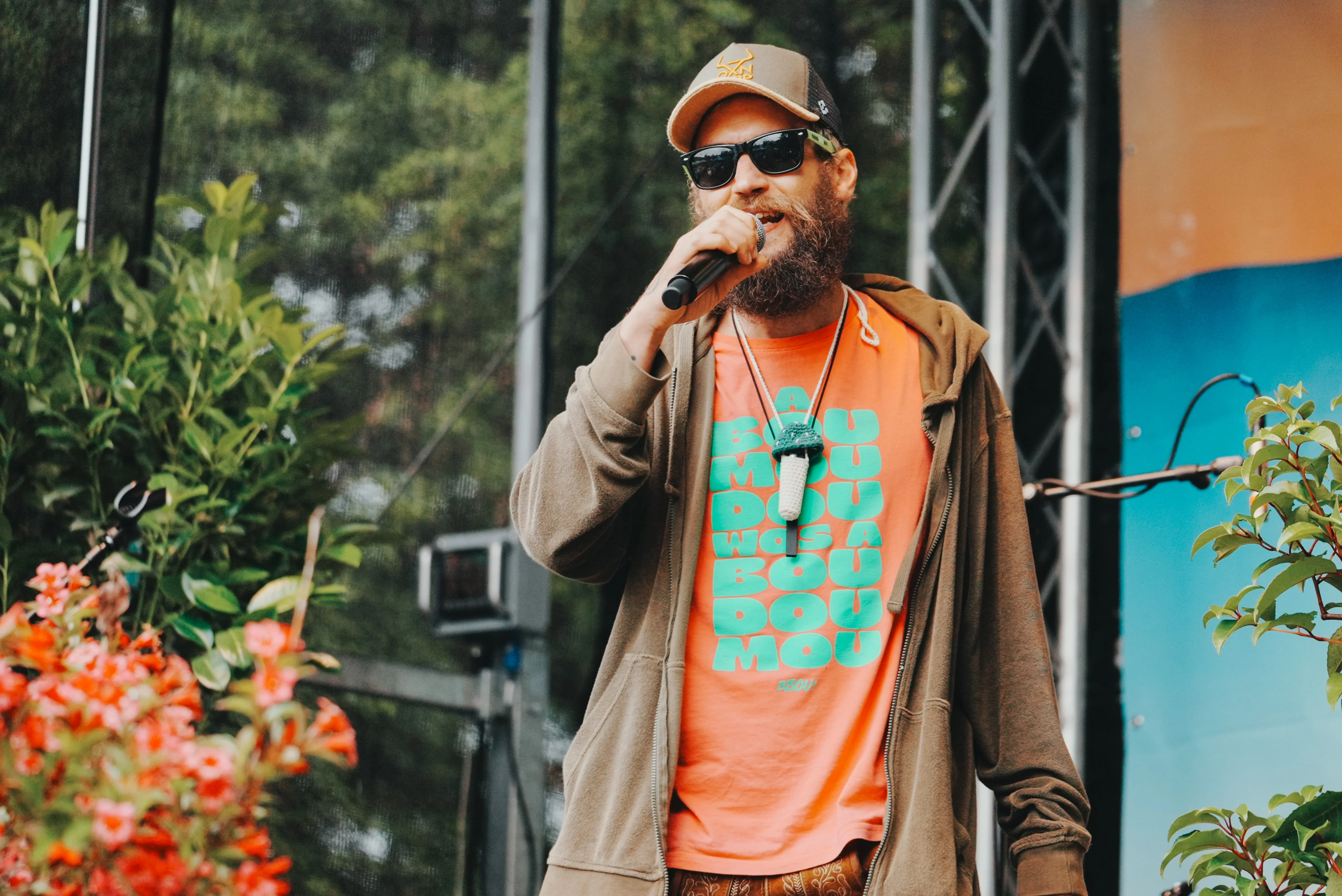
Image from Wikipedia
Image from Wikipedia
BBou – The Upper Palatinate Dialect Rapper Between Home, Stance, and Hip-Hop
BBou: An Artist Portrait Full of Dialect, Impact, and Quirkiness
BBou, also known as Boarischa Bou, bbou or Bbou, whose real name is Michael Honig, represents a rare connection of rap, dialect, and regional identity. Since 2004, he has been active at the microphone and has intentionally chosen the Upper Palatinate dialect after initial attempts in High German. This choice becomes the signature of his music career: unmistakable, edgy, locally rooted, and yet connectable far beyond the region. ([de.wikipedia.org](https://de.wikipedia.org/wiki/BBou))
As a Bavarian musician, German rapper, music producer, and songwriter, BBou uses language not as folklore, but as an artistic tool. His lyrics draw on personal experiences, everyday observations, and the life feeling of his surroundings, translating them into dialect rap with character. His discography showcases an artist who has consistently worked on sound, production, and narrative precision over the years. ([de.wikipedia.org](https://de.wikipedia.org/wiki/BBou))
Biography: From High German Attempts to Unmistakable Upper Palatinate Rap
BBou began his career early and only found his defining form after initial endeavors in High German: rap in the Upper Palatinate dialect. The Wikipedia biography explicitly states that he has been active since 2004 and chose the regional language form thereafter. This decision made him a distinctive voice in German dialect hip-hop, as he does not rap against his origins, but from them. ([de.wikipedia.org](https://de.wikipedia.org/wiki/BBou))
His artistic development is also closely linked to the Upper Palatinate. BBou collaborates with artists such as Kiste, Liquid & Maniac, Monaco F, Dicht & Ergreifend, Gram Grämsn, Bavarian Squad, Pam Pam Ida, Widersacher aller Liedermacher, Claudia Koreck, and Hannes Ringlstetter. This positions him within a network of dialect, pop, songwriter tradition, and modern rap aesthetics. ([de.wikipedia.org](https://de.wikipedia.org/wiki/BBou))
Career: An Independent Path Between Underground, Stage, and Recognition
His career tells the story of an artist who has never confused regional roots with provinciality. Since 2016, BBou has released music on the Munich world music label Out Here Records, which places his sound in a context between hip-hop, world music, and dialect culture. In 2023, he toured Germany with “Grod Schey Is,” bringing his material to the stage, where his stage presence and linguistic independence are particularly impactful. ([de.wikipedia.org](https://de.wikipedia.org/wiki/BBou))
The press also describes him as an unconventional yet audience-friendly artist. In a taz interview, it is mentioned that he has been rapping since his youth and drew inspiration from role models like Blumentopf and Aggro Berlin before finding his own language. This makes BBou an example of how local identity and rap history can productively intertwine. ([taz.de](https://taz.de/Rapper-BBou/%215959484/?utm_source=openai))
Discography: From Mixtape to Mature Long Form
BBou's discography shows a steady artistic concentration. Important milestones include “Rap mit Soul” (2008), “Aaf dy Xicht” (2009), “GUAD&FESCH” (2011), “Volksmusik 2.0” (EP, 2012), “Bavarian Wasted Youth” with Liquid (2013), “Es gibt nix bessas wey wos Guads” (2014), “Idylle” (2017), and “Grod schey is” (2023). Even the titles reflect his character: confident, ironic, regionally colored, and linguistically unique. ([bbou.de](https://www.bbou.de/bio))
His releases are not just collections of individual songs, but chapters of an artistic development. While early formats like mixtapes and collaboration projects emphasized the underground character, later albums showcase a more mature production and a clearer profile. On Apple Music, current singles like “Oans,” “420 Mario Ahner,” “Zu mir oder zu dir,” “Kanona (HARRiSON FiAT Remix),” “Beys,” and especially “In meim Dorf” from 2025 are featured. ([music.apple.com](https://music.apple.com/de/artist/bbou/768028473))
Musical Development: Dialect Rap with Humor, Societal Awareness, and Melody
BBou's musical style can be categorized as dialect rap or hip-hop. Wikipedia describes that he often draws inspiration from his surroundings and personal experiences, giving his lyrics an immediate and credible grounding. This mixture of observation, wit, and regional storytelling lends his music a unique dramaturgy. ([de.wikipedia.org](https://de.wikipedia.org/wiki/BBou))
In his production, he blends rap with hints of folk music, Bavarian tradition, and contemporary pop logic. This is evident not only in the album title “Volksmusik 2.0,” but also in later works that are sonically broader and often more melodic. “Grod schey is” marks a phase where the artist plays his profile with even more confidence while addressing societal themes. ([bbou.de](https://www.bbou.de/bio))
Current Projects: New Singles, Tours, and Ongoing Presence
BBou remained active in the market through 2024 and 2025. The official homepage announces new entries in the news section and points to a download archive that makes his early milestones from 2004 to 2009 accessible. Several singles are scheduled for release on Apple Music in 2024 and 2025, including “In meim Dorf” as a new release from July 30, 2025, which confirms his ongoing release activity. ([bbou.de](https://www.bbou.de/wos-gibts-neis?utm_source=openai))
BBou also remains visible live. The official schedule documents performances such as the Altstadtfest in Amberg, the Moos Meadow Festival, Free Tree Open Air, and dates in Burglengenfeld in 2024. Thus, his music career is not limited to streaming and recordings, but unfolds its true power in direct contact with the audience. ([bbou.de](https://www.bbou.de/event-list?utm_source=openai))
Awards and Cultural Influence: Dialect as an Artistic Stance
In 2018, BBou was awarded the Dialect Prize Bavaria and received the Literature Promotion Prize from Markt Beratzhausen in 2024. These honors are more than symbolic gestures: they confirm that his work is not only entertaining but also linguistically and culturally relevant. He does not muse the dialect but translates it into a contemporary musical form. ([de.wikipedia.org](https://de.wikipedia.org/wiki/BBou))
This is where his cultural influence lies. In a scene that often relies on Standard German or global rap codes, BBou insists on the musical productivity of the local. He shows that dialect does not mean narrowing but extends expression, rhythm, and identity – an approach that consistently attracts attention in the German-speaking world. ([de.wikipedia.org](https://de.wikipedia.org/wiki/BBou))
Conclusion: Why BBou Remains Exciting
BBou is exciting because he does not pit rap, a sense of home, and artistic independence against each other but condenses them into a clear signature. His lyrics have regional flair, his productions continually evolve, and his stage presence brings the songs into a vibrant live context. Those who know German rap only as a big-city narrative experience a powerful counter-perspective from the Upper Palatinate with BBou. ([de.wikipedia.org](https://de.wikipedia.org/wiki/BBou))
It is especially live that the lasting impact of his music becomes apparent: the dialect lines hit directly, the humor works, and the connection of tradition and present generates real energy. BBou is worth experiencing for anyone who appreciates authentic dialect rap, pointed lyrics, and a strong cultural identity. Experiencing him live means hearing linguistic art, music, and a sense of home in a single performance. ([bbou.de](https://www.bbou.de/event-list?utm_source=openai))
Official Channels of BBou:
- Instagram: https://www.instagram.com/bbou_offiziell/
- Facebook: https://www.facebook.com/boarischabou
- YouTube: https://youtube.com/@BBou
- Spotify: https://open.spotify.com/intl-de/artist/0UQLelNtEEpaM89zxIiDrq?si=hu3qXmKISiCld7peiY8T_Q
- TikTok: No official profile found
Sources:
- BBou Homepage – BIO
- BBou Homepage – MUSIC
- BBou Homepage – WOS GIBTS NEIS
- BBou Homepage – LIVE DATES
- Linktree – BBou alias Boarischa Bou
- Wikipedia – BBou
- Bavarian State Portal – Awarding of the Dialect Prize Bavaria 2018
- Markt Beratzhausen – The Literature Prize of the Upper Palatinate Jura 2024
- Regensburger Nachrichten – “Grod Schey Is”: BBou in an Interview about Village Life, Disco, and the Cathedral City
- taz – Rapper BBou: What is a Bavarian Anyway?
Upcoming Events
BBOU & Guests – grod schey is
BBou & Guests