
Deutscher Herbst
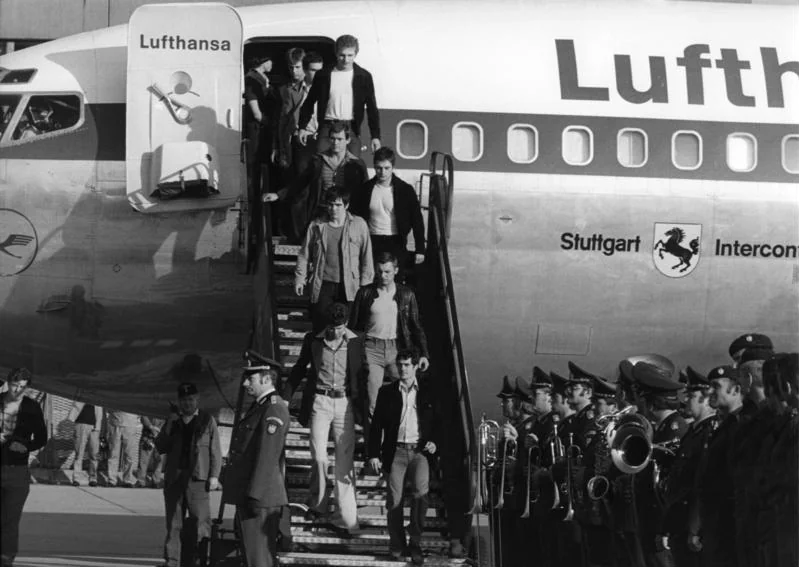
Image from Wikipedia
Image from Wikipedia
German Autumn: The Moment When the Federal Republic Came Under Pressure
A Historical Cipher for Terror, State Crisis, and Societal Upheaval
The term "German Autumn" refers to the political atmosphere in the Federal Republic of Germany in September and October 1977, when the attacks by the Red Army Faction plunged the country into one of its gravest crises. At the center were the kidnapping and murder of Hanns Martin Schleyer, the hijacking of the Lufthansa plane "Landshut," and the suicides of leading RAF members in custody. The expression still does not refer to a musical work, but rather to a historical state of emergency that has deeply shaped politics, media, and public perception. ([de.wikipedia.org](https://de.wikipedia.org/wiki/Deutscher_Herbst?utm_source=openai))
Historical Context: Germany in a State of Emergency
The German Autumn marked the peak of the so-called "Offensive 77" by the RAF. The federal government reacted with extraordinary severity, while security agencies and the state faced a scenario that revealed the limits of democratic crisis management. The contact ban law, the escalation of the security debate, and the hardline stance of the government under Helmut Schmidt are among the most significant consequences of these weeks. In the political memory of the Federal Republic, this phase still represents the tension between freedom and security. ([de.wikipedia.org](https://de.wikipedia.org/wiki/Deutscher_Herbst?utm_source=openai))
The Escalation of 1977: Kidnapping, Pressure, and Decision
Throughout the autumn of 1977, several events converged into a dramatic chain. The kidnapping of Hanns Martin Schleyer served as a tool of coercion for the RAF, while the hijacking of the Lufthansa aircraft "Landshut" highlighted the international dimension of the conflict. The fact that the federal government did not yield to the extortion became a crucial political signal. The subsequent rescue of the hostages by GSG 9 in October 1977 marked the turning point of the crisis and became a symbol of state action capability. ([de.wikipedia.org](https://de.wikipedia.org/wiki/Deutscher_Herbst?utm_source=openai))
Political Impact: One of the Severest Crises of the Republic
The German Autumn is considered one of the most severe crises in the history of the Federal Republic of Germany. The events had a lasting impact on the sense of security and influenced legislation well beyond the year 1977. The terror of the RAF posed the greatest challenge to the authorities in their history to date and became a lasting point of reference in domestic political debates. For this reason, the term is not only historical but also charged with cultural history. ([de.wikipedia.org](https://de.wikipedia.org/wiki/Deutscher_Herbst?utm_source=openai))
Cultural Interpretation: The Term in the Mirror of Film and Memory
The expression "German Autumn" derives from the film Germany in Autumn from 1978. This collage of several documentary films by eleven directors from the New German Cinema critically examined the state's response to terrorism. Thus, the term also became a cultural cipher: it not only stands for facts and events, but also for a climate of fear, political escalation, and public self-examination. In German memory culture, this framework of interpretation has become firmly entrenched. ([de.wikipedia.org](https://de.wikipedia.org/wiki/Deutscher_Herbst?utm_source=openai))
Media and Societal Resonance
The coverage of the German Autumn intensified the perception of a historical turning point. Contemporary and later retrospectives show how strongly the country oscillated between solidarity with the victims, fear of further violence, and questions of legal severity. The events thus became a litmus test for democratic stability and public communication in times of crisis. Even decades later, the German Autumn remains a central reference point when discussing political extremism in Germany. ([verfassungsschutz.de](https://www.verfassungsschutz.de/DE/verfassungsschutz/75-jahre-bfv/5-das-bfv-im-historischen-kontext/das-bfv-im-historischen-kontext_node.html?utm_source=openai))
Contextualization Instead of Romanticization
Because the term does not describe an artist biography but a historical state of emergency, this page consciously follows an objective and culturally informed perspective. The German Autumn is one of the defining chapters of post-war history and requires a portrayal that brings together political power, violence, and societal reaction. Its significance lies precisely in the fact that it continues to be read as a warning sign for democracies. ([de.wikipedia.org](https://de.wikipedia.org/wiki/Deutscher_Herbst?utm_source=openai))
Conclusion: Why the German Autumn Remains Relevant Today
The German Autumn is compelling because it is more than a sequence of events: it condenses the question of how a democratic state responds to terror without losing its own principles. Anyone wanting to understand the political history of the Federal Republic will inevitably encounter this autumn of 1977. For deeper insights, it is worthwhile to read historical sources and engage with documented eyewitness perspectives. ([de.wikipedia.org](https://de.wikipedia.org/wiki/Deutscher_Herbst?utm_source=openai))
Official Channels of German Autumn:
- Instagram: No official profile found
- Facebook: No official profile found
- YouTube: No official profile found
- Spotify: No official profile found
- TikTok: No official profile found
Sources:
Upcoming Events
herbst concert in Erlangen
herbst - Summer Hits - E-Werk Open Air