

Deggendorf
94469 Deggendorf, Deutschland
Deggendorf | Events & Attractions 2026
Deggendorf is a large district town on the Danube with 38,783 inhabitants and an area of 77.20 square kilometers. The town is located at a special intersection between the Danube Valley and the Bavarian Forest, ranging in height from 310 to 1,116 meters, and presents itself as a historical site, university location, and modern excursion destination. Those who visit Deggendorf experience short distances, lively squares, strong cultural offerings, and many leisure opportunities. This mix makes the town attractive for day visitors, weekend guests, families, and prospective students. ([deggendorf.de](https://www.deggendorf.de/rathaus/zahlenspiegel))
Events in Deggendorf: Cultural Calendar, Festivals, and City Life
When people search for deggendorf events, they usually mean a vibrant program of culture, city festivals, concerts, lectures, and special themed evenings. This is exactly what the current event calendar of the city reflects. It not only lists individual dates but also a wide range of offerings from art and culture to education and citizen-oriented formats. The city shows that events in Deggendorf are not just an additional program but an essential part of urban life. Whether it's the Bavarian Dialect Day, Christmas Market, Danube Festival, or seasonal themed evenings: The cultural year is visibly diverse and clearly designed for encounters. ([deggendorf.de](https://www.deggendorf.de/veranstaltungen))
Particularly interesting is how strongly Deggendorf connects its events with locations in the city center. The calendar lists programs in the Old Town Hall, in the city center, in the City Hall Park, and at other central locations. This way, events are not processed anonymously but are directly experienceable with the city. For visitors, this means: Anyone attending an event simultaneously discovers places, paths, and faces of the city. The Tourist Information also plays an important role as it offers tickets for events and serves as a contact point for open city tours or thematic walks. Thus, the simple desire for an appointment quickly turns into a complete city visit. ([deggendorf.de](https://www.deggendorf.de/veranstaltungen))
The city also relies on recurring formats that establish themselves throughout the year. These include open city tours, tours with a town hall tower visit, and cultural formats that strengthen local identity. The city administration points out new dates and press releases in the calendar, allowing visitors to plan early. Especially for guests who do not yet know Deggendorf, these events are an ideal entry point as they connect culture, history, and urban atmosphere. So, anyone looking for a place where events and city feeling reinforce each other will find a surprisingly dense selection in Deggendorf. ([deggendorf.de](https://www.deggendorf.de/gaestefuehrungen-durch-deggendorf?utm_source=openai))
Sights, Old Town, and City History: The Historical Deggendorf
Deggendorf is a city with deep historical roots. The first documented mention dates back to 1002 when King Henry II confirmed ownership in Deggendorf. In the 13th and 14th centuries, a settlement developed into a town with growing self-confidence, and in 1316 Deggendorf was granted city rights, which were reaffirmed in 1320. The construction of the Pilgrimage Church of St. Peter and Paul began in 1338, and with the baroque tower, the city acquired a building that is now one of its most distinctive landmarks. This development explains why Deggendorf is still perceived as a historically shaped Danube city today. ([deggendorf.de](https://www.deggendorf.de/kunst-und-kultur/geschichte))
Those exploring the sights in Deggendorf encounter a whole series of notable places. The Old Town Hall with its Gothic tower dates back to 1535 and is one of the city's most famous landmarks. Also significant are the historic city wall, the town squares, the parish church of the Assumption of Mary, the Geiersberg Church, the Craft Museum, the City Museum, and the Shipmaster's House. The official tourism website highlights these places as the core of the cityscape. Particularly appealing is that many of these sights are located in close proximity to each other, providing ideal conditions for city walks. Discovering Deggendorf on foot allows one to experience history not just as information but as a spatial feeling. ([deggendorf.travel](https://deggendorf.travel/sehenswuerdigkeiten))
Another strong element is the historic city wall. The preserved remnant is about 30 meters long, dates back to the 14th century, and still has a wooden walkway. Such details make Deggendorf tangible as they keep medieval city fortifications visible to this day. Additionally, the Dumpling Thrower, which plays a role in local storytelling tradition, has made Deggendorf known as the Dumpling City. The city connects architecture, legends, and regional identity in an unusually strong way. The digital city tour also shows how seriously Deggendorf takes its history: With audio stations at the town hall, city wall, stumbling stones, pilgrimage church, and other points, history is conveyed in a modern way while remaining authentic. ([deggendorf.travel](https://deggendorf.travel/sehenswuerdigkeiten/historische-stadtmauer?utm_source=openai))
Travel, Maps, and Parking in Deggendorf: Visiting Made Easy
Those searching for deggendorf maps or deggendorf directions usually want to quickly know how to reach the city and how convenient the visit will be. The answer is simple: Deggendorf is very well connected. Via the A3, guests come from Cologne, Frankfurt, Nuremberg, and Regensburg, while the A92 connects from Munich. By train, Deggendorf's main station is the central station, while the Plattling station serves as an ICE station nearby. Long-distance bus lines are also available. This makes the city comfortably accessible not only for day visitors but also for families, groups, and business travelers. ([deggendorf.travel](https://deggendorf.travel/anreise))
When it comes to parking, Deggendorf scores with an unusually good city center structure. The tourism portal mentions over 1,500 parking spaces that are centrally located, inexpensive, and partially weather-protected. Additionally, a parking guidance system helps with orientation. The city information lists several relevant underground garages and parking areas such as the Upper Town Square, Luitpold Square, the Old Town district, and the Cultural Quarter. For guest buses, there is a stop at Luitpold Square as well as a free bus parking lot at Maria-Ward-Platz. This is an important plus for visitors experiencing Deggendorf for the first time, as arrival and local changes remain uncomplicated. ([deggendorf.travel](https://deggendorf.travel/anreise))
The Tourist Information is also strategically well located. It is situated in the Old Town Hall at the Upper Town Square and provides city maps, flyers, and personal advice. This is where the circle closes between maps, orientation, and experience. Those who do not just want to arrive but want to understand the city get a good starting point there. Additionally, open city tours, digital tours, and the offer for barrier-free visits are important components. Thus, Deggendorf becomes a city that is not only easy to navigate but also easy to explore. This is particularly relevant for SEO search queries around maps, directions, and parking because users expect a direct, practical solution. ([deggendorf.de](https://www.deggendorf.de/viel-neues-in-der-tourist-information?utm_source=openai))
Deggendorf as a University Location: THD, Internationality, and Future
Deggendorf is not only historically interesting but also a modern university location. The Deggendorf Institute of Technology, short THD or DIT, was founded in 1994 and has since developed into a successful university with a strong practical focus. The university emphasizes its orientation towards application-oriented teaching, research, development, and transfer into business and society. On the official website, Deggendorf is described as a modern, international campus located directly on the Danube and at the gateway to the Bavarian Forest. Thus, the university is an essential part of the urban profile and noticeably shapes life in Deggendorf. ([th-deg.de](https://www.th-deg.de/en/dit/profile?utm_source=openai))
The internationality is particularly evident in the numbers and structures. According to official university information, around 9,400 people study at THD, about half of whom are international. In addition, there are various campus locations and a European campus with English-language offerings. For Deggendorf, this means an open, young, and networked atmosphere. The International Week brings together students, staff, and guests from all over the world every year and promotes cultural exchange. So, those searching for deggendorf institute of technology are not only looking for a university but a whole ecosystem of study, research, encounters, and urban life. ([th-deg.de](https://th-deg.de/Studieninteressierte/infos-fuer-internationale-studieninteressierte/International_Prospectus_2026_web.pdf?utm_source=openai))
From the city's perspective, THD is also an important growth engine. The university strengthens the perception of Deggendorf as an educational and innovation location in Southeast Bavaria. It attracts students, researchers, and international guests who in turn utilize gastronomy, mobility, culture, and leisure on-site. This creates a lively mix that is noticeable in the streets, cafés, and event venues of the city. Therefore, Deggendorf is not only a historically significant Danube city but also a place where the future can be experienced very concretely. For visitors, this is exciting because historical backdrop and scientific dynamism coexist here side by side. ([th-deg.de](https://www.th-deg.de/en/dit/profile?utm_source=openai))
Leisure in Deggendorf: ELYPSO, Ice Stadium, and the Danube as an Experience Space
Among the frequently searched leisure terms is deggendorf elypso, and for good reason. The leisure and adventure pool offers swimming, sauna, outdoor pool, wellness, and events and is one of the most well-known leisure addresses in the city. The facility is operated by the Deggendorf municipal utilities and is understood as a publicly accessible institution. The official site regularly announces highlights such as women's sauna, Finnish sauna, or special evening events. The access is also clearly described, for example via the A92 towards Deggendorf. For families, wellness guests, and rainy days, ELYPSO is a strong plus in the city's leisure offerings. ([elypso.de](https://www.elypso.de/?lang=de&utm_source=openai))
Equally important is the Deggendorf Ice Stadium, which is considered the home of the Deggendorf SC. The official site speaks of ice hockey in the Hitzkopf Arena, mentions home games, entry times, tickets, and blocks, clearly indicating how strongly sports are part of the local identity. For search queries like deggendorf ice hockey or deggendorfer sc, the stadium is the central reference point. Wheelchair spaces are also indicated at the boards, which points to practical usability and a certain accessibility. Especially during the season, the stadium creates an atmosphere that goes far beyond sports: It is a meeting point, emotional space, and topic of conversation in the city at the same time. ([eisstadion.deggendorf.de](https://eisstadion.deggendorf.de/eishockey/?utm_source=openai))
However, the leisure profile includes not only individual facilities but also the location itself. Deggendorf is located on the Danube and at the entrance to the Bavarian Forest, making hiking, cycling, walks, and winter activities a natural part of the offerings. The city describes itself as a place with many charming activities, from hiking and bike trails to tennis and skiing. Additionally, there are the Danube promenade, city walks, and proximity to nature and heights. So, anyone planning leisure in Deggendorf gets not just a swim or a game but a city where movement, nature, and urbanity closely interact. ([deggendorf.de](https://www.deggendorf.de/sprachen/englisch/welcome))
Inhabitants, Location, and Quality of Life: Why Deggendorf is So Versatile
Deggendorf appears compact at first glance but is very versatile in reality. The official statistics state 38,783 inhabitants, of which 36,352 have a main residence and 2,431 have a secondary residence. The city is thus large enough to have its own urban profile and at the same time manageable enough to connect paths and places well. The age structure, the number of households, and the area also show a city that has grown but has retained its character. For the SEO search intent deggendorf inhabitants, this current number is particularly important as it quickly provides orientation and simultaneously makes the city's significance in the Lower Bavarian area visible. ([deggendorf.de](https://www.deggendorf.de/rathaus/zahlenspiegel))
The location also strongly shapes the quality of life. Deggendorf describes itself as the economic center in Southeast Bavaria and as the gateway to the Bavarian Forest. The proximity to Regensburg, Passau, and even the border to the Czech Republic underscores the central location in Eastern Bavaria. The cityscape is also characterized by significant elevation differences: From the Danube Valley to the surrounding heights, one experiences very different perspectives on the city and landscape. This diversity can also be considered in terms of weather, as excursions, walks, and seasons are particularly noticeable here. Anyone visiting Deggendorf quickly realizes that the city is not just a point on the map but an interface between cultural space, natural space, and economic space. ([deggendorf.de](https://www.deggendorf.de/sprachen/englisch/welcome))
The local identity also includes the role as a place of enjoyment. The city emphasizes regional specialties and products, especially the Deggendorf dumplings, and connects culinary arts with history. In local storytelling, the Dumpling Thrower recalls a defense scene from the 13th century that made Deggendorf known beyond its borders. Such stories are not just folklore but part of the urban brand image. Together with cultural offerings, the university, sports, and good transport links, a profile emerges that clearly distinguishes Deggendorf from many other cities. This is precisely why search queries for restaurants, culture, maps, events, and attractions in Deggendorf remain strongly interconnected. ([deggendorf.de](https://www.deggendorf.de/sprachen/englisch/welcome))
Sources:
- City of Deggendorf - Events ([deggendorf.de](https://www.deggendorf.de/veranstaltungen))
- Tourism Deggendorf - Attractions ([deggendorf.travel](https://deggendorf.travel/sehenswuerdigkeiten))
- City of Deggendorf - Statistical Overview ([deggendorf.de](https://www.deggendorf.de/rathaus/zahlenspiegel))
- Deggendorf Institute of Technology - Official Website ([th-deg.de](https://www.th-deg.de/en?utm_source=openai))
- ELYPSO Deggendorf - Official Website ([elypso.de](https://www.elypso.de/?lang=de&utm_source=openai))
- Deggendorf Ice Stadium - Ice Hockey ([eisstadion.deggendorf.de](https://eisstadion.deggendorf.de/eishockey/?utm_source=openai))
Mehr anzeigenWeniger anzeigen
Deggendorf | Events & Attractions 2026
Deggendorf is a large district town on the Danube with 38,783 inhabitants and an area of 77.20 square kilometers. The town is located at a special intersection between the Danube Valley and the Bavarian Forest, ranging in height from 310 to 1,116 meters, and presents itself as a historical site, university location, and modern excursion destination. Those who visit Deggendorf experience short distances, lively squares, strong cultural offerings, and many leisure opportunities. This mix makes the town attractive for day visitors, weekend guests, families, and prospective students. ([deggendorf.de](https://www.deggendorf.de/rathaus/zahlenspiegel))
Events in Deggendorf: Cultural Calendar, Festivals, and City Life
When people search for deggendorf events, they usually mean a vibrant program of culture, city festivals, concerts, lectures, and special themed evenings. This is exactly what the current event calendar of the city reflects. It not only lists individual dates but also a wide range of offerings from art and culture to education and citizen-oriented formats. The city shows that events in Deggendorf are not just an additional program but an essential part of urban life. Whether it's the Bavarian Dialect Day, Christmas Market, Danube Festival, or seasonal themed evenings: The cultural year is visibly diverse and clearly designed for encounters. ([deggendorf.de](https://www.deggendorf.de/veranstaltungen))
Particularly interesting is how strongly Deggendorf connects its events with locations in the city center. The calendar lists programs in the Old Town Hall, in the city center, in the City Hall Park, and at other central locations. This way, events are not processed anonymously but are directly experienceable with the city. For visitors, this means: Anyone attending an event simultaneously discovers places, paths, and faces of the city. The Tourist Information also plays an important role as it offers tickets for events and serves as a contact point for open city tours or thematic walks. Thus, the simple desire for an appointment quickly turns into a complete city visit. ([deggendorf.de](https://www.deggendorf.de/veranstaltungen))
The city also relies on recurring formats that establish themselves throughout the year. These include open city tours, tours with a town hall tower visit, and cultural formats that strengthen local identity. The city administration points out new dates and press releases in the calendar, allowing visitors to plan early. Especially for guests who do not yet know Deggendorf, these events are an ideal entry point as they connect culture, history, and urban atmosphere. So, anyone looking for a place where events and city feeling reinforce each other will find a surprisingly dense selection in Deggendorf. ([deggendorf.de](https://www.deggendorf.de/gaestefuehrungen-durch-deggendorf?utm_source=openai))
Sights, Old Town, and City History: The Historical Deggendorf
Deggendorf is a city with deep historical roots. The first documented mention dates back to 1002 when King Henry II confirmed ownership in Deggendorf. In the 13th and 14th centuries, a settlement developed into a town with growing self-confidence, and in 1316 Deggendorf was granted city rights, which were reaffirmed in 1320. The construction of the Pilgrimage Church of St. Peter and Paul began in 1338, and with the baroque tower, the city acquired a building that is now one of its most distinctive landmarks. This development explains why Deggendorf is still perceived as a historically shaped Danube city today. ([deggendorf.de](https://www.deggendorf.de/kunst-und-kultur/geschichte))
Those exploring the sights in Deggendorf encounter a whole series of notable places. The Old Town Hall with its Gothic tower dates back to 1535 and is one of the city's most famous landmarks. Also significant are the historic city wall, the town squares, the parish church of the Assumption of Mary, the Geiersberg Church, the Craft Museum, the City Museum, and the Shipmaster's House. The official tourism website highlights these places as the core of the cityscape. Particularly appealing is that many of these sights are located in close proximity to each other, providing ideal conditions for city walks. Discovering Deggendorf on foot allows one to experience history not just as information but as a spatial feeling. ([deggendorf.travel](https://deggendorf.travel/sehenswuerdigkeiten))
Another strong element is the historic city wall. The preserved remnant is about 30 meters long, dates back to the 14th century, and still has a wooden walkway. Such details make Deggendorf tangible as they keep medieval city fortifications visible to this day. Additionally, the Dumpling Thrower, which plays a role in local storytelling tradition, has made Deggendorf known as the Dumpling City. The city connects architecture, legends, and regional identity in an unusually strong way. The digital city tour also shows how seriously Deggendorf takes its history: With audio stations at the town hall, city wall, stumbling stones, pilgrimage church, and other points, history is conveyed in a modern way while remaining authentic. ([deggendorf.travel](https://deggendorf.travel/sehenswuerdigkeiten/historische-stadtmauer?utm_source=openai))
Travel, Maps, and Parking in Deggendorf: Visiting Made Easy
Those searching for deggendorf maps or deggendorf directions usually want to quickly know how to reach the city and how convenient the visit will be. The answer is simple: Deggendorf is very well connected. Via the A3, guests come from Cologne, Frankfurt, Nuremberg, and Regensburg, while the A92 connects from Munich. By train, Deggendorf's main station is the central station, while the Plattling station serves as an ICE station nearby. Long-distance bus lines are also available. This makes the city comfortably accessible not only for day visitors but also for families, groups, and business travelers. ([deggendorf.travel](https://deggendorf.travel/anreise))
When it comes to parking, Deggendorf scores with an unusually good city center structure. The tourism portal mentions over 1,500 parking spaces that are centrally located, inexpensive, and partially weather-protected. Additionally, a parking guidance system helps with orientation. The city information lists several relevant underground garages and parking areas such as the Upper Town Square, Luitpold Square, the Old Town district, and the Cultural Quarter. For guest buses, there is a stop at Luitpold Square as well as a free bus parking lot at Maria-Ward-Platz. This is an important plus for visitors experiencing Deggendorf for the first time, as arrival and local changes remain uncomplicated. ([deggendorf.travel](https://deggendorf.travel/anreise))
The Tourist Information is also strategically well located. It is situated in the Old Town Hall at the Upper Town Square and provides city maps, flyers, and personal advice. This is where the circle closes between maps, orientation, and experience. Those who do not just want to arrive but want to understand the city get a good starting point there. Additionally, open city tours, digital tours, and the offer for barrier-free visits are important components. Thus, Deggendorf becomes a city that is not only easy to navigate but also easy to explore. This is particularly relevant for SEO search queries around maps, directions, and parking because users expect a direct, practical solution. ([deggendorf.de](https://www.deggendorf.de/viel-neues-in-der-tourist-information?utm_source=openai))
Deggendorf as a University Location: THD, Internationality, and Future
Deggendorf is not only historically interesting but also a modern university location. The Deggendorf Institute of Technology, short THD or DIT, was founded in 1994 and has since developed into a successful university with a strong practical focus. The university emphasizes its orientation towards application-oriented teaching, research, development, and transfer into business and society. On the official website, Deggendorf is described as a modern, international campus located directly on the Danube and at the gateway to the Bavarian Forest. Thus, the university is an essential part of the urban profile and noticeably shapes life in Deggendorf. ([th-deg.de](https://www.th-deg.de/en/dit/profile?utm_source=openai))
The internationality is particularly evident in the numbers and structures. According to official university information, around 9,400 people study at THD, about half of whom are international. In addition, there are various campus locations and a European campus with English-language offerings. For Deggendorf, this means an open, young, and networked atmosphere. The International Week brings together students, staff, and guests from all over the world every year and promotes cultural exchange. So, those searching for deggendorf institute of technology are not only looking for a university but a whole ecosystem of study, research, encounters, and urban life. ([th-deg.de](https://th-deg.de/Studieninteressierte/infos-fuer-internationale-studieninteressierte/International_Prospectus_2026_web.pdf?utm_source=openai))
From the city's perspective, THD is also an important growth engine. The university strengthens the perception of Deggendorf as an educational and innovation location in Southeast Bavaria. It attracts students, researchers, and international guests who in turn utilize gastronomy, mobility, culture, and leisure on-site. This creates a lively mix that is noticeable in the streets, cafés, and event venues of the city. Therefore, Deggendorf is not only a historically significant Danube city but also a place where the future can be experienced very concretely. For visitors, this is exciting because historical backdrop and scientific dynamism coexist here side by side. ([th-deg.de](https://www.th-deg.de/en/dit/profile?utm_source=openai))
Leisure in Deggendorf: ELYPSO, Ice Stadium, and the Danube as an Experience Space
Among the frequently searched leisure terms is deggendorf elypso, and for good reason. The leisure and adventure pool offers swimming, sauna, outdoor pool, wellness, and events and is one of the most well-known leisure addresses in the city. The facility is operated by the Deggendorf municipal utilities and is understood as a publicly accessible institution. The official site regularly announces highlights such as women's sauna, Finnish sauna, or special evening events. The access is also clearly described, for example via the A92 towards Deggendorf. For families, wellness guests, and rainy days, ELYPSO is a strong plus in the city's leisure offerings. ([elypso.de](https://www.elypso.de/?lang=de&utm_source=openai))
Equally important is the Deggendorf Ice Stadium, which is considered the home of the Deggendorf SC. The official site speaks of ice hockey in the Hitzkopf Arena, mentions home games, entry times, tickets, and blocks, clearly indicating how strongly sports are part of the local identity. For search queries like deggendorf ice hockey or deggendorfer sc, the stadium is the central reference point. Wheelchair spaces are also indicated at the boards, which points to practical usability and a certain accessibility. Especially during the season, the stadium creates an atmosphere that goes far beyond sports: It is a meeting point, emotional space, and topic of conversation in the city at the same time. ([eisstadion.deggendorf.de](https://eisstadion.deggendorf.de/eishockey/?utm_source=openai))
However, the leisure profile includes not only individual facilities but also the location itself. Deggendorf is located on the Danube and at the entrance to the Bavarian Forest, making hiking, cycling, walks, and winter activities a natural part of the offerings. The city describes itself as a place with many charming activities, from hiking and bike trails to tennis and skiing. Additionally, there are the Danube promenade, city walks, and proximity to nature and heights. So, anyone planning leisure in Deggendorf gets not just a swim or a game but a city where movement, nature, and urbanity closely interact. ([deggendorf.de](https://www.deggendorf.de/sprachen/englisch/welcome))
Inhabitants, Location, and Quality of Life: Why Deggendorf is So Versatile
Deggendorf appears compact at first glance but is very versatile in reality. The official statistics state 38,783 inhabitants, of which 36,352 have a main residence and 2,431 have a secondary residence. The city is thus large enough to have its own urban profile and at the same time manageable enough to connect paths and places well. The age structure, the number of households, and the area also show a city that has grown but has retained its character. For the SEO search intent deggendorf inhabitants, this current number is particularly important as it quickly provides orientation and simultaneously makes the city's significance in the Lower Bavarian area visible. ([deggendorf.de](https://www.deggendorf.de/rathaus/zahlenspiegel))
The location also strongly shapes the quality of life. Deggendorf describes itself as the economic center in Southeast Bavaria and as the gateway to the Bavarian Forest. The proximity to Regensburg, Passau, and even the border to the Czech Republic underscores the central location in Eastern Bavaria. The cityscape is also characterized by significant elevation differences: From the Danube Valley to the surrounding heights, one experiences very different perspectives on the city and landscape. This diversity can also be considered in terms of weather, as excursions, walks, and seasons are particularly noticeable here. Anyone visiting Deggendorf quickly realizes that the city is not just a point on the map but an interface between cultural space, natural space, and economic space. ([deggendorf.de](https://www.deggendorf.de/sprachen/englisch/welcome))
The local identity also includes the role as a place of enjoyment. The city emphasizes regional specialties and products, especially the Deggendorf dumplings, and connects culinary arts with history. In local storytelling, the Dumpling Thrower recalls a defense scene from the 13th century that made Deggendorf known beyond its borders. Such stories are not just folklore but part of the urban brand image. Together with cultural offerings, the university, sports, and good transport links, a profile emerges that clearly distinguishes Deggendorf from many other cities. This is precisely why search queries for restaurants, culture, maps, events, and attractions in Deggendorf remain strongly interconnected. ([deggendorf.de](https://www.deggendorf.de/sprachen/englisch/welcome))
Sources:
- City of Deggendorf - Events ([deggendorf.de](https://www.deggendorf.de/veranstaltungen))
- Tourism Deggendorf - Attractions ([deggendorf.travel](https://deggendorf.travel/sehenswuerdigkeiten))
- City of Deggendorf - Statistical Overview ([deggendorf.de](https://www.deggendorf.de/rathaus/zahlenspiegel))
- Deggendorf Institute of Technology - Official Website ([th-deg.de](https://www.th-deg.de/en?utm_source=openai))
- ELYPSO Deggendorf - Official Website ([elypso.de](https://www.elypso.de/?lang=de&utm_source=openai))
- Deggendorf Ice Stadium - Ice Hockey ([eisstadion.deggendorf.de](https://eisstadion.deggendorf.de/eishockey/?utm_source=openai))
Upcoming Events
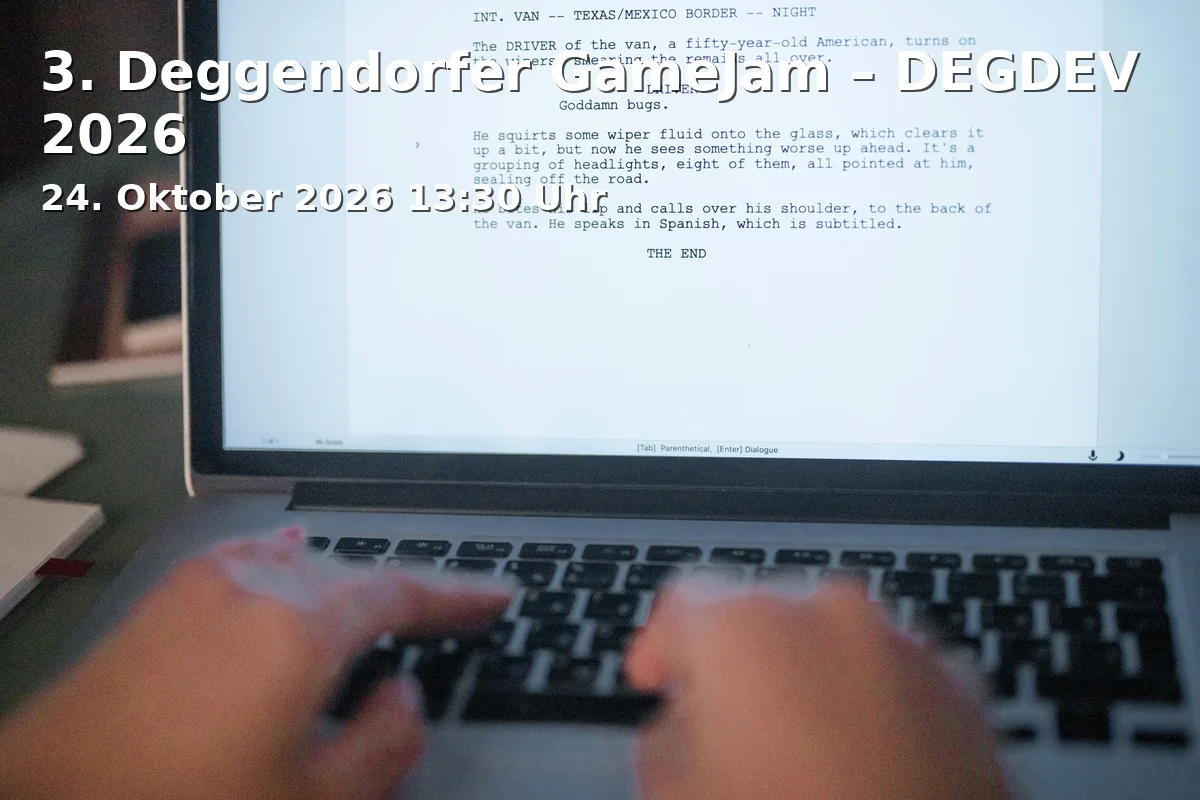
3rd Deggendorf GameJam – DEGDEV 2026

DSC Home Game: Deggendorfer SC against SC Riessersee

International Storytelling Café with THD

Sophie Scholl – the Last Hours with Tim Pröse
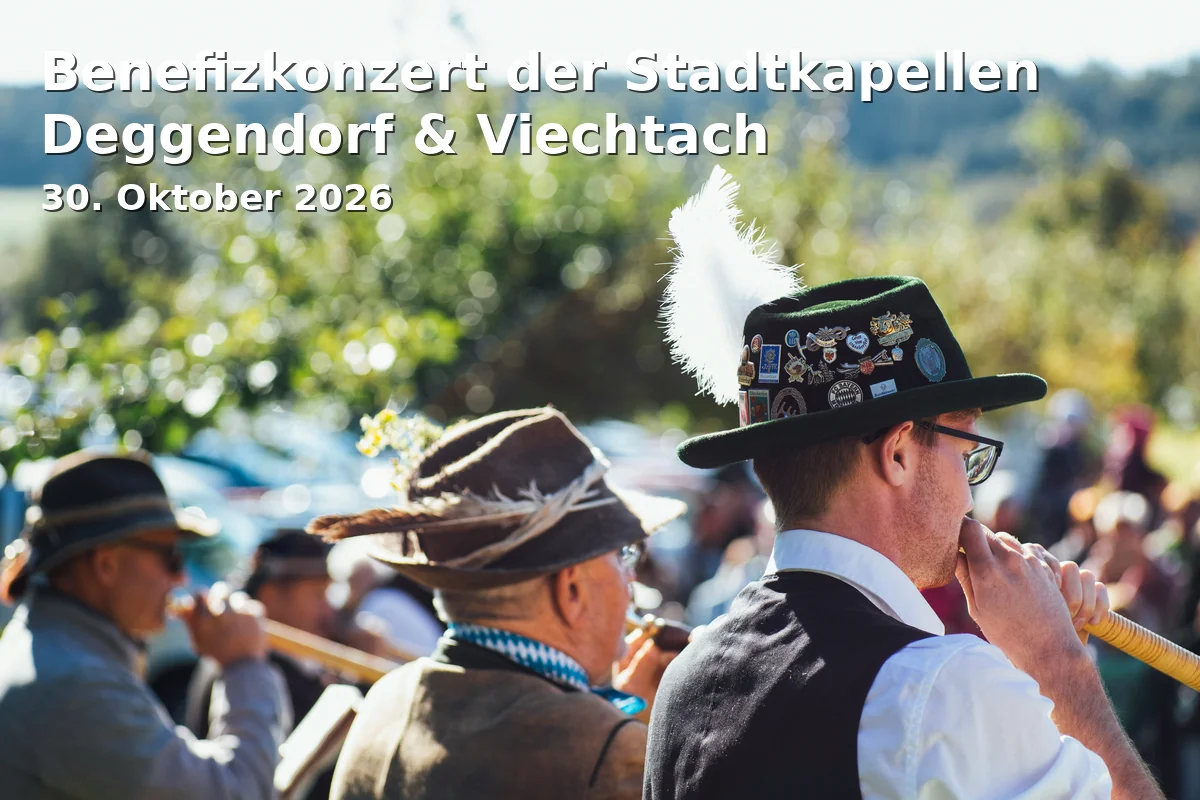
Benefit Concert of the City Bands Deggendorf & Viechtach
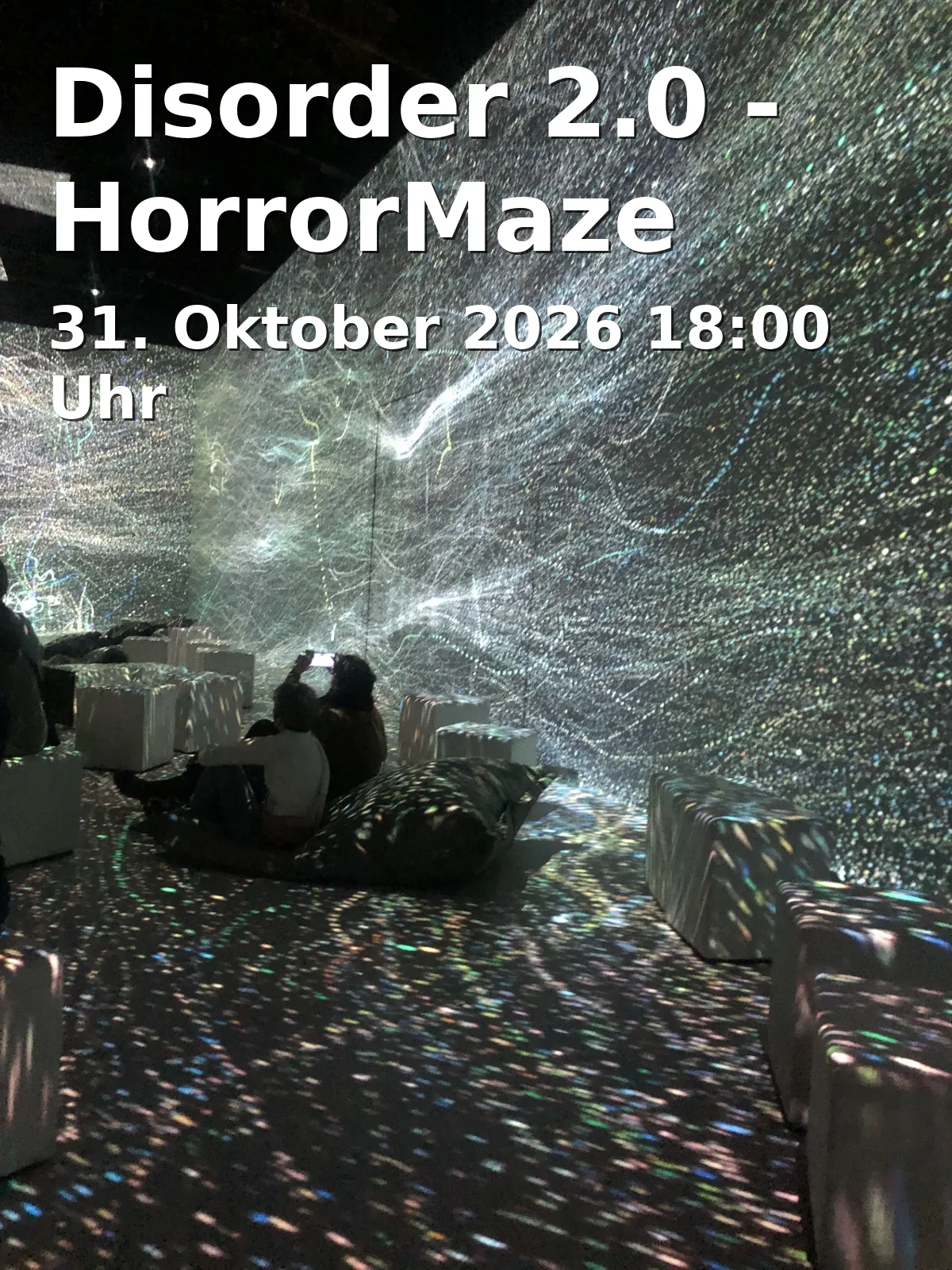
Disorder 2.0 - HorrorMaze
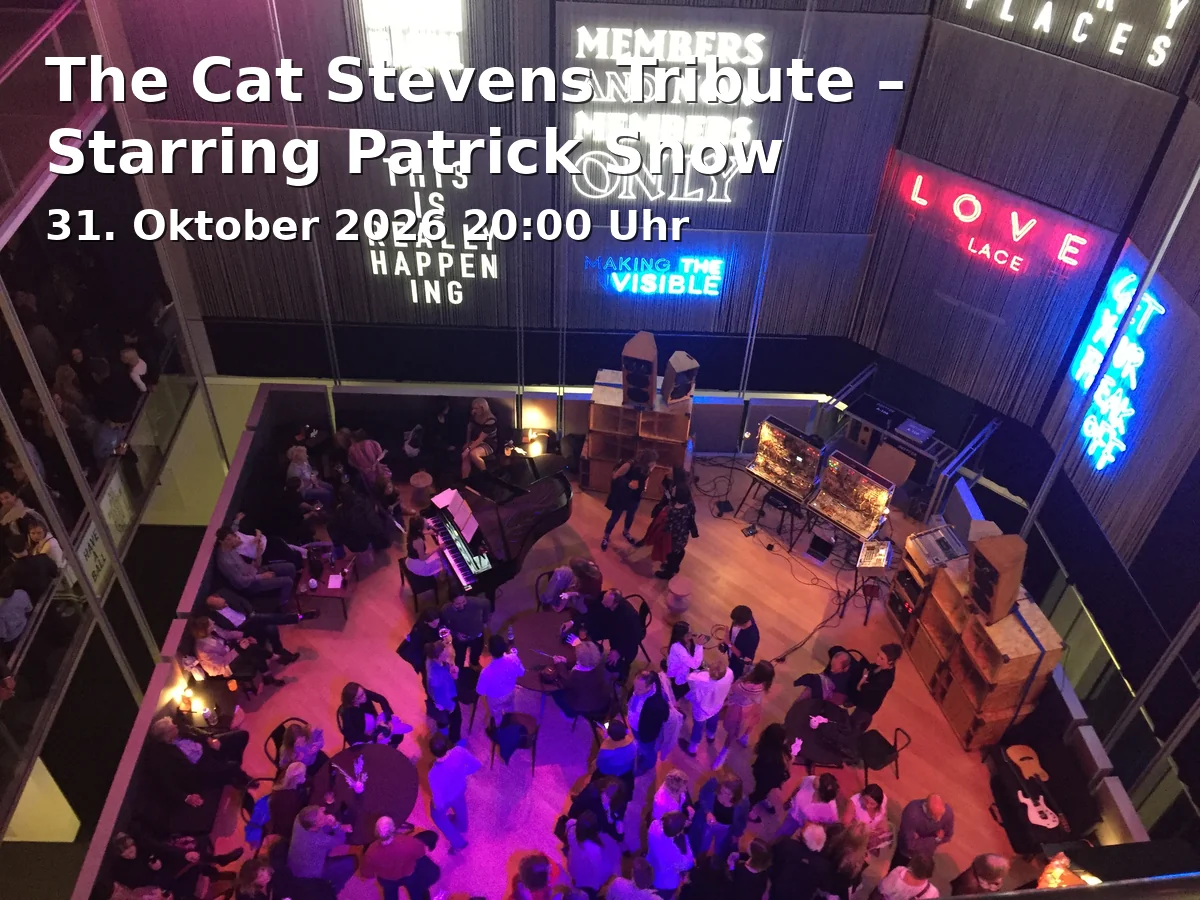
The Cat Stevens Tribute – Starring Patrick Snow
Deggendorfer SC – EV Füssen
Gaming Allowed – Learning Guaranteed! Quantum Academy Autumn School
KLANGJUWEL – Someday Tour
Frequently Asked Questions
Reviews
No reviews found